
Five causes of cracks in en 10149-2 s355mc technical data during quenching
Detailed technical analysis of why EN 10149-2 S355MC steel develops cracks during quenching, covering thermal stress, microstructure, and chemical composition.
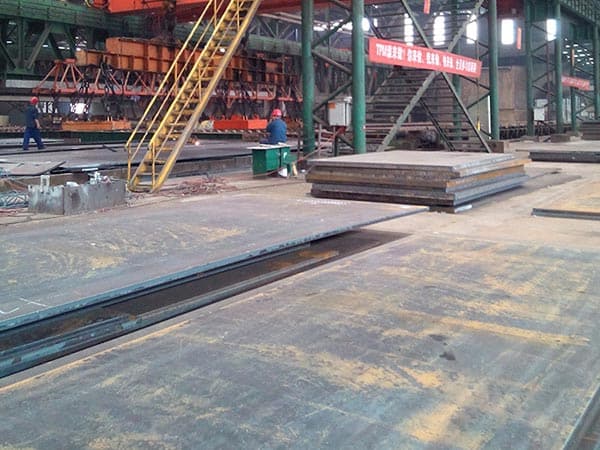
The Metallurgical Nature of EN 10149-2 S355MC Steel
EN 10149-2 S355MC is a high-yield-strength steel designed specifically for cold forming. Unlike traditional structural steels, S355MC is produced through thermomechanical rolling (TMCP). This process integrates controlled rolling and accelerated cooling to achieve a fine-grained microstructure, primarily consisting of ferrite and pearlite, without the need for high alloy content. The 'MC' designation indicates its thermomechanically rolled state, which provides a unique balance of strength, toughness, and weldability. However, problems often arise when this material is subjected to quenching, a process for which it was not originally optimized. Quenching S355MC can lead to severe cracking, compromising the structural integrity of components used in automotive frames, heavy machinery, and cold-pressed sections.
1. Thermal Gradient and Excessive Structural Stress
The primary cause of cracking in S355MC during quenching is the development of extreme thermal gradients between the surface and the core of the material. When the steel is heated to its austenitizing temperature and then rapidly plunged into a cooling medium like water or oil, the exterior cools and contracts much faster than the interior. This differential cooling rate creates significant tensile stresses on the surface. Since S355MC is often supplied in relatively thin gauges (typically 1.5mm to 20mm), the cooling rate is exceptionally high. The rapid contraction of the outer layers against a still-expanding or stationary core leads to 'quench cracks' that often propagate along the grain boundaries. This phenomenon is exacerbated if the cooling medium is too aggressive or if the agitation of the quenching bath is uneven, leading to localized hot spots and increased stress concentration.
2. Incompatibility of TMCP Microstructure with Reheating
S355MC derives its mechanical properties from the thermomechanical rolling process, which pins grain boundaries using micro-alloying elements like Niobium (Nb), Vanadium (V), and Titanium (Ti). When this steel is reheated for quenching, the carefully engineered fine-grained structure is disrupted. If the austenitizing temperature exceeds the optimal range, the micro-alloying precipitates begin to dissolve, leading to rapid austenite grain growth. Large austenite grains are significantly more prone to cracking during the subsequent martensitic transformation. The transformation from austenite to martensite involves a volume expansion. In a coarse-grained structure, this expansion creates higher localized stresses that the material cannot plastically accommodate, resulting in intergranular cracking. The technical data for S355MC emphasizes its cold-forming capabilities, and deviating into high-temperature heat treatments effectively negates the benefits of its original manufacturing process.
3. Chemical Composition and Carbon Equivalent (CEV) Sensitivity
While S355MC is a low-carbon steel, its chemical composition is finely tuned for weldability and strength. The presence of Manganese (Mn) and micro-alloys affects its hardenability. Although the Carbon Equivalent (CEV) is generally low (typically below 0.39), it is high enough that rapid quenching can still trigger the formation of brittle martensite or bainite in localized areas. The following table illustrates the typical chemical limits for S355MC according to EN 10149-2:
| Element | Max % (Cast Analysis) |
|---|---|
| Carbon (C) | 0.12 |
| Manganese (Mn) | 1.50 |
| Silicon (Si) | 0.50 |
| Phosphorus (P) | 0.025 |
| Sulfur (S) | 0.020 |
| Aluminium (Al) | 0.015 |
| Nb + Ti + V | 0.22 |
During quenching, the segregation of Manganese or Phosphorus at the grain boundaries can lower the cohesive strength of the steel. Even though the overall carbon content is low, the rapid cooling rate can trap carbon atoms in the lattice, creating a highly stressed, distorted structure. This internal strain, combined with the presence of micro-alloying elements that may not have fully redistributed during heating, creates a high risk of brittle fracture during the cooling cycle.
4. Surface Integrity and Geometric Stress Concentration
S355MC is frequently used in complex shapes that have been bent, sheared, or punched. These cold-working processes introduce residual stresses and potential surface defects such as micro-cracks or burrs. When a component with sheared edges or sharp radii is quenched, these sites act as major stress concentrators. The quenching stress concentrates at the tip of these pre-existing micro-defects, causing them to propagate rapidly into macro-cracks. Furthermore, the scale formed during the heating phase can lead to non-uniform cooling. If the scale flakes off unevenly, some areas of the steel cool faster than others, creating a 'patchy' cooling profile that induces localized bending moments and cracking. Proper surface preparation and edge finishing are critical, yet often overlooked, factors in preventing quench-induced failure in S355MC parts.
5. Hydrogen-Induced Cracking (HIC) and Atmosphere Control
The role of hydrogen in quenching cracks is often underestimated. If the heating furnace has a high moisture content or if the quenching medium is contaminated, hydrogen atoms can diffuse into the steel at high temperatures. As the steel cools and transforms, the solubility of hydrogen drops sharply. The hydrogen atoms migrate to defects, inclusions, or grain boundaries, where they recombine into molecular hydrogen, creating immense internal pressure. In the case of S355MC, the micro-alloyed precipitates can act as traps for hydrogen. When combined with the high residual stresses of quenching, this leads to delayed cracking, where the material appears sound immediately after quenching but develops cracks hours or days later. Maintaining a dry, controlled atmosphere during the heating phase is essential to mitigate this risk, especially when dealing with high-strength grades where the lattice is already under significant tension.
Technical Comparison of S355MC Properties
To understand why quenching is risky, one must look at the standard mechanical properties that S355MC is designed to provide under normal conditions. The steel is engineered for ductility and yield strength, not for the hardness typically sought through quenching.
| Property | Value (for t < 3mm) | Value (for t > 3mm) |
|---|---|---|
| Yield Strength (MPa) | Min 355 | Min 355 |
| Tensile Strength (MPa) | 430 - 550 | 430 - 550 |
| Elongation A80 (%) | Min 19 | - |
| Elongation A5 (%) | - | Min 23 |
| Bending Radius (180°) | 0.5t | 0.5t |
The high elongation values (19-23%) demonstrate that S355MC is built for plastic deformation. Quenching forces the material into a brittle state that contradicts its fundamental design. When the material is forced to exceed its tensile strength due to thermal and transformational stresses without the ability to deform plastically, cracking is the inevitable result. Practitioners should instead focus on stress-relieving or normalizing if heat treatment is absolutely necessary, although these will also alter the TMCP-derived properties. For applications requiring high hardness, switching to a quench-and-tempered grade like S460QL or a boron steel is technically more sound than attempting to quench S355MC.
Leave a message