
Why is en 10149-2 s315mc steel more expensive?
Discover the technical and economic factors driving the price of EN 10149-2 S315MC steel. Learn about its micro-alloying, TMCP production, and superior mechanical properties.
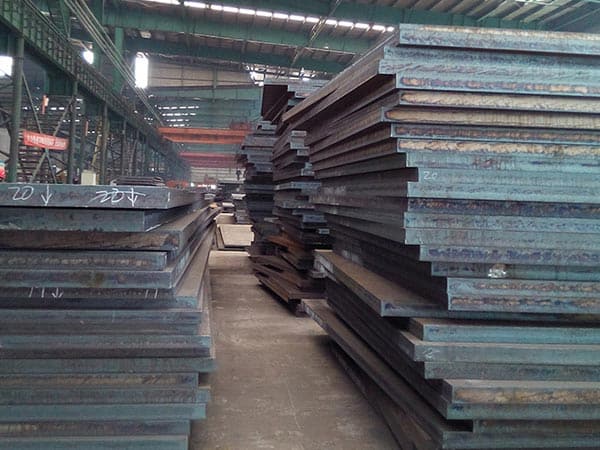
The Technical Premium of EN 10149-2 S315MC Steel
Understanding the pricing structure of EN 10149-2 S315MC requires a deep dive into the metallurgical sophistication that separates it from standard structural steels like S235JR or s355jr. While standard grades focus on basic load-bearing capabilities, S315MC is a thermomechanically rolled, high-yield strength steel specifically engineered for cold forming. The 'MC' suffix indicates its production via a Thermomechanically Controlled Process (TMCP), a method that significantly increases production costs compared to traditional hot rolling. This process involves precise temperature control and specific deformation schedules during the rolling phase, which refines the grain structure to a degree unattainable through simple heat treatment. The result is a material that offers an exceptional balance of strength, ductility, and toughness, justifying its higher market valuation through enhanced performance and manufacturing efficiency.
The Complexity of Thermomechanical Rolling (TMCP)
The primary driver of the cost difference is the TMCP technology itself. Unlike conventional hot rolling where the steel is rolled at high temperatures and allowed to cool naturally, TMCP demands a rigorous cooling regime. This requires specialized rolling mills equipped with advanced cooling systems and sophisticated automation to monitor the temperature at every stage of the reduction process. The energy consumption is higher, and the production speed is often slower to ensure the desired microstructural transformation occurs. This precision ensures that the steel achieves a fine-grained ferrite-pearlite or even acicular ferrite structure, which provides high yield strength without the need for high carbon content. By keeping carbon levels low, the steel maintains excellent weldability and formability, but the equipment overhead and energy intensity of this process are reflected in the final invoice.
Micro-Alloying Elements and Raw Material Costs
S315MC relies on the strategic addition of micro-alloying elements such as Niobium (Nb), Vanadium (V), and Titanium (Ti). These elements are significantly more expensive than the iron and carbon found in basic steels. Even in small quantities (often less than 0.15% combined), these alloys play a critical role in grain refinement and precipitation hardening. Niobium, for instance, raises the recrystallization temperature, allowing for effective grain refinement during the rolling process. Titanium acts as a nitrogen scavenger, preventing the formation of harmful nitrides that could embrittle the steel. The procurement of these high-purity alloys and the precision required to dose them into the melt add a layer of cost that standard structural steels do not carry. Furthermore, S315MC requires extremely low levels of impurities like Sulfur and Phosphorus to ensure superior cold-forming properties, necessitating more intensive refining processes in the basic oxygen furnace or electric arc furnace.
| Chemical Element | S315MC Max Content (%) | Impact on Performance and Cost |
|---|---|---|
| Carbon (C) | 0.12 | Ensures excellent weldability and cold forming. |
| Manganese (Mn) | 1.30 | Increases strength and hardness; requires careful balancing. |
| Silicon (Si) | 0.50 | Deoxidizer that improves yield strength. |
| Niobium (Nb) | 0.09 | Key for grain refinement; high raw material cost. |
| Titanium (Ti) | 0.15 | Prevents grain growth; adds to alloy surcharge. |
| Vanadium (V) | 0.20 | Enhances precipitation hardening; expensive additive. |
Mechanical Superiority and Weight Reduction Logic
The price of S315MC is often offset by the 'lightweighting' effect it enables in engineering design. With a minimum yield strength of 315 MPa, it allows designers to use thinner sections compared to S235JR without sacrificing structural integrity. In the automotive and heavy machinery sectors, reducing the thickness of a component from 6mm to 4mm leads to a significant reduction in the overall weight of the vehicle or structure. This weight reduction translates into lower fuel consumption, higher payload capacity, and reduced transportation costs. When calculated on a 'per part' basis rather than a 'per ton' basis, S315MC often proves to be more economical. The higher price per kilogram is a trade-off for the ability to use fewer kilograms per unit, a fundamental principle in modern sustainable engineering.
Superior Processing Performance: Welding and Cold Forming
One of the hidden values of S315MC is its behavior during secondary manufacturing processes. Its low Carbon Equivalent (CEV) makes it exceptionally easy to weld using standard methods like MIG, TIG, or submerged arc welding. Unlike higher carbon steels, it does not require expensive pre-heating or post-weld heat treatments (PWHT) to prevent cold cracking in the heat-affected zone (HAZ). This saves significant labor time and energy costs in the fabrication shop. Additionally, its high ductility (elongation values typically exceeding 20%) allows for tight bending radii without the risk of cracking or springback. Manufacturers of complex chassis components, crane arms, and structural profiles find that the reduced scrap rate and faster processing times associated with S315MC more than compensate for the initial material premium.
Environmental Adaptability and Fatigue Resistance
The fine-grained structure produced by the EN 10149-2 standard gives S315MC superior resistance to fatigue and low-temperature brittleness. In environments where equipment is subjected to cyclic loading or extreme cold, such as in construction machinery or transport trailers, S315MC maintains its toughness where cheaper steels might fail. This durability extends the service life of the end product and reduces maintenance costs. The ability of the material to absorb energy during impact is also a critical safety feature in automotive crash structures. The rigorous testing required to certify these properties—including Charpy V-notch impact tests at sub-zero temperatures—adds to the quality assurance costs but provides the reliability demanded by high-stakes industries.
Market Dynamics and Supply Chain Specialization
Finally, the supply side of the equation influences the price. S315MC is not a 'commodity' steel produced by every small-scale mill. It requires sophisticated metallurgical control and large-scale TMCP rolling stands that only Tier-1 steel producers typically possess. This specialization limits the number of global suppliers, creating a market where quality and consistency are prioritized over rock-bottom pricing. Furthermore, S315MC is often supplied with superior surface finishes and tighter dimensional tolerances (according to EN 10051), which reduces the need for additional surface preparation or machining. The combination of high-tech production, expensive alloying, and specialized supply chains creates a price point that reflects the material's status as a high-performance engineering solution.
Leave a message