
What are the effects of phosphorus in EN10111 DD1 steel for cold forming automobile
A deep dive into how phosphorus content influences the ductility, strength, and weldability of EN10111 DD1 steel specifically for automotive cold forming processes.
The Chemical DNA of EN10111 DD1 Steel
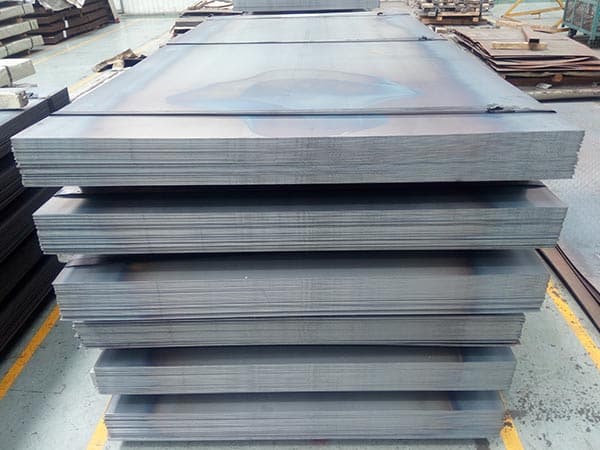
EN10111 DD1 is a standard grade of hot-rolled low-carbon steel designed specifically for cold forming and drawing. In the automotive industry, where complex geometries and structural integrity are paramount, understanding the trace elements within the steel matrix is crucial. Among these elements, phosphorus (P) plays a dual role. While often categorized as an impurity, its presence is strictly controlled under the EN 10111 specification to ensure the material maintains its characteristic formability and toughness.
DD1 steel is typically utilized for components that do not require deep drawing but need reliable bending and shaping capabilities. The chemical composition of DD1 is characterized by low carbon and manganese levels to maximize softness. However, phosphorus, even in small percentages, significantly alters the lattice structure of the iron, impacting how the steel behaves under the high-stress environment of an automotive stamping press.
Phosphorus as a Solid Solution Strengthener
Phosphorus is one of the most potent solid solution strengtheners available in ferritic steel. When phosphorus atoms dissolve into the iron matrix, they create localized strain fields that impede the movement of dislocations. This results in an increase in yield strength and tensile strength. For automotive manufacturers, this might seem beneficial as it allows for thinner gauges of steel to meet structural requirements.
However, in the context of DD1 steel, which is prized for its high elongation, the strengthening effect of phosphorus comes at a cost. Every 0.01% increase in phosphorus can lead to a measurable decrease in ductility. In automotive cold forming, where the material must flow into dies without fracturing, excessive phosphorus can lead to premature necking or cracking during the stamping of brackets, chassis components, or seat frames.
| Element/Property | Standard DD1 Limits (EN 10111) | Impact of High Phosphorus |
|---|---|---|
| Carbon (C) | ≤ 0.12% | N/A |
| Manganese (Mn) | ≤ 0.60% | Synergistic hardening |
| Phosphorus (P) | ≤ 0.045% | Reduced ductility, increased hardness |
| Sulfur (S) | ≤ 0.045% | Increased risk of hot shortness |
| Yield Strength (MPa) | 170 - 340 | Shifts toward the higher end |
The Risk of Cold Shortness and Embrittlement
The most critical detrimental effect of phosphorus in DD1 steel is cold shortness. This phenomenon refers to the material becoming brittle at lower temperatures. Phosphorus tends to segregate at the grain boundaries during the cooling process of hot-rolled coils. This segregation weakens the intergranular bonds, making the steel susceptible to brittle fracture rather than ductile deformation.
In automotive applications, vehicles are subjected to various climatic conditions. If the phosphorus content in the DD1 steel components is too high, the part may fail catastrophically under impact or vibration in cold weather. This is particularly dangerous for safety-critical components. For cold forming processes, cold shortness means that if the workshop temperature drops or the material is stored in unheated environments, the "springback" behavior becomes unpredictable, and the risk of micro-cracking during sharp bends increases significantly.
Impact on Cold Formability and Stamping Performance
Cold forming requires the steel to have a high n-value (strain hardening exponent) and r-value (plastic strain ratio). Phosphorus generally lowers the n-value. When DD1 steel with elevated phosphorus is put through a continuous stamping line, the material work-hardens too quickly. This leads to several manufacturing challenges:
- Increased Tool Wear: Harder material exerts more pressure on the dies, necessitating more frequent maintenance and increasing production costs.
- Edge Cracking: During shearing or blanking, high phosphorus levels can cause the edges to become brittle, leading to cracks that propagate during subsequent forming steps.
- Surface Defects: Phosphorus segregation can lead to "ghost lines" or uneven surface textures after drawing, which may interfere with painting or coating processes in automotive finishing.
Weldability and Joinability in Automotive Assembly
Automotive manufacturing relies heavily on resistance spot welding and MIG/MAG welding. Phosphorus is a known enemy of high-quality welds. It significantly increases the risk of solidification cracking (hot cracking) in the weld pool. As the weld metal cools, phosphorus stays liquid longer than the surrounding iron, forming low-melting-point eutectics that settle at the grain boundaries of the weld.
Under the thermal stresses of cooling, these liquid films pull apart, creating microscopic cracks. In DD1 steel, keeping phosphorus levels well below the 0.045% limit is essential for ensuring that the welded joints of a car's sub-frame or inner panels can withstand the fatigue cycles of a vehicle's lifespan. Furthermore, phosphorus can increase the hardness of the Heat Affected Zone (HAZ), making the joint more prone to hydrogen-induced cracking.
Corrosion Resistance and Environmental Adaptation
Interestingly, phosphorus is not entirely negative. In certain weathering steels, phosphorus is intentionally added to improve atmospheric corrosion resistance. It helps form a dense, protective patina layer on the surface. For EN10111 DD1, which is often used for parts that might be hidden or semi-exposed, a controlled amount of phosphorus can slightly enhance the steel's resistance to rusting compared to ultra-pure iron.
However, this benefit is usually secondary to the mechanical requirements. In modern automotive production, parts made from DD1 are typically galvanized or E-coated. Therefore, the "natural" corrosion resistance provided by phosphorus is less important than the chemical compatibility of the steel surface with zinc coatings. High phosphorus levels can sometimes interfere with the formation of a uniform zinc layer during hot-dip galvanizing, leading to a brittle intermetallic layer that may flake off during assembly.
Metallurgical Control and Quality Assurance
To balance the benefits of strength with the necessity of formability, steel mills employ advanced ladle metallurgy to keep phosphorus within tight tolerances. For high-end automotive DD1 applications, manufacturers often request "restricted" phosphorus levels, significantly lower than the standard 0.045% limit, to ensure maximum consistency across different batches.
During the hot rolling of DD1, the cooling rate is carefully managed to minimize phosphorus segregation. A uniform distribution of phosphorus ensures that the mechanical properties are isotropic, meaning the steel behaves the same way whether it is being bent along or across the rolling direction. This isotropy is vital for automated automotive lines where precision and repeatability are the keys to efficiency.
Technical Summary of Phosphorus Influence
The influence of phosphorus on EN10111 DD1 steel is a balancing act of metallurgical engineering. While it provides a cost-effective way to boost yield strength, its tendency to cause embrittlement and welding defects makes it a critical parameter for quality control. Automotive engineers must account for these effects during the design phase, ensuring that the chosen DD1 variant has a chemical profile optimized for the specific complexity of the part being manufactured. By maintaining low phosphorus levels, the industry ensures that DD1 remains a versatile, reliable, and high-performing material for the rigorous demands of vehicle production.
Leave a message