
How long will S315MC high yield strength alloy quality steel last not rust outside?
Detailed analysis of S315MC steel outdoor longevity, corrosion resistance factors, mechanical properties, and protective measures for industrial applications.
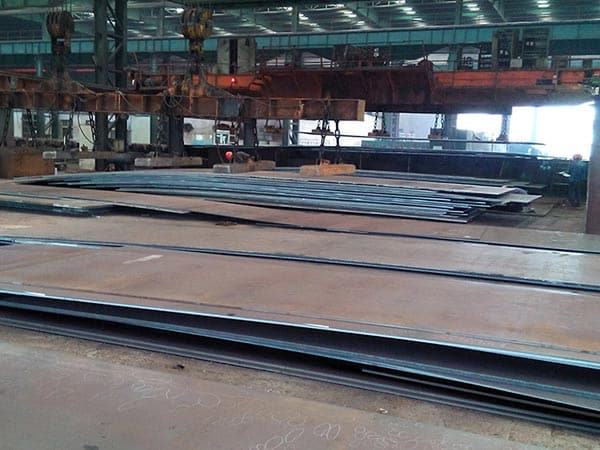
Understanding S315MC Steel and Its Atmospheric Behavior
S315MC is a high-yield strength, thermomechanically rolled steel specifically designed for cold forming. Governed by the EN 10149-2 standard, this material is prized for its balance of weight reduction and structural integrity. However, when the question arises regarding how long it will last outdoors without rusting, we must look beyond simple timeframes and examine the electrochemical interactions between its alloy components and the environment.
Unlike stainless steels which contain high chromium levels to form a passive protective layer, S315MC is a low-carbon, micro-alloyed steel. Its resistance to oxidation is inherently limited by its chemical composition. In an unprotected outdoor state, the onset of visible iron oxide (rust) can occur within hours or days if moisture and oxygen are present. The longevity of the structural component itself—before its mechanical properties are compromised—is a much more complex calculation involving corrosion rates measured in micrometers per year (μm/a).
Chemical Composition and Its Influence on Oxidation
The chemical makeup of S315MC is optimized for strength and weldability rather than corrosion resistance. To understand its outdoor life, we must analyze the elements involved:
| Element | Max Percentage (%) | Impact on Durability |
|---|---|---|
| Carbon (C) | 0.12 | Low carbon ensures good weldability but provides no protection against rust. |
| Manganese (Mn) | 1.30 | Enhances strength; slightly improves resistance to atmospheric corrosion compared to pure iron. |
| Silicon (Si) | 0.50 | Acts as a deoxidizer; can influence the adherence of protective coatings. |
| Niobium (Nb) / Titanium (Ti) | 0.09 / 0.15 | Refines grain structure, maintaining high yield strength even as surface thickness reduces. |
The micro-alloying elements like Niobium and Titanium are crucial. While they do not stop rust, they ensure that the steel maintains its 315 MPa minimum yield strength throughout its cross-section. This means that even if the surface begins to oxidize, the internal structural integrity remains stable longer than lower-grade steels with coarser grain structures.
Environmental Categories and Estimated Corrosion Rates
The lifespan of S315MC outdoors is dictated by the ISO 9223 classification of atmospheric corrosivity. Without surface treatment, the steel will follow these approximate degradation paths:
- C1 (Very Low): Indoor heated buildings. S315MC can last decades with only minor surface dulling.
- C2 (Low): Rural areas with low pollution. Surface rust appears quickly, but structural loss is slow (0.1 to 1.1 μm/year).
- C3 (Medium): Urban and industrial atmospheres. Corrosion rates jump to 12-25 μm/year. Without protection, S315MC might show significant pitting within 5-10 years.
- C4 (High): Industrial areas and coastal regions with moderate salinity. The lifespan of thin-gauge S315MC parts can be reduced to less than 5 years if structural safety margins are tight.
- C5 (Very High): Marine environments with high salt spray. Unprotected S315MC will suffer rapid exfoliation and could fail structurally within 1-3 years depending on thickness.
Mechanical Properties Under Environmental Stress
The primary risk for S315MC in outdoor settings is not just the aesthetic change to a reddish-brown color, but stress corrosion cracking and the reduction of the effective load-bearing area. S315MC offers a tensile strength of 390-510 MPa. As rust consumes the surface, the "effective thickness" of the part decreases. For a 3mm thick bracket made of S315MC, a corrosion rate of 50 μm per year means a 10% loss in thickness over 6 years, which directly translates to a 10% loss in load-bearing capacity.
Furthermore, the high yield strength of S315MC is often utilized in designs with thinner sections to save weight (lightweighting). This makes the material more sensitive to rust than thicker, lower-grade mild steels. A 2mm S315MC sheet will reach a critical failure point much faster than a 6mm S235JR plate, even if the S315MC is technically "stronger" initially.
Processing Performance and Surface Vulnerability
S315MC is excellent for cold bending and folding. However, the process of cold forming introduces residual stresses into the material. These stress points often become anodic sites where corrosion initiates preferentially. When S315MC is bent into chassis components or structural frames, the outer radius of the bend experiences tension, which can micro-crack the mill scale (the bluish-black oxide layer from production). These cracks allow moisture to penetrate directly to the substrate, accelerating localized rusting.
The surface finish of S315MC is typically "as rolled" or "pickled and oiled." Pickled and oiled (O) surfaces provide temporary protection during transport and storage but offer zero long-term outdoor resistance. Once the oil film evaporates or is washed away by rain, the clean, reactive steel surface is fully exposed to atmospheric oxygen.
Extending the Outdoor Life of S315MC
To ensure S315MC lasts for the intended service life of a vehicle or machine (often 15-20 years), surface protection is mandatory. The following methods are industry standards for this specific grade:
- Hot-Dip Galvanizing: Provides sacrificial protection. Even if the coating is scratched, the zinc corrodes instead of the S315MC. This can extend outdoor life to 30+ years in C3 environments.
- Cataphoretic Painting (KTL/E-Coat): Commonly used in the automotive industry for S315MC frames. It provides a uniform barrier even in recessed areas and sharp edges.
- Powder Coating: Offers excellent UV resistance and physical durability, though it requires a proper zinc-rich primer to prevent "rust creep" if the coating is chipped.
- Weathering Steel Alternatives: If no coating is desired, designers might look toward S355J0WP, though this changes the mechanical profile compared to S315MC.
Industry Applications and Real-World Durability
In the heavy machinery and transportation sectors, S315MC is frequently used for truck chassis, crane arms, and agricultural equipment. In these applications, the steel is almost always part of a multi-layer coating system. For example, an agricultural spreader made of S315MC, if properly grit-blasted and powder-coated, can withstand outdoor exposure to fertilizers and rain for over 15 years. Conversely, the same part left as bare steel in a farmyard would likely seize or fail at the weld joints within 24 months due to the corrosive nature of organic nitrates combined with humidity.
The durability of S315MC is also dependent on design geometry. Parts designed with "water traps"—areas where rain or condensation can pool—will rust significantly faster. Expert engineering requires ensuring that S315MC components have adequate drainage holes and that weld seams are continuous to prevent crevice corrosion, where stagnant water can accelerate the oxidation process by ten-fold.
Technical Summary for Engineers
When specifying S315MC for outdoor use, the focus should not be on "if" it will rust, but on the rate of metal loss relative to the safety factor of the design. S315MC provides the high yield strength necessary for modern, efficient structures, but it lacks the alloying elements (like high Copper or Chromium) to resist the atmosphere on its own. By calculating the expected environmental corrosivity and applying a robust barrier or sacrificial coating, the exceptional mechanical properties of S315MC can be preserved for the entire lifecycle of the equipment.
Leave a message