
What is the difference between S355MC hot-rolled steel and A36 metals?
A detailed technical comparison between S355MC hot-rolled steel and ASTM A36. Explore differences in chemical composition, mechanical properties, thermomechanical processing, and industrial applications.
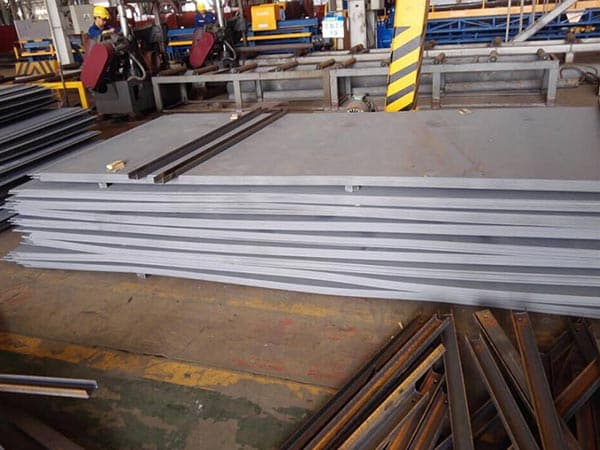
Understanding the Fundamental Standards: S355MC vs. ASTM A36
In the global steel trade, selecting the appropriate material grade requires a deep understanding of the standards governing their production. S355MC and ASTM A36 are two of the most frequently utilized steel grades, yet they originate from different engineering philosophies and geographical standards. S355MC is a high-strength, cold-forming steel governed by the European standard EN 10149-2. In contrast, ASTM A36 is a classic structural carbon steel defined by the American Society for Testing and Materials. While both are hot-rolled, their alloying strategies and intended performance characteristics diverge significantly.
Chemical Composition and Metallurgical Design
The primary difference between S355MC and A36 lies in their chemical makeup. ASTM A36 is a traditional carbon-manganese steel. It relies primarily on carbon and manganese to achieve its strength. The carbon content in A36 can be as high as 0.25% to 0.29% depending on the thickness, which provides decent strength but can limit ductility and weldability if not managed carefully.
S355MC, however, belongs to the High-Strength Low-Alloy (HSLA) family. It is designed with a much lower carbon content, typically below 0.12%. To compensate for the low carbon and actually exceed the strength of A36, S355MC utilizes micro-alloying elements such as Niobium (Nb), Titanium (Ti), and Vanadium (V). These elements promote grain refinement during the rolling process, resulting in a much finer microstructure that enhances both strength and toughness simultaneously.
| Element | S355MC (EN 10149-2) | ASTM A36 (Standard Plate) |
|---|---|---|
| Carbon (Max %) | 0.12 | 0.25 - 0.29 |
| Manganese (%) | 1.50 | 0.80 - 1.20 |
| Silicon (Max %) | 0.50 | 0.40 |
| Micro-alloys (Nb, Ti, V) | Present (Required) | Not Specified |
Mechanical Properties: Yield and Tensile Strength
The "355" in S355MC refers to its minimum yield strength of 355 Megapascals (MPa). The "36" in A36 refers to its yield strength in kilopounds per square inch (ksi), which translates to approximately 250 MPa. This represents a massive gap in load-bearing capacity. S355MC is roughly 40% stronger than A36 in terms of yield strength. This allows engineers to use thinner sections of S355MC to support the same load, leading to significant weight reduction in transport and machinery applications.
Tensile strength also differs. S355MC typically ranges from 430 to 550 MPa, while A36 ranges from 400 to 550 MPa. While the upper ends are similar, the higher yield-to-tensile ratio of S355MC makes it a more efficient material for structural components where deformation must be minimized under high stress.
The Impact of the Thermomechanical Rolling Process (MC)
The "MC" suffix in S355MC stands for Thermomechanically Rolled. This is a sophisticated manufacturing process where the final deformation is carried out within a specific temperature range that leads to material properties that cannot be achieved by heat treatment alone. This process ensures a fine-grained structure, which is the secret behind S355MC's superior combination of high strength and excellent cold-forming properties.
ASTM A36 is typically produced via conventional hot rolling. While effective for general construction, it does not benefit from the same level of grain refinement as thermomechanically rolled steels. Consequently, A36 is more susceptible to brittle fracture at lower temperatures compared to S355MC, which often has specified impact energy requirements at sub-zero temperatures.
Cold Forming and Fabrication Versatility
S355MC is specifically engineered for cold forming. It can be bent, folded, and pressed into complex shapes without cracking. This makes it a favorite in the automotive industry for chassis parts, cross members, and bracketry. The low carbon content and micro-alloyed structure provide a high degree of ductility relative to its strength.
ASTM A36, while weldable and capable of being formed, is generally stiffer and more prone to surface cracking if bent to tight radii. It is better suited for heavy structural shapes like I-beams, channels, and thick plates used in bridges and buildings where complex forming is not the primary requirement.
Welding Metallurgy and Carbon Equivalent
Welding is a critical consideration in steel selection. The weldability of steel is often determined by its Carbon Equivalent Value (CEV). Due to its ultra-low carbon content, S355MC has an exceptionally low CEV, making it very easy to weld without the need for extensive preheating, even in thicker sections. The risk of hydrogen-induced cracking is minimal.
ASTM A36 is also considered highly weldable, but because its carbon content can be higher, thicker sections may require more attention to cooling rates and preheating to ensure a sound weld joint. In high-speed robotic welding environments, the consistency of S355MC's chemistry often provides more predictable results than the broader tolerances allowed for A36.
Environmental Adaptability and Durability
In terms of environmental performance, neither steel is inherently "stainless" or corrosion-resistant. However, the fine-grained structure of S355MC provides a slightly better substrate for modern coating systems. Its surface finish, resulting from the thermomechanical process, is often cleaner and more uniform than the heavier mill scale found on standard A36 plates.
For applications in cold climates, S355MC is the clear winner. The micro-alloying elements improve the transition temperature, ensuring the steel remains tough rather than becoming brittle in winter conditions. A36 does not have a mandatory Charpy V-notch impact test unless specifically requested as a supplemental requirement, making it riskier for low-temperature structural applications.
Expanding Application Horizons
The choice between these two metals often comes down to the specific industry. S355MC is the backbone of the transportation and lifting industry. You will find it in truck frames, crane arms, and agricultural machinery where weight savings are directly linked to fuel efficiency and payload capacity.
ASTM A36 remains the king of civil engineering and general fabrication. It is the go-to material for base plates, gussets, simple structural supports, and oil and gas infrastructure where the extreme strength-to-weight ratio of HSLA steel is less critical than material availability and initial cost per ton.
- S355MC: Best for weight-sensitive, high-stress, and complex-formed parts.
- ASTM A36: Best for general structural use, heavy plates, and cost-driven projects.
- Formability: S355MC is superior for bending and pressing.
- Strength: S355MC offers 355 MPa yield vs. A36's 250 MPa.
When transitioning from A36 to S355MC, designers can often reduce the thickness of a part by 20-30% while maintaining the same safety factor. This "lightweighting" is a key trend in modern manufacturing, pushing many industries toward the European S355MC standard even in regions where A36 was traditionally dominant.
Leave a message