
How to calculate the weight of automotive industry used steel S355MC
Discover the precise methods for calculating S355MC steel weight in automotive applications. This guide explores mechanical properties, chemical composition, and processing advantages of EN 10149-2 S355MC.
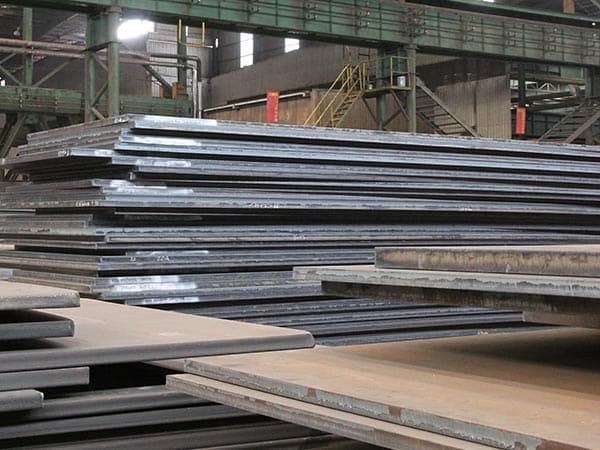
The Fundamental Physics of S355MC Weight Calculation
Precision in weight calculation is a cornerstone of automotive engineering, where every gram impacts fuel efficiency, emissions, and structural integrity. S355MC, a high-yield strength steel for cold forming, is governed by the EN 10149-2 standard. To calculate the weight of S355MC steel, one must first recognize its theoretical density. Like most carbon steels, S355MC has a density of 7.85 g/cm³ (or 7850 kg/m³). This value is the industry standard used for commercial transactions and engineering simulations.
The basic formula for a flat sheet or plate is: Weight (kg) = Thickness (mm) × Width (m) × Length (m) × 7.85. For example, a sheet of S355MC with a thickness of 4mm, a width of 1.5 meters, and a length of 3 meters would be calculated as: 4 × 1.5 × 3 × 7.85 = 141.3 kg. In the context of automotive coils, the calculation often involves the mean diameter and the number of wraps, but the volumetric mass remains the constant anchor. For complex stamped parts, engineers utilize CAD software to integrate this density into the 3D model, allowing for instantaneous mass estimation of intricate geometries like chassis cross-members or suspension arms.
Chemical Composition and Its Influence on Material Density
While the density of 7.85 is standard, the specific alloying elements of S355MC define its performance characteristics without significantly altering its weight. S355MC is a thermomechanically rolled steel, meaning its grain structure is refined through controlled temperature and deformation. The "MC" designation indicates it is a thermomechanically rolled steel (M) suitable for cold forming (C).
| Element | Maximum Content (%) | Role in Automotive Applications |
|---|---|---|
| Carbon (C) | 0.12 | Ensures weldability while maintaining strength. |
| Manganese (Mn) | 1.50 | Increases hardness and tensile strength. |
| Silicon (Si) | 0.50 | Acts as a deoxidizer and strengthens the ferrite. |
| Niobium (Nb) | 0.09 | Provides grain refinement for high yield strength. |
| Titanium (Ti) | 0.15 | Prevents grain growth during the rolling process. |
The low carbon content is particularly vital for the automotive industry. It allows for superior weldability, which is essential for robotic assembly lines. The addition of micro-alloying elements like Niobium and Titanium allows S355MC to achieve a yield strength of 355 MPa without the heavy weight penalty of traditional thicker carbon steels. This "strength-to-weight" optimization is why S355MC has become a staple in modern vehicle architectures.
Mechanical Properties: Strength Without Excess Mass
The primary reason for selecting S355MC over standard S235 or s355jr grades is its mechanical efficiency. In automotive design, the goal is often to reduce thickness (down-gauging) while maintaining or increasing load-bearing capacity. S355MC provides a guaranteed minimum yield strength of 355 MPa, which allows designers to use thinner sections than would be possible with lower-grade steels.
Consider the mechanical specifications of S355MC according to EN 10149-2:
- Minimum Yield Strength: 355 MPa
- Tensile Strength: 430 to 550 MPa
- Minimum Elongation (A80mm): 19% to 23% (depending on thickness)
- Bending Radius: 0.5t to 1.5t (allowing for tight folds without cracking)
These properties ensure that when calculating the weight of a component, the engineer can account for the material's ability to withstand high stress. The high elongation percentage indicates that S355MC can undergo significant cold forming—such as deep drawing or complex bending—without losing its structural integrity. This versatility reduces the need for additional reinforcement brackets, further lowering the total assembly weight.
Process Performance and Cold Forming Capabilities
Automotive manufacturing relies heavily on the cold forming performance of steel. S355MC is specifically engineered to excel in these environments. Because it is thermomechanically rolled, it possesses a very fine-grained microstructure. This microstructural refinement translates to excellent edge ductility, which is critical when parts are punched or laser-cut and subsequently bent.
When calculating the weight of a finished part, one must also consider the scrap rate during the stamping process. S355MC's consistent mechanical properties across the width and length of the coil mean that nesting of parts can be more aggressive, reducing waste. The material's predictable springback behavior during bending ensures that the final dimensions are accurate, which is crucial for the assembly of large structures like truck frames or longitudinal beams.
Furthermore, the surface quality of S355MC is typically superior to hot-rolled structural steels. It is often supplied in a pickled and oiled condition, which provides a clean surface for welding and subsequent coating. This clean surface ensures that the weight of the applied paint or anti-corrosion coating is uniform, preventing localized weight imbalances or premature failure due to poor adhesion.
Environmental Adaptability and Lifecycle Considerations
The automotive industry is under constant pressure to improve the environmental footprint of its vehicles. S355MC contributes to this goal through its recyclability and its role in lightweighting. By enabling the use of thinner steel without sacrificing safety, S355MC directly reduces the total mass of the vehicle, which in turn lowers fuel consumption and CO2 emissions during the vehicle's operational life.
In terms of environmental adaptability, S355MC performs well in a variety of climates when properly treated. While it is not a corrosion-resistant steel like stainless steel, its chemistry is highly compatible with modern galvanizing and E-coating processes. When calculating the weight of a chassis component intended for use in harsh, corrosive environments (such as coastal regions or areas with heavy road salt), engineers must add the weight of the protective zinc layer to the base steel weight. A typical hot-dip galvanized coating might add 300-600 grams per square meter, a factor that must be included in the final mass budget.
Comparative Analysis: S355MC vs. S355JR
A common point of confusion is the difference between S355MC and S355JR. While both have a yield strength of 355 MPa, their applications and weight-saving potentials differ significantly. S355JR is a standard structural steel (EN 10025-2), while S355MC is a thermomechanically rolled steel for cold forming (EN 10149-2).
S355MC has a much lower carbon equivalent (CEV), making it significantly easier to weld and form into complex shapes. In automotive contexts, S355JR is often too brittle for tight bends and lacks the surface consistency required for high-speed stamping. By choosing S355MC, manufacturers can achieve more complex geometries, which often allows for the consolidation of multiple parts into a single stamped component. This part consolidation is a major driver of weight reduction in modern vehicle design, as it eliminates the weight of fasteners and weld seams.
Practical Steps for Weight Optimization in Vehicle Design
To maximize the benefits of S355MC, engineers follow a systematic approach to weight calculation and material selection:
- Load Path Analysis: Identifying where the highest stresses occur in the chassis to determine the minimum necessary thickness of S355MC.
- Gauge Optimization: Using finite element analysis (FEA) to reduce the thickness of the steel in non-critical areas, leveraging S355MC's high yield strength.
- Tolerancing: Specifying tight thickness tolerances from the steel mill to ensure that the actual weight of the delivered coils does not exceed the calculated theoretical weight.
- Surface Treatment Selection: Choosing thin-film coatings that provide maximum protection with minimum added mass.
This technical rigor ensures that the final vehicle meets performance targets while remaining within weight limits. S355MC's predictable behavior under stress and during manufacturing makes it an ideal candidate for these optimization strategies.
Future Trends in Automotive Steel Utilization
As the industry shifts toward electric vehicles (EVs), the role of high-strength steels like S355MC is evolving. The heavy weight of battery packs necessitates even more aggressive weight reduction in the rest of the vehicle structure to maintain range. S355MC is increasingly used in battery enclosures and protective frames where high energy absorption is required during a collision.
The ability of S355MC to be formed into complex, energy-absorbing shapes makes it a vital component of the safety cage. When calculating the weight of these new EV components, the focus remains on the 7.85 density constant, but the application of the material is becoming more sophisticated. Advanced high-strength steels (AHSS) are often used in conjunction with S355MC to create multi-material solutions that provide the best balance of weight, cost, and performance.
The continued relevance of S355MC lies in its cost-effectiveness compared to aluminum or carbon fiber. For mass-market vehicles, S355MC provides a path to lightweighting that does not prohibitively increase the retail price. Its ease of processing and global availability ensure that it will remain a cornerstone of automotive material strategy for the foreseeable future.
Strategic Implementation of S355MC in Heavy Transport
Beyond passenger cars, S355MC is heavily utilized in the manufacturing of trailers, trucks, and heavy machinery. In these industries, the weight of the vehicle directly impacts the payload capacity. Every kilogram saved in the chassis of a trailer is an extra kilogram of cargo that can be transported. S355MC is the preferred choice for longitudinal beams and cross-members in truck frames due to its high fatigue strength and excellent cold-forming properties.
The weight calculation for these large-scale components follows the same volumetric principles but requires even greater attention to the rolling tolerances of the steel. Because the sections are so long, a minor deviation in thickness can result in a weight difference of several dozen kilograms over the length of a trailer. Manufacturers often work closely with steel mills to procure S355MC with restricted thickness tolerances to ensure that the final product meets the strict weight requirements of the transport industry.
The durability of S355MC under cyclic loading (fatigue) is also a critical factor. When calculating the lifecycle weight and cost, the longevity of the material reduces the need for replacement parts, further contributing to the overall efficiency of the transport system. This technical synergy between material properties and engineering application is what makes S355MC an indispensable asset in the pursuit of more efficient and sustainable transportation solutions.
Leave a message