
Growth of S355MC hot rolled automotive steel sheet exported to the Middle East
An in-depth analysis of the rising demand for S355MC hot rolled automotive steel in the Middle East, covering its mechanical properties, processing advantages, and environmental suitability.
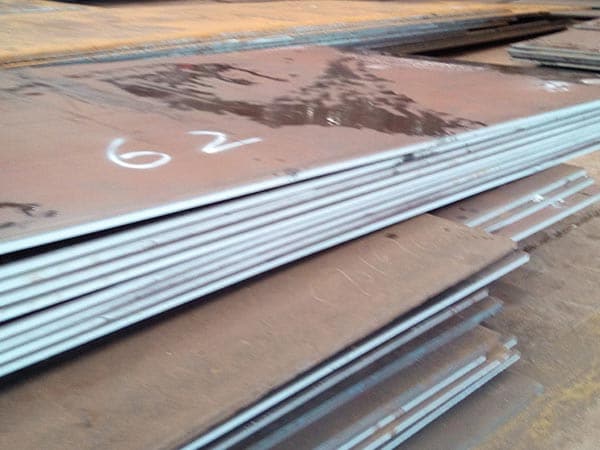
The Strategic Shift: Why S355MC is Dominating the Middle Eastern Automotive Supply Chain
The Middle Eastern automotive landscape is no longer just a consumer market for imported luxury vehicles; it is rapidly evolving into a manufacturing and assembly hub. Driven by initiatives like Saudi Arabia's Vision 2030 and the UAE's industrial diversification strategies, the demand for high-performance structural materials has surged. Among these, S355MC hot rolled automotive steel sheet has emerged as a cornerstone material. This grade, defined under the EN 10149-2 standard, offers a unique balance of high yield strength and exceptional cold formability, making it indispensable for modern vehicle architectures that prioritize weight reduction without compromising safety.
Exporting S355MC to the Middle East involves more than just logistics; it requires a deep understanding of the region's technical requirements and environmental challenges. The growth in export volumes is a direct reflection of the material's ability to meet the rigorous demands of heavy-duty vehicle manufacturing, trailer construction, and specialized off-road vehicle modifications common in the GCC (Gulf Cooperation Council) countries.
Technical Profile: Decoding the Superiority of S355MC
S355MC is a thermomechanically rolled steel designed for cold forming. The "S" stands for structural steel, "355" denotes the minimum yield strength in Megapascals (MPa), and "MC" indicates that the steel is thermomechanically rolled (M) and suitable for cold forming (C). Unlike traditional hot rolled steels, the thermomechanical rolling process (TMCP) allows for a fine-grained microstructure, which is the secret behind its superior mechanical properties.
The chemical composition of S355MC is meticulously controlled to ensure weldability and formability. By keeping carbon content low and utilizing micro-alloying elements like Niobium (Nb), Vanadium (V), and Titanium (Ti), manufacturers can achieve high strength without the brittleness associated with high-carbon steels. This is particularly crucial for Middle Eastern manufacturers who require materials that can withstand both the intense heat of the day and the rapid cooling of desert nights.
| Element | C (max) | Mn (max) | Si (max) | P (max) | S (max) | Al (min) | Nb (max) |
|---|---|---|---|---|---|---|---|
| Percentage (%) | 0.12 | 1.50 | 0.50 | 0.025 | 0.015 | 0.015 | 0.09 |
Mechanical Prowess and Cold Forming Capabilities
One of the primary reasons for the growth of S355MC exports to the Middle East is its versatility in the workshop. Automotive structural components, such as chassis frames, cross members, and suspension parts, often require complex bending and folding. S355MC excels in these applications because its fine-grained structure prevents cracking during tight-radius bending.
The mechanical properties of S355MC are standardized to provide reliability for engineers. The minimum yield strength of 355 MPa provides a significant upgrade over standard S235 or S275 grades, allowing for thinner gauges to be used while maintaining the same load-bearing capacity. This "down-gauging" is essential for reducing vehicle weight, which in turn improves fuel efficiency—a growing concern even in oil-rich regions as they move toward sustainable transport solutions.
| Property | Yield Strength (MPa) | Tensile Strength (MPa) | Elongation (%) |
|---|---|---|---|
| Value (t < 3mm) | min 355 | 430 - 550 | min 19 |
| Value (t ≥ 3mm) | min 355 | 430 - 550 | min 23 |
Environmental Adaptability: Thriving in the Middle Eastern Climate
The Middle East presents a unique set of environmental challenges for steel. High ambient temperatures, intense UV radiation, and the presence of abrasive sand can accelerate wear and corrosion. S355MC, while not a corrosion-resistant grade like stainless steel, provides an excellent substrate for advanced coating systems. Its clean surface finish, a result of controlled hot rolling, ensures superior adhesion for galvanizing or E-coating processes.
Furthermore, the structural integrity of S355MC remains stable under high-temperature fluctuations. In many parts of the Middle East, surface temperatures of vehicles can exceed 70°C in the sun. The low carbon equivalent of S355MC ensures that the material does not undergo significant thermal aging or embrittlement, maintaining its impact toughness over long service lives. This makes it the preferred choice for heavy-duty truck frames that traverse the vast desert highways connecting cities like Dubai, Riyadh, and Doha.
Application Industry Expansion: Beyond the Chassis
While the automotive sector is the primary driver, the application of S355MC in the Middle East has expanded into related industries. The growth of the logistics sector has increased the demand for trailers and semi-trailers. Manufacturers in the region are increasingly adopting S355MC for trailer side beams and longitudinal members because it offers the strength needed to carry heavy containers across rugged terrain while keeping the trailer's tare weight low.
- Heavy Truck Manufacturing: Used in main frames and reinforcement plates where high fatigue resistance is required.
- Bus and Coach Structures: Provides the necessary safety cage strength while allowing for aerodynamic shaping.
- Specialized Off-Road Equipment: Ideal for the modification of 4x4 vehicles, which is a massive sub-culture and industry in the Middle East.
- Agricultural Machinery: As the region invests in food security, S355MC is being used in the fabrication of robust farming equipment capable of handling dry, hard soils.
Logistics and Quality Assurance for Export Success
Exporting S355MC to the Middle East requires strict adherence to quality standards and meticulous packaging. The maritime route involves high humidity and salt air exposure, which can cause surface oxidation (red rust) if the steel is not properly protected. High-quality exporters utilize VCI (Volatile Corrosion Inhibitor) paper and heavy-duty steel wrapping to ensure the sheets arrive in factory-prime condition.
Compliance with local standards, such as the Saudi Standards, Metrology and Quality Organization (SASO) requirements, is also vital. This includes providing detailed Mill Test Certificates (MTC) that trace the chemical and mechanical properties back to the specific heat number. The transparency of the supply chain is a major factor in the growing trust between international steel mills and Middle Eastern automotive fabricators.
Processing Advantages: Welding and Cutting
For Middle Eastern fabricators, the ease of processing S355MC is a significant cost-saving factor. Its low carbon content makes it exceptionally easy to weld using standard methods such as MIG, TIG, and submerged arc welding. The Heat Affected Zone (HAZ) remains stable, preserving the structural integrity of the joint. This is critical for automotive safety components where weld failure is not an option.
In terms of cutting, S355MC is highly compatible with modern fiber laser and plasma cutting systems. The consistency of the material's thickness and flatness reduces machine downtime and minimizes scrap rates. As Middle Eastern factories increasingly adopt Industry 4.0 technologies and automated production lines, the demand for predictable, high-quality materials like S355MC will only continue to rise.
The synergy between the high-strength properties of S355MC and the ambitious industrial goals of the Middle East has created a robust market. By providing a material that enables lighter, stronger, and more efficient vehicles, exporters are playing a pivotal role in the region's transition toward a more advanced manufacturing economy. The continued growth of S355MC in this market is not just a trend but a reflection of a fundamental shift toward higher engineering standards and material excellence.
Leave a message