
cold forming S355MC high-strength steel ASTM equivalent steel grade
A technical guide to S355MC high-strength steel, detailing its ASTM equivalent grades, mechanical properties, cold forming advantages, and industrial applications.
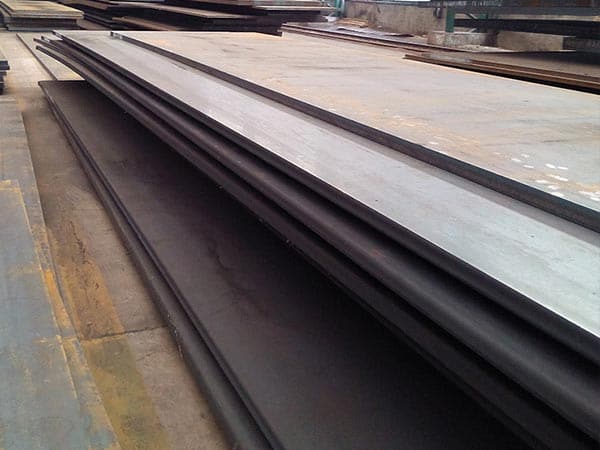
Understanding S355MC: The Benchmark for Cold Forming High-Strength Steel
S355MC is a thermomechanically rolled, high-yield-strength steel designed specifically for cold forming operations. Governed by the European standard EN 10149-2, this grade represents a critical balance between structural integrity and processability. Manufacturers across the globe prioritize S355MC when they need to reduce component weight without sacrificing load-bearing capacity. The 'MC' designation indicates that the material is thermomechanically rolled (M) and suitable for cold forming (C). This unique manufacturing process results in a fine-grained microstructure that offers superior toughness and weldability compared to traditional hot-rolled structural steels.
ASTM Equivalent Steel Grades for S355MC
Identifying the precise ASTM equivalent for S355MC requires a nuanced understanding of both European and American testing standards. While there is no 1:1 identical match due to variations in chemical tolerances and testing methodologies, several ASTM grades are frequently used as functional substitutes.
The most common cross-references include ASTM A1011 HSLAS Class 2 Grade 50 and ASTM A656 Grade 50. For applications requiring slightly higher performance or thicker sections, ASTM A1018 may also be considered. Below is a comparison table highlighting the primary equivalents:
| Standard | Grade | Yield Strength (min MPa) | Tensile Strength (MPa) |
|---|---|---|---|
| EN 10149-2 | S355MC | 355 | 430-550 |
| ASTM A1011 | HSLAS Grade 50 Class 2 | 345 | 450 min |
| ASTM A656 | Grade 50 | 345 | 450 min |
| JIS G3134 | SPFH 540 | 355 | 540 min |
When substituting S355MC with ASTM A1011, engineers must account for the slight difference in yield strength (355 MPa vs 345 MPa). ASTM A656 is often preferred for structural components in heavy machinery because it shares the micro-alloyed, fine-grain characteristics of the EN 10149 series.
Chemical Composition and Micro-Alloying Logic
The exceptional properties of S355MC stem from its low carbon content and the strategic addition of micro-alloying elements such as Niobium (Nb), Vanadium (V), and Titanium (Ti). These elements facilitate grain refinement during the thermomechanical rolling process.
- Carbon (C): Kept below 0.12% to ensure excellent weldability and prevent brittleness in the heat-affected zone (HAZ).
- Manganese (Mn): Acts as a solid solution strengthener and improves hardenability.
- Silicon (Si): Limited to 0.50% to maintain surface quality during galvanizing.
- Micro-alloys (Nb, Ti, V): These elements form carbides and nitrides that pin grain boundaries, preventing grain growth and resulting in a high-strength, fine-grained matrix.
This lean chemistry ensures that S355MC remains highly ductile, allowing for tight bend radii that would cause cracking in standard carbon steels of similar strength levels.
Mechanical Performance and Cold Forming Characteristics
The defining feature of S355MC is its cold forming capability. Unlike standard S355J2 structural steel, S355MC is optimized for bending, flanging, and folding. The fine-grain structure provides a high degree of isotropic behavior, meaning the steel performs consistently regardless of the rolling direction.
In practical workshop environments, S355MC allows for a minimum inner bend radius (at 90 degrees) of approximately 0.5 to 1.5 times the material thickness, depending on the specific thickness and orientation. This makes it ideal for complex geometries in automotive chassis and crane booms.
| Thickness (mm) | Min Yield (MPa) | Tensile (MPa) | Min Elongation (%) |
|---|---|---|---|
| t ≤ 3 | 355 | 430-550 | 23 |
| 3 < t ≤ 6 | 355 | 430-550 | 19 |
| t > 6 | 355 | 430-550 | 17 |
The high elongation values (typically 19-23% for thinner gauges) provide a significant safety margin during deep drawing or intensive forming processes. Furthermore, the low yield-to-tensile ratio helps in managing springback, a common challenge when working with high-strength materials.
Weldability and Processing Advantages
S355MC is highly compatible with all standard welding techniques, including MIG/MAG, TIG, and submerged arc welding. Because the carbon equivalent (CEV) is remarkably low, the steel does not require preheating in most thickness ranges, significantly reducing production time and energy costs.
During laser or plasma cutting, S355MC exhibits minimal distortion. The clean chemistry and lack of heavy inclusions result in smooth cut edges, which are essential for components that undergo subsequent fatigue loading. The surface finish is typically excellent, providing a good substrate for painting, powder coating, or hot-dip galvanizing.
Environmental Adaptability and Durability
While S355MC is not a dedicated "weathering steel" like Corten, its fine-grained structure provides better atmospheric corrosion resistance than standard hot-rolled commercial quality steels. In industrial environments, the material maintains its structural integrity over long lifecycles, provided appropriate surface treatments are applied.
For equipment operating in low-temperature environments, such as refrigerated transport or Arctic construction, S355MC offers reliable impact toughness. Although the standard EN 10149-2 focuses on yield strength, the thermomechanical process inherently improves the ductile-to-brittle transition temperature, making it safer for dynamic loads in cold climates.
Diversified Industrial Applications
The versatility of S355MC has led to its widespread adoption across multiple high-stakes industries. Its primary value proposition is weight reduction; by using a thinner gauge of S355MC to replace a thicker gauge of standard S235 steel, manufacturers can reduce the weight of a structure by up to 30% without losing strength.
- Automotive Industry: Used for longitudinal beams, cross members, and chassis components where energy absorption and weight saving are paramount.
- Heavy Lifting: Ideal for telescopic crane booms, aerial platforms, and forklift frames that require high stiffness and low self-weight.
- Transportation: Widely utilized in the manufacturing of trailers, truck bodies, and railway wagons to increase payload capacity.
- Agricultural Machinery: Applied in plow frames, seeders, and harvesters that face high mechanical stress and abrasive environments.
- Storage Systems: Used for high-rack shelving and racking systems where vertical load capacity and precision forming are required.
Optimizing Production with S355MC
To maximize the benefits of S355MC, fabricators should pay close attention to the direction of rolling during the layout phase. While S355MC is designed for multi-directional forming, bending transverse to the rolling direction typically allows for even tighter radii. Additionally, maintaining sharp tooling and proper die clearance will prevent surface galling and ensure the longevity of the formed parts.
Choosing S355MC or its ASTM equivalents like A1011 Grade 50 is a strategic decision that impacts the entire lifecycle of a product—from ease of manufacturing and reduced welding costs to improved fuel efficiency in mobile equipment. By leveraging the high yield strength and superior ductility of this grade, engineers can push the boundaries of modern design, creating structures that are lighter, stronger, and more sustainable.
Leave a message