
What is S460MC hot rolled flat equivalent material in China
Discover the Chinese equivalent of S460MC hot rolled steel. This guide compares Q460MC with S460MC, detailing chemical composition, mechanical properties, and industrial applications.
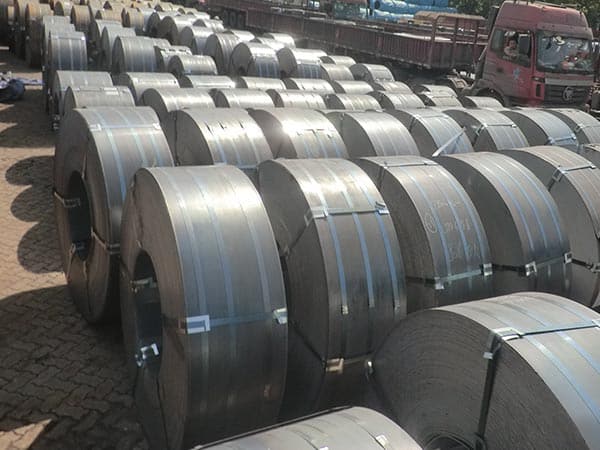
Understanding S460MC and Its Primary Chinese Counterpart
S460MC is a high-strength, thermomechanically rolled steel specifically designed for cold forming. Governed by the European standard EN 10149-2, it is widely recognized for its excellent yield strength and ductility. For procurement professionals and engineers looking for an equivalent in the Chinese market, the direct counterpart is Q460MC, which follows the GB/T 1591 (High-strength low-alloy structural steels) or GB/T 3273 (Hot-rolled steel sheets and strips for automobile frames) standards.
The 'S' in S460MC stands for structural steel, '460' represents the minimum yield strength in Megapascals (MPa), 'M' indicates the thermomechanical rolling process, and 'C' signifies its suitability for cold forming. Similarly, in the Chinese designation Q460MC, 'Q' stands for 'Qu' (yield), '460' is the yield strength, and 'MC' aligns with the European thermomechanical and cold-forming characteristics. While these grades are functionally interchangeable in most engineering scenarios, a deeper dive into their metallurgy and processing reveals why they are the backbone of modern lightweight construction.
Chemical Composition: The Science of Micro-Alloying
The performance of S460MC and Q460MC is rooted in a low-carbon chemistry enhanced by micro-alloying elements like Niobium (Nb), Vanadium (V), and Titanium (Ti). These elements facilitate grain refinement during the thermomechanical rolling process (TMCP), allowing the steel to achieve high strength without the brittleness typically associated with high carbon content.
| Element (Max %) | S460MC (EN 10149-2) | Q460MC (GB/T 1591) |
|---|---|---|
| Carbon (C) | 0.12 | 0.12 |
| Manganese (Mn) | 1.60 | 1.60 |
| Silicon (Si) | 0.50 | 0.50 |
| Phosphorus (P) | 0.025 | 0.025 |
| Sulfur (S) | 0.015 | 0.015 |
| Aluminium (Al) | 0.015 | 0.015 |
| Nb + V + Ti | 0.22 | 0.22 |
Both standards emphasize low sulfur and phosphorus levels to ensure superior internal cleanliness. This cleanliness is critical for preventing lamellar tearing during welding and ensuring the steel can withstand severe cold bending. The use of micro-alloys ensures that even at a yield strength of 460 MPa, the material remains highly weldable, as the carbon equivalent (CEV) remains remarkably low compared to traditional structural steels.
Mechanical Performance and Structural Integrity
The primary reason for selecting S460MC or its Chinese equivalent Q460MC is the balance between strength and weight. By utilizing a 460 MPa yield strength steel instead of standard S355 or Q355, designers can reduce the thickness of structural components by up to 30%, leading to significant fuel savings in transport and reduced material costs in construction.
| Property | S460MC Value | Q460MC Value |
|---|---|---|
| Yield Strength (ReH MPa) | Min 460 | Min 460 |
| Tensile Strength (Rm MPa) | 520 - 670 | 520 - 670 |
| Elongation (A5 %) | Min 14 - 17 (varies by thickness) | Min 14 - 17 |
| Bending Radius (180°) | 0.5t - 1.0t (varies by thickness) | 0.5t - 1.0t |
The elongation properties of Q460MC are particularly impressive. Despite its high strength, it maintains sufficient plasticity to undergo complex stamping and folding operations. This makes it an ideal candidate for automotive longitudinal beams and cross members where energy absorption and structural rigidity are paramount.
The TMCP Process: Why It Matters
Thermomechanical Control Process (TMCP) is the manufacturing heart of these steel grades. Unlike traditional normalized rolling, TMCP involves precise temperature control and deformation during the rolling stages, followed by accelerated cooling. This process creates a fine-grained microstructure (ferrite and pearlite or bainite) that is impossible to achieve through heat treatment alone.
- Grain Refinement: Smaller grains increase both strength and toughness simultaneously, a rare combination in metallurgy.
- Energy Efficiency: TMCP eliminates the need for secondary heat treatments, reducing the carbon footprint of the production cycle.
- Uniformity: The process ensures consistent mechanical properties across the entire length and width of the flat-rolled coil or sheet.
Chinese mills such as Baosteel, Shougang, and Ansteel have perfected the TMCP technique for Q460MC, ensuring that the Chinese equivalent meets or often exceeds the stringent requirements of European automotive and heavy machinery manufacturers.
Exceptional Weldability and Fabrication Performance
Fabricators often worry that high-strength steels will be difficult to weld or prone to cracking. S460MC and Q460MC address these concerns through their low carbon equivalent. They can be welded using all standard methods, including MAG (Metal Active Gas), SAW (Submerged Arc Welding), and Laser welding. No preheating is typically required for thicknesses under 15mm, which significantly speeds up production timelines.
Beyond welding, the cold-forming capability is a standout feature. When bending Q460MC, the minimum mandrel radius is exceptionally tight, allowing for compact designs. Furthermore, the material exhibits excellent laser cutting performance. Due to the low level of impurities and controlled silicon content, laser-cut edges are smooth and require minimal post-processing, making it a favorite for precision-engineered components in the crane and lifting industry.
Expanding Industry Applications
The transition from S460MC to the Chinese Q460MC has opened doors across various sectors that demand high performance under stress. The most prominent use is in the Automotive Industry, specifically for heavy-duty truck chassis, trailers, and specialized transport vehicles. By reducing the dead weight of the chassis, fleet operators can increase their payload, directly impacting profitability.
In the Lifting and Mobile Equipment sector, these grades are used for telescopic booms, crane frames, and outriggers. The high strength-to-weight ratio allows for longer reaches and higher lifting capacities without increasing the overall footprint of the machine. Additionally, the Cold-Formed Section industry utilizes S460MC/Q460MC to create lightweight C and Z purlins for large-scale industrial warehouses, where structural efficiency and speed of assembly are vital.
Environmental adaptability is another factor. These steels perform reliably in various climates. While they are not "weathering steels" in the traditional sense, their dense microstructure provides a baseline resistance to atmospheric corrosion that is superior to lower-grade carbon steels. When combined with modern coating technologies like galvanizing or high-performance painting, the service life of Q460MC structures can span decades.
Strategic Sourcing: Selecting the Right Equivalent
When sourcing Q460MC as an equivalent to S460MC, it is essential to verify the certification. Look for materials that carry the MTC (Mill Test Certificate) confirming compliance with either GB/T 1591-2018 or the automotive-specific GB/T 3273. Quality Chinese suppliers will also provide data on impact toughness (typically tested at -20°C or -40°C) if the application involves low-temperature environments.
Understanding the nuances of thickness tolerances is also vital. EN 10149-2 often specifies tolerances according to EN 10051, while Chinese products may follow GB/T 709. Ensuring these tolerances align with your fabrication equipment (such as automated bending cells) will prevent production bottlenecks. By choosing a reputable Chinese equivalent like Q460MC, global manufacturers can maintain high quality while optimizing their supply chain costs in an increasingly competitive market.
Leave a message