
How to distinguish hot rolled s355mc steel equivalent astm and cold rolled steel by naked eyes
Master the art of identifying S355MC hot rolled high-strength steel and its ASTM equivalents compared to cold rolled steel through visual inspection. This expert guide covers surface textures, mechanical properties, and industrial applications.
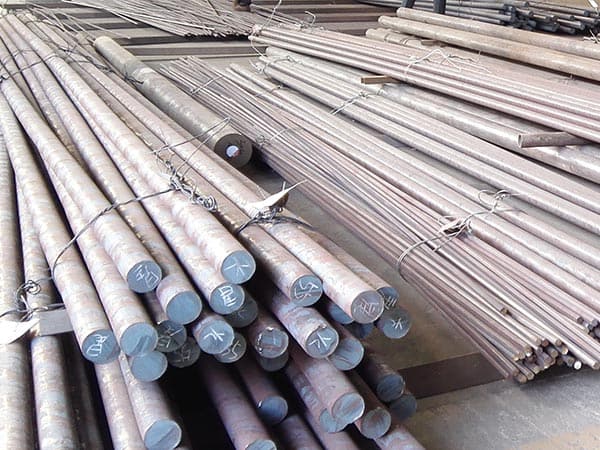
The Fundamental Visual Disparity Between Hot Rolled S355MC and Cold Rolled Steel
Identifying steel grades and processing methods through visual inspection is a critical skill for quality control inspectors, engineers, and procurement specialists. S355MC, a thermomechanically rolled high-yield-strength steel governed by the EN 10149-2 standard, often finds its American counterparts in the ASTM A1011 HSLAS (High-Strength Low-Alloy Steel) category. When placed side-by-side with cold rolled (CR) steel, the differences are striking if you know where to look. The primary distinction lies in the surface morphology, which is a direct result of the temperature at which the steel was processed.
Hot rolled S355MC is produced at temperatures exceeding the recrystallization point (typically above 1,100°C). This high-heat environment facilitates the formation of a characteristic oxide layer known as mill scale. In contrast, cold rolled steel is processed at room temperature, which prevents oxidation and results in a drastically different aesthetic and tactile experience. Recognizing these nuances is the first step in ensuring the correct material is utilized for specific structural or automotive applications.
Surface Texture and Coloration: The Primary Indicators
Mill Scale and Oxide Layers: The most obvious visual cue for S355MC and its ASTM A1011 equivalents is the presence of mill scale. This layer typically appears as a dark blue, grey, or even blackish coating. It is somewhat brittle and can occasionally flake off if the sheet is bent aggressively. Cold rolled steel, however, lacks this scale. Because it has been pickled (dipped in acid to remove scale) and then rolled cold, it possesses a bright, silver-grey, or metallic finish that is often reflective.
Surface Smoothness: If you run your fingers across the surface, S355MC will feel slightly rough or granular. The hot rolling process leaves behind a texture that is non-uniform. Cold rolled steel is exceptionally smooth to the touch. In many cases, CR steel is coated with a thin layer of rust-preventative oil, giving it a slick, greasy feel that is rarely found on standard hot rolled S355MC unless specifically requested.
Reflectivity: While not as mirror-like as stainless steel, cold rolled steel has a distinct luster. S355MC is matte. Even when the mill scale is removed via pickling (resulting in HRPO steel), the surface remains duller and more porous than the dense, compressed surface of a cold rolled sheet.
Dimensional Precision and Edge Characteristics
Visual inspection extends beyond the flat surface to the edges and the overall geometry of the steel. Because cold rolling allows for much tighter control over thickness and width, the physical profile of the steel offers significant clues.
- Edge Sharpness: Cold rolled steel usually features very sharp, squared-off edges. This is because it is often slit or trimmed after the final cold reduction. Hot rolled S355MC, especially in its mill-edge state, tends to have slightly rounded or feathered edges due to the nature of high-temperature deformation.
- Thickness Uniformity: While difficult to measure precisely with the naked eye, a visual scan of the sheet's profile often reveals that cold rolled steel is remarkably consistent. S355MC may show slight variations in thickness (crown) across the width of the coil, a common characteristic of the hot rolling process.
- Flatness: Cold rolled steel generally exhibits superior flatness. S355MC, while often leveled, may retain slight internal stresses that manifest as subtle waves or buckles, particularly in thinner gauges.
Understanding S355MC and its ASTM Equivalents
To accurately identify S355MC, one must understand what it is. S355MC is a micro-alloyed steel. The "S" stands for structural, "355" denotes a minimum yield strength of 355 MPa, and "MC" indicates it is thermomechanically rolled for cold forming. Its closest ASTM equivalent is ASTM A1011 HSLAS Grade 50 or Grade 55 (depending on the specific requirements of the project).
These steels are engineered for a high strength-to-weight ratio. Visually, they look like standard carbon steel (like S235JR or ASTM A36), but their performance is vastly superior. Unlike standard hot rolled steel, S355MC is designed to be bent and folded without cracking. When inspecting a part made from S355MC, you might notice tight radius bends that would typically cause failure in lower-grade hot rolled steels. This "formability" is a hallmark of the MC designation.
Mechanical Performance and Internal Grain Structure
While the naked eye cannot see the grain structure, the visual results of mechanical testing provide evidence of the steel's identity. Cold rolled steel undergoes strain hardening during the rolling process. This increases its hardness and tensile strength but reduces its ductility. If you were to attempt a deep draw on a standard cold rolled sheet versus an S355MC sheet, the visual outcomes would differ.
| Property | S355MC (Hot Rolled) | ASTM A1011 HSLAS Gr 50 | Cold Rolled Steel (e.g., DC01/SPCC) |
|---|---|---|---|
| Yield Strength | Min 355 MPa | Min 345 MPa | Approx. 140-280 MPa |
| Surface Finish | Matte, Blue-Grey Scale | Matte, Dark Grey | Bright, Silver, Oily |
| Typical Thickness | 1.5mm - 20mm | 1.2mm - 13mm | 0.3mm - 3.0mm |
| Formability | Excellent for high strength | Good | Excellent for deep drawing |
Environmental Adaptability and Corrosion Resistance
The visual state of steel changes based on its environment, and this provides another clue for identification. The mill scale on S355MC acts as a temporary, albeit imperfect, barrier against atmospheric corrosion. In a warehouse setting, S355MC might show light "red rust" only where the scale has been scratched or abraded.
Cold rolled steel, lacking this oxide layer, is highly susceptible to oxidation. Without a protective oil film, CR steel will develop a uniform coating of orange-red rust much faster than S355MC. If you see a stack of steel that is perfectly silver and shiny, it is almost certainly cold rolled and well-oiled. If it is dark and rugged-looking, it is likely a hot rolled grade like S355MC.
Processing Performance: Welding and Cutting
The behavior of the steel during secondary processing offers visual confirmation of its grade. S355MC is optimized for laser cutting and welding. Due to its low carbon equivalent and micro-alloying elements (like Niobium and Titanium), the heat-affected zone (HAZ) after welding is relatively stable.
When laser cutting S355MC, the edges are typically clean, though the presence of mill scale can sometimes cause minor dross if the laser settings are not optimized. Cold rolled steel cuts exceptionally cleanly with almost zero dross due to its lack of surface impurities and consistent thickness. In a workshop, the sparks produced during grinding can also hint at the carbon content; however, since both S355MC and many CR steels are low-carbon, this distinction is subtle and requires a highly trained eye.
Industry Application Scenarios
Where you find the steel often tells you what it is. S355MC and its ASTM A1011 equivalents are the workhorses of the heavy transport and structural industries. You will see them in:
- Truck Chassis: The high yield strength allows for thinner, lighter frames that can carry heavy loads.
- Crane Arms: Where weight reduction is vital without sacrificing lifting capacity.
- Agricultural Equipment: For components that require both strength and the ability to be cold-formed into complex shapes.
Cold rolled steel is the preferred choice for applications where surface finish and dimensional precision are paramount, such as:
- Home Appliances: Refrigerators, washing machines, and ovens.
- Automotive Outer Panels: Where a perfectly smooth surface is required for high-quality painting.
- Electrical Enclosures: Where precise fitment of hinges and doors is necessary.
Summary of Visual Identification Tips
To distinguish these materials effectively without lab equipment, follow this checklist: First, check the color—dark and matte indicates hot rolled S355MC, while bright and reflective indicates cold rolled. Second, feel the texture—roughness suggests hot rolled, while silkiness suggests cold rolled. Third, look at the thickness—anything over 3mm is predominantly hot rolled S355MC, while very thin, precise sheets are likely cold rolled. Finally, examine the edges—rounded edges are typical for S355MC mill edges, whereas sharp, clean edges are the hallmark of cold rolled products. By combining these observations, you can accurately identify the material and ensure it meets the structural and aesthetic requirements of your specific project.
Leave a message