
What is the S460MC sheet chemistry flaw detection process
Explore the intricate details of S460MC steel sheets, from chemical composition and flaw detection techniques to mechanical performance and industrial applications.
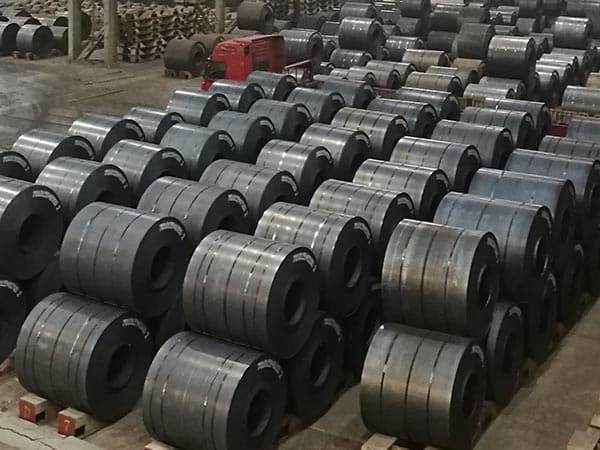
Understanding S460MC: The High-Strength Structural Powerhouse
S460MC is a high-yield strength, cold-forming steel produced through thermomechanical rolling, strictly adhering to the EN 10149-2 standard. As industries demand lighter yet stronger materials to enhance fuel efficiency and load-bearing capacity, S460MC has emerged as a critical material. Its designation 'S' signifies structural steel, '460' represents a minimum yield strength of 460 MPa, and 'MC' indicates it is suitable for cold forming and produced by thermomechanical rolling. Unlike traditional hot-rolled steels, S460MC undergoes a controlled cooling and rolling process that refines its grain structure, providing a unique balance of strength, ductility, and weldability.
The Intricate Chemistry of S460MC Steel
The performance of S460MC is fundamentally rooted in its precise chemical composition. The strategy involves a low-carbon approach supplemented by micro-alloying elements. By keeping carbon levels low, the steel maintains exceptional weldability and toughness, while the addition of Niobium (Nb), Vanadium (V), and Titanium (Ti) facilitates grain refinement and precipitation hardening.
| Element | Maximum Content (%) | Functional Role |
|---|---|---|
| Carbon (C) | 0.12 | Ensures weldability and prevents brittleness. |
| Manganese (Mn) | 1.60 | Increases strength and improves hardenability. |
| Silicon (Si) | 0.50 | Acts as a deoxidizer and strengthens the ferrite. |
| Phosphorus (P) | 0.025 | Strictly controlled to prevent cold shortness. |
| Sulfur (S) | 0.015 | Minimized to enhance lamellar tearing resistance. |
| Aluminium (Al) | 0.015 (min) | Used for grain size control and deoxidation. |
| Nb/V/Ti (Total) | 0.22 | Micro-alloys for grain refinement and strength. |
The synergy between these elements allows S460MC to achieve high strength without the need for heavy alloying, which keeps the material cost-effective and easy to process. The low sulfur content is particularly vital for flaw detection, as it reduces the presence of non-metallic inclusions that could lead to internal defects.
The Rigorous Flaw Detection Process for S460MC Sheets
Flaw detection is a non-negotiable phase in the production of S460MC, especially when the material is destined for safety-critical components like truck chassis or crane booms. The process ensures that the internal integrity of the sheet matches its external specifications. The primary methods include Ultrasonic Testing (UT), Magnetic Particle Inspection (MPI), and advanced surface scanning.
1. Ultrasonic Testing (UT): This is the gold standard for detecting internal flaws such as laminations, cracks, and porosity. For S460MC, UT is often performed according to standards like EN 10160. High-frequency sound waves are transmitted through the sheet; any internal discontinuity reflects the waves differently, allowing technicians to map the size and depth of the defect. This is crucial for high-strength steels because internal laminations can cause catastrophic failure during high-stress bending or welding.
2. Magnetic Particle Inspection (MPI): While UT focuses on the interior, MPI is used to detect surface and near-surface discontinuities. By applying a magnetic field and iron particles to the sheet, any crack or void will create a 'leakage' in the magnetic flux, attracting the particles and making the flaw visible. This is essential for inspecting edges after laser or plasma cutting.
3. Spectrometric Chemistry Verification: Before physical flaw detection, the 'chemical flaw' detection occurs via Optical Emission Spectroscopy (OES). This ensures that no tramp elements (like excessive Copper or Tin) have contaminated the melt, which could lead to hot shortness or reduced fatigue life.
Mechanical Performance and Structural Integrity
S460MC is celebrated for its mechanical resilience. The thermomechanical rolling process (TMCP) ensures that the steel does not require subsequent heat treatment, which preserves the fine-grained microstructure achieved at the mill. This results in superior yield strength and impressive elongation properties.
- Yield Strength: Minimum 460 MPa, providing the necessary stiffness for heavy-load applications.
- Tensile Strength: Ranging between 520 and 670 MPa, ensuring the material can withstand significant tension before failure.
- Elongation: Typically 14% to 17% (depending on thickness), allowing for complex cold-forming shapes without cracking.
- Impact Toughness: Often tested at -20°C or -40°C to ensure the material remains ductile in cold climates.
Advanced Processing: Welding and Cold Forming
The low carbon equivalent (Cev) of S460MC makes it exceptionally friendly to modern fabrication techniques. In welding, the material exhibits a low tendency for cold cracking in the heat-affected zone (HAZ). Whether using MIG, MAG, or laser welding, the fine grain structure remains relatively stable, provided that heat input is controlled. Overheating can lead to grain coarsening, which locally reduces the yield strength.
Regarding cold forming, S460MC allows for tight bending radii. This is a significant advantage for manufacturers of complex automotive frames. However, because of its high yield strength, 'springback' is more pronounced compared to standard S235 or S355 grades. Tooling must be designed to compensate for this elastic recovery to ensure dimensional accuracy.
Environmental Adaptability and Longevity
S460MC is designed to perform in diverse environments. While it is not a 'weathering steel' like Corten, its clean chemistry and fine microstructure provide a consistent substrate for protective coatings. Whether galvanized or powder-coated, the lack of surface impurities (verified during flaw detection) ensures excellent coating adhesion. This prevents sub-film corrosion and extends the service life of the final component in humid or saline conditions.
Strategic Industry Applications
The adoption of S460MC is widespread across sectors where weight reduction is a priority. In the transportation industry, it is used for longitudinal beams, cross members, and reinforcement parts in heavy-duty trucks and trailers. By switching from S355 to S460MC, engineers can often reduce the thickness of components by 15-25% without sacrificing safety.
In the construction and lifting equipment sector, S460MC is the material of choice for telescopic crane booms and agricultural machinery. The high strength-to-weight ratio allows for longer reach and higher lift capacities. Furthermore, its reliability in low-temperature environments makes it suitable for equipment used in northern latitudes or high-altitude mining operations.
Choosing S460MC involves a commitment to quality. By understanding the rigorous chemistry controls and flaw detection processes, procurement and engineering teams can ensure they are utilizing a material that offers maximum performance and long-term structural security.
Leave a message