
What is the S315MC cold forming autobobile steel for boom hardness?
A comprehensive guide to S315MC steel hardness, mechanical properties, and its specialized application in automotive booms and structural components.
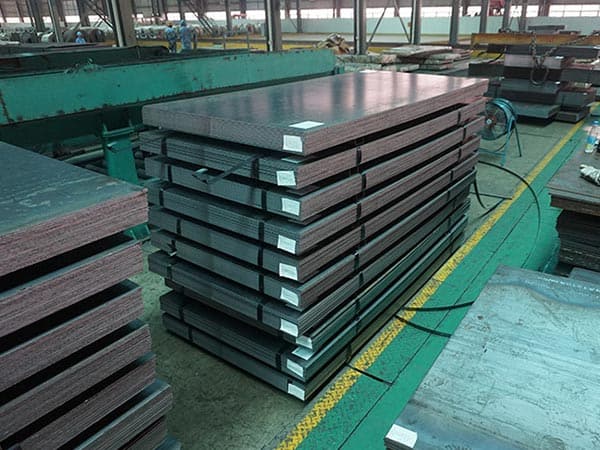
Defining S315MC: The Foundation of High-Strength Cold Forming Steel
S315MC is a high-yield strength steel designed specifically for cold forming, governed by the European standard EN 10149-2. When engineers ask about the S315MC cold forming automobile steel for boom hardness, they are often looking for a balance between structural rigidity and the ability to shape complex components without cracking. Unlike traditional hot-rolled steels, S315MC undergoes thermomechanically rolled processes, which refine the grain structure to achieve superior mechanical properties with a lower carbon equivalent.
The 'S' stands for structural steel, '315' denotes the minimum yield strength of 315 MPa, and 'MC' indicates it is suitable for cold forming (M) and has high impact toughness (C). For boom applications—such as those found in truck-mounted cranes, concrete pumps, or telescopic handlers—hardness is a secondary but vital indicator of wear resistance and surface integrity.
Hardness Values and Material Conversion
Standard specifications for S315MC typically focus on yield strength, tensile strength, and elongation rather than a mandatory hardness range. However, for industrial quality control, hardness is frequently measured using Brinell (HBW) or Vickers (HV) scales. Based on its tensile strength range of 390–510 MPa, the typical hardness of S315MC falls between 120 and 160 HBW.
| Property | Value Range | Unit |
|---|---|---|
| Yield Strength (ReH) | ≥ 315 | MPa |
| Tensile Strength (Rm) | 390 - 510 | MPa |
| Elongation (A80mm) | ≥ 20 (thickness < 3mm) | % |
| Estimated Brinell Hardness | 120 - 160 | HBW |
While this hardness level is relatively low compared to quenched and tempered steels, it is optimized for cold workability. If the hardness were too high, the material would become brittle, leading to micro-cracks during the intensive bending processes required to manufacture hexagonal or octagonal boom sections.
Chemical Composition and Grain Refinement
The secret to S315MC’s performance lies in its micro-alloying strategy. By using small amounts of Niobium (Nb), Vanadium (V), and Titanium (Ti), manufacturers achieve grain refinement. This fine-grained structure is what allows the steel to maintain a consistent hardness profile across the entire surface of a large boom plate.
| Element | Maximum Content (%) |
|---|---|
| Carbon (C) | 0.12 |
| Manganese (Mn) | 1.30 |
| Silicon (Si) | 0.50 |
| Phosphorus (P) | 0.025 |
| Sulfur (S) | 0.020 |
| Al (Total) | 0.015 |
The low carbon content (max 0.12%) ensures excellent weldability, which is critical for booms that are fabricated by joining long longitudinal plates. The micro-alloys create a stable matrix that resists softening in the Heat Affected Zone (HAZ) during welding, ensuring the structural integrity of the boom remains uniform.
Cold Forming Performance in Boom Manufacturing
Boom manufacturing involves significant deformation. S315MC is prized for its minimum bending radius, which allows for tighter folds without the risk of edge cracking. For a thickness (t) of 3mm to 6mm, the recommended internal bending radius is usually 0.25t to 0.5t. This ductility is the direct trade-off for its moderate hardness.
- Springback Control: Because of its consistent yield-to-tensile ratio, S315MC exhibits predictable springback, allowing for high-precision automated folding.
- Surface Quality: The thermomechanical rolling process results in a clean, scale-free surface, which is ideal for the high-quality painting and coating required for outdoor construction machinery.
- Edge Ductility: Laser-cut or sheared edges of S315MC maintain enough plasticity to undergo subsequent flanging or bending without pre-heating.
Environmental Adaptability and Fatigue Resistance
Automobile booms operate in diverse environments, from arctic cold to tropical humidity. S315MC is tested for impact energy at low temperatures (typically -20°C or -40°C upon request). This ensures that the material does not undergo a ductile-to-brittle transition, which could lead to catastrophic failure under load in cold climates.
Fatigue resistance is another critical factor. Booms are subject to cyclic loading. The fine-grain structure of S315MC provides a higher fatigue limit compared to standard hot-rolled carbon steels of similar strength. This longevity is essential for reducing the total cost of ownership for vehicle fleets.
Application Extension: Why Choose S315MC for Booms?
The choice of S315MC for booms is driven by the need for weight reduction. By using a higher strength-to-weight ratio material compared to S235JR, manufacturers can reduce the plate thickness while maintaining the same load-bearing capacity. This directly increases the payload of the vehicle and improves fuel efficiency.
Beyond booms, S315MC is extensively used in chassis frames, cross members, and cold-pressed longitudinal beams. Its ability to be formed into complex geometries makes it a favorite for weight-optimized structural parts in the heavy-duty truck and trailer industry.
Comparative Analysis: S315MC vs. Higher Grades
When designing a boom, engineers sometimes debate between S315MC and higher grades like S700MC. While S700MC offers much higher strength and surface hardness, it requires much larger bending radii and more sophisticated welding procedures. S315MC remains the "sweet spot" for applications where extreme formability and cost-effectiveness are prioritized over maximum weight savings.
For components requiring moderate wear resistance without the need for additional heat treatment, the natural hardness of S315MC provides a sufficient barrier against surface indentation during assembly and transport. Its uniform grain structure ensures that even after significant cold work, the hardness remains relatively homogenous, preventing localized weak spots in the boom's structure.
Technical Integration for Modern Engineering
Utilizing S315MC effectively requires an understanding of its metallurgical limits. Processing should ideally occur at room temperature to preserve the benefits of the thermomechanical rolling. If hot forming is required, the material may lose its strength properties, as the fine-grain structure can coarsen at temperatures exceeding 580°C. Therefore, for boom construction, cold folding and precision welding are the standard methodologies to leverage the full potential of this steel grade.
The synergy between its chemical purity and mechanical toughness makes S315MC a reliable choice for the demanding safety standards of the automotive and lifting industries. By focusing on the 315 MPa yield point and its associated 120-160 HBW hardness, designers can create robust, durable, and efficient mobile equipment.
Leave a message