
What is the S460MC steel for car parts as rolled delivery state
Discover the properties and benefits of S460MC steel in its thermomechanically rolled (MC) delivery state, focusing on its role in automotive lightweighting and safety.
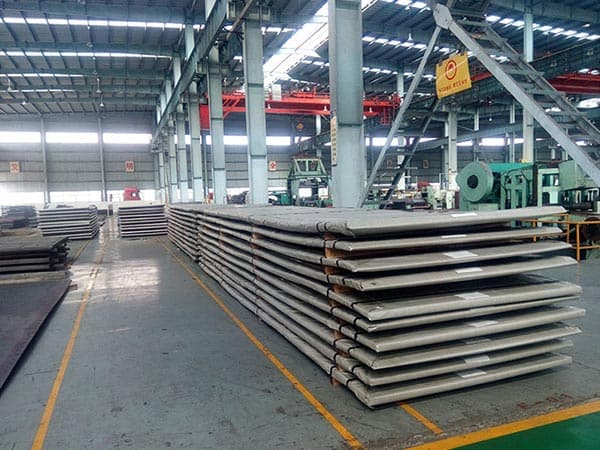
Understanding S460MC: The High-Strength Standard for Automotive Engineering
S460MC is a high-strength low-alloy (HSLA) steel grade specifically engineered for the demanding requirements of the automotive industry. Governed by the EN 10149-2 standard, this material is defined by its minimum yield strength of 460 MPa and its specific delivery condition, denoted by the suffix "MC". In the context of automotive manufacturing, S460MC serves as a critical bridge between traditional structural steels and ultra-high-strength grades, offering a balanced profile of weight reduction, formability, and cost-efficiency.
The "MC" in S460MC stands for thermomechanically rolled. This delivery state is not merely a manufacturing step but a sophisticated metallurgical process that combines controlled rolling and controlled cooling. Unlike traditional hot-rolled steels that might require subsequent heat treatment to achieve high strength, S460MC attains its mechanical properties directly from the rolling mill. This process refines the grain structure of the steel, resulting in a fine-grained ferrite-pearlite microstructure that is exceptionally tough and resistant to fatigue.
The Significance of the Thermomechanically Rolled (MC) Delivery State
The thermomechanical control process (TMCP) is what differentiates S460MC from normalized or as-hot-rolled structural steels. During the rolling process, the temperature and deformation are strictly monitored to prevent grain growth. By adding micro-alloying elements like Niobium (Nb), Vanadium (V), and Titanium (Ti), the steel develops a structure that resists deformation at high temperatures, allowing for a much finer grain size upon cooling.
- Energy Efficiency: Because the properties are achieved during rolling, there is no need for energy-intensive secondary heat treatments like normalizing or quenching and tempering.
- Uniformity: TMCP ensures consistent mechanical properties across the entire length and width of the coil, which is vital for automated automotive stamping lines.
- Enhanced Weldability: The process allows for high strength with a lower carbon equivalent (CEV) compared to traditional steels, making it much easier to weld without the risk of cold cracking.
Chemical Composition and Micro-Alloying Excellence
The performance of S460MC is rooted in its precise chemical makeup. The steel is designed to be "clean," with low levels of impurities like phosphorus and sulfur, which enhances its ductility and impact resistance. The inclusion of micro-alloys is the secret to its high strength-to-weight ratio.
| Element | Maximum Content (%) |
|---|---|
| Carbon (C) | 0.12 |
| Manganese (Mn) | 1.60 |
| Silicon (Si) | 0.50 |
| Phosphorus (P) | 0.025 |
| Sulfur (S) | 0.015 |
| Aluminum (Al) | 0.015 (min) |
| Nb + V + Ti | 0.22 |
Niobium and Titanium act as grain refiners and precipitation hardeners. These elements form stable carbides and nitrides that pin grain boundaries during the rolling process, ensuring the final product maintains a fine-grained structure even after being subjected to the heat of welding or forming.
Mechanical Properties and Automotive Performance
For automotive designers, the mechanical properties of S460MC are the primary focus. The goal is often to replace thicker, heavier sections of S355MC or standard structural steel with thinner sections of S460MC to reduce vehicle weight without compromising structural integrity or passenger safety.
| Property | Value (Thickness ≤ 3mm) | Value (Thickness > 3mm) |
|---|---|---|
| Yield Strength (ReH MPa) | ≥ 460 | ≥ 460 |
| Tensile Strength (Rm MPa) | 520 - 670 | 520 - 670 |
| Elongation (A80/A5 %) | ≥ 14 | ≥ 14 |
The high yield strength allows automotive components to withstand significant loads before permanent deformation occurs. Meanwhile, the elongation values ensure that the material can absorb energy during a collision, a critical factor for crash-relevant parts like longitudinal beams and bumpers.
Superior Cold Forming and Processing Capabilities
One of the standout features of S460MC is its excellent cold formability. Automotive parts often involve complex geometries, including tight bends and deep draws. S460MC is designed to handle these processes without cracking. The fine grain structure provided by the MC delivery state allows for a smaller minimum bending radius compared to other steels of similar strength.
When processing S460MC, manufacturers benefit from reduced springback compared to higher-strength grades like S700MC, which simplifies tool design and improves dimensional accuracy. It is also highly suitable for laser cutting and plasma cutting, as the low impurity content results in clean, smooth edges that require minimal post-processing.
Weldability: Simplifying Assembly Lines
In vehicle assembly, welding is the most common joining method. S460MC is optimized for all standard welding techniques, including MAG (Metal Active Gas), MIG (Metal Inert Gas), and laser welding. Due to its low carbon equivalent value (CEV), it does not typically require pre-heating, even when welding thicker sections.
The heat-affected zone (HAZ) of S460MC remains stable, maintaining a high level of toughness and strength. This reliability is essential for chassis components and suspension systems where the weld joints are subjected to constant vibration and cyclic loading. Using high-quality filler materials that match the strength of the base metal ensures the entire assembly meets safety standards.
Critical Applications in the Automotive Sector
The transition toward electric vehicles (EVs) has increased the demand for lightweight materials to offset the weight of heavy battery packs. S460MC has become a staple in several key areas of vehicle construction:
- Chassis and Frames: The high strength allows for thinner gauges in truck frames and passenger car subframes, reducing overall vehicle mass.
- Cross Members and Beams: These parts require high stiffness and strength to maintain the vehicle's structural rigidity during cornering and impacts.
- Seat Rails and Brackets: S460MC provides the necessary strength to secure seats during a crash while remaining easy to stamp into complex shapes.
- Wheels and Suspension Arms: The fatigue resistance of the thermomechanically rolled structure makes it ideal for parts that experience millions of load cycles.
Environmental Impact and Sustainability
Using S460MC contributes significantly to the sustainability goals of modern automakers. By enabling the use of thinner steel sheets, it reduces the total amount of raw material required per vehicle. This "lightweighting" directly translates to lower fuel consumption in internal combustion engines and increased range for electric vehicles. Furthermore, the TMCP production route is more energy-efficient than traditional heat-treated steel production, lowering the initial carbon footprint of the material itself.
As a fully recyclable material, S460MC fits perfectly into the circular economy. At the end of a vehicle's life, the steel can be recovered and processed into new high-quality steel products without losing its inherent properties, making it a responsible choice for the future of mobility.
Comparing S460MC with Other HSLA Grades
When selecting a material, engineers often compare S460MC with S355MC and S500MC. While S355MC is more ductile and easier to form, it requires thicker sections to meet the same load-bearing requirements as S460MC. Conversely, while S500MC offers even higher strength, it may present more challenges in extreme cold-forming scenarios. S460MC is often considered the "sweet spot" for structural components that require a high degree of forming but also need to provide substantial structural support.
The consistency of the S460MC as-rolled state ensures that whether the steel is sourced for a small bracket or a large chassis rail, the performance remains predictable. This predictability is the foundation of modern computer-aided engineering (CAE) and crash simulation, allowing manufacturers to design safer vehicles with higher confidence.
Leave a message