
What is carbon S420MC steel for car safety parts equivalent to
A comprehensive guide to S420MC steel, exploring its global equivalents (ASTM, GB, JIS), mechanical properties, and critical role in automotive safety components.
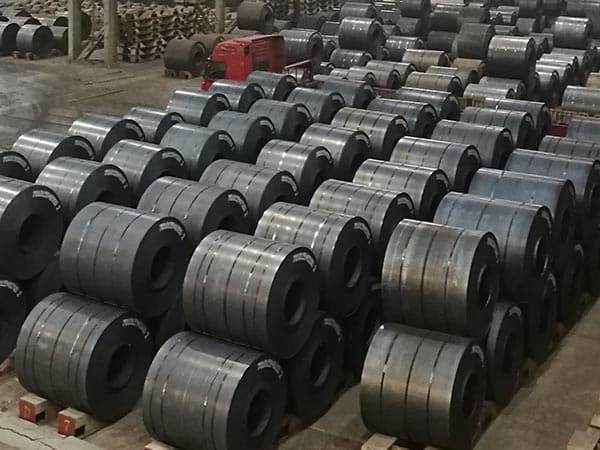
Understanding S420MC: The Backbone of Modern Vehicle Safety
S420MC is a high-strength, cold-forming steel produced through thermomechanically controlled rolling (TMCP). Governed by the European standard EN 10149-2, this grade is specifically engineered to provide a unique balance of high yield strength and exceptional formability. In the automotive industry, where weight reduction and passenger safety are paramount, S420MC serves as a critical material for structural components that must absorb energy during collisions while maintaining structural integrity.
The "S" in S420MC stands for structural steel, "420" denotes the minimum yield strength of 420 Megapascals (MPa), and "MC" indicates that the steel is thermomechanically rolled (M) and intended for cold forming (C). Unlike traditional hot-rolled steels, the TMCP process refines the grain structure of S420MC, resulting in a fine-grained ferritic-pearlitic microstructure. This microscopic refinement is the secret behind its superior toughness and fatigue resistance, making it an ideal candidate for car safety parts such as chassis members, cross-beams, and reinforcement pillars.
Global Equivalents: Mapping S420MC Across International Standards
Engineers and procurement specialists often need to identify equivalent grades when sourcing S420MC globally. While exact chemical compositions and testing requirements may vary slightly between standards, several grades are considered functionally equivalent for automotive applications.
- ASTM A1011/A1011M (USA): The closest equivalent in the American standard is HSLAS-F Grade 60. This High-Strength Low-Alloy steel with improved formability (F) matches the yield requirements of S420MC, although ASTM standards often allow for slightly different micro-alloying strategies.
- GB/T 1591 or GB/T 3273 (China): In the Chinese national standard, Q420L is the primary equivalent. The "Q" represents yield strength, and the "L" specifically designates it for automotive frames and structural use.
- JIS G3134 (Japan): The Japanese equivalent is typically SPFH 540. While JIS standards focus heavily on tensile strength, SPFH 540 provides the necessary yield performance and cold-forming capabilities required for safety-critical components.
- ISO 6930 (International): Under the International Organization for Standardization, the grade PW420 aligns closely with the mechanical and chemical parameters of S420MC.
| Standard | Equivalent Grade | Yield Strength (min) | Tensile Strength |
|---|---|---|---|
| EN 10149-2 | S420MC | 420 MPa | 480 - 620 MPa |
| ASTM A1011 | HSLAS-F Grade 60 | 410 MPa | 520 MPa |
| GB/T 3273 | Q420L | 420 MPa | 520 - 680 MPa |
| JIS G3134 | SPFH 540 | 390 MPa | 540 MPa |
Chemical Composition and the Role of Micro-Alloying
The exceptional performance of S420MC is not merely a result of its carbon content, which is kept intentionally low (typically below 0.12%) to ensure excellent weldability. Instead, its strength is derived from micro-alloying elements such as Niobium (Nb), Vanadium (V), and Titanium (Ti). These elements form fine carbides and nitrides that pin grain boundaries during the rolling process, preventing grain growth and enhancing the material's strength through grain refinement and precipitation hardening.
Niobium (Nb): Increases the recrystallization temperature, allowing for a finer grain structure during the thermomechanical rolling process. This is crucial for maintaining ductility at high strength levels.
Titanium (Ti): Acts as a deoxidizer and nitrogen binder, preventing the formation of coarse nitrides that could act as crack initiation sites during cold forming or welding.
Manganese (Mn): Typically present in ranges between 1.0% and 1.6%, manganese increases hardenability and contributes to solid solution strengthening without significantly compromising ductility.
Mechanical Properties and Performance in Safety Parts
For car safety parts, the mechanical properties of S420MC must be consistent across the entire coil. The steel must exhibit high energy absorption capacity, which is a function of its yield-to-tensile ratio and elongation properties. S420MC typically offers a minimum elongation of 16% to 19% (depending on thickness), allowing it to deform plastically during a crash without catastrophic fracturing.
- Yield Strength (ReH): Minimum 420 MPa. This ensures the component can withstand significant operational loads without permanent deformation.
- Tensile Strength (Rm): 480 to 620 MPa. The spread between yield and tensile strength provides a safety margin for overload conditions.
- Bending Properties: S420MC is designed for tight bending radii. For thicknesses less than 3mm, a 180-degree bend can often be achieved with a mandrel diameter of 0.5 to 1.0 times the material thickness.
Advanced Processing: Welding and Cold Forming
One of the primary reasons S420MC is favored by automotive OEMs (Original Equipment Manufacturers) is its superior processing characteristics. Because it is a low-carbon steel, it possesses a low Carbon Equivalent (CEV), which translates to excellent weldability using standard industrial methods such as MAG (Metal Active Gas), TIG (Tungsten Inert Gas), and laser welding.
During the welding process, the heat-affected zone (HAZ) of S420MC remains relatively stable. While some softening can occur due to the nature of TMCP steels, the fine grain structure helps mitigate the risk of cold cracking. Furthermore, the material's clean chemistry reduces the likelihood of weld defects like porosity or inclusions, ensuring that the structural integrity of the safety part is maintained at the joints.
In terms of cold forming, S420MC exhibits minimal springback compared to other high-strength steels. This allows for high precision in complex geometries, such as the intricate shapes required for vehicle cross-members or suspension arms. The consistency of the material's mechanical properties ensures that automated stamping and bending processes can run with high repeatability and low scrap rates.
Environmental Adaptability and Fatigue Life
Automotive components are subjected to harsh environments, including cyclic loading and corrosive road conditions. S420MC offers respectable fatigue resistance due to its fine-grained structure, which hinders the propagation of micro-cracks. When combined with modern coating technologies like hot-dip galvanizing or electro-galvanizing, S420MC components can achieve long service lives even in salt-heavy winter environments.
The material's performance at low temperatures is also noteworthy. Many automotive standards require impact testing at -20°C or -40°C. S420MC, particularly when specified as S420MC-L, demonstrates high Charpy V-notch impact energy, ensuring that safety parts do not become brittle in cold climates. This "low-temperature toughness" is a non-negotiable requirement for vehicles sold in Northern Europe, North America, and Northern China.
Applications in the Automotive Industry
The versatility of S420MC has led to its widespread adoption across various vehicle segments, from passenger cars to heavy-duty trucks. Its primary role is in the "skeleton" of the vehicle—parts that are invisible to the consumer but vital for survival in an accident.
- Chassis Frames: Providing the rigid foundation for the vehicle while allowing for weight savings over traditional carbon steels.
- B-Pillars and Reinforcements: S420MC is often used in the middle pillars of cars to protect occupants during side-impact collisions.
- Cross Members: These components connect the longitudinal rails of the chassis and must handle torsional stress and impact loads.
- Seat Frames: High strength allows for thinner, lighter seat structures that still meet stringent crash safety regulations.
By replacing thicker sections of lower-grade steel with thinner S420MC, manufacturers can reduce vehicle weight by 15-25% for specific components. This weight reduction directly contributes to lower fuel consumption and reduced CO2 emissions, aligning with global environmental targets without compromising the safety of the vehicle's occupants.
Technical Comparison: S420MC vs. S355MC
A common question in engineering design is whether to upgrade from S355MC to S420MC. While S355MC is a workhorse in the industry, S420MC provides approximately an 18% increase in yield strength. This allows for a significant reduction in wall thickness for structural tubes and stamped parts. However, the designer must account for the slightly reduced elongation in S420MC. In safety parts where maximum deformation is required to absorb energy (crumple zones), S355MC might be preferred, whereas in parts where maintaining the survival cell's shape is critical (cabin reinforcements), S420MC is the superior choice.
The selection of S420MC or its equivalents like Q420L or HSLAS-F Grade 60 represents a strategic decision to utilize advanced metallurgical engineering for the benefit of automotive safety and efficiency. As the industry moves toward electric vehicles, where battery weight must be offset by lighter structural components, the role of micro-alloyed steels like S420MC will only continue to grow in importance.
Leave a message