
How to improve the hardenability of S355MC hot rolled steel
Discover expert strategies to enhance the hardenability of S355MC hot rolled steel through micro-alloying, optimized heat treatment, and surface engineering for industrial applications.
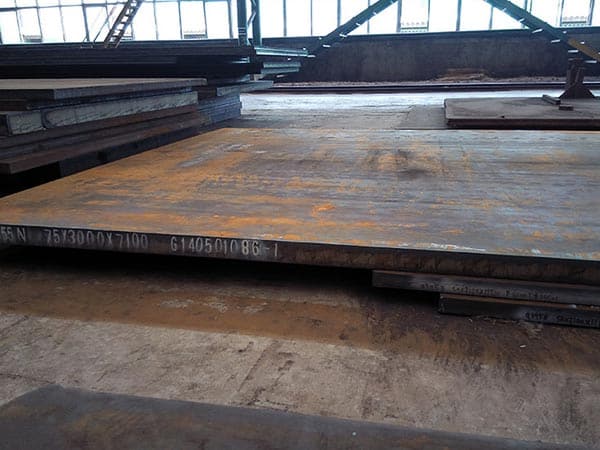
Understanding the Metallurgical Profile of S355MC Hot Rolled Steel
S355MC, a high-strength low-alloy (HSLA) steel governed by the EN 10149-2 standard, is specifically engineered for cold-forming and high-load structural applications. Its 'MC' designation indicates a thermomechanically rolled condition, which results in a fine-grained microstructure that balances high yield strength with excellent ductility. However, a common challenge encountered by engineers is its relatively low hardenability. Because S355MC typically maintains a low carbon content (often below 0.12%) to ensure superior weldability and toughness, achieving a high through-hardness via traditional quenching methods is difficult. Improving this property requires a deep dive into the chemical composition and the kinetics of phase transformation.
The Role of Carbon Equivalent and Chemical Optimization
Hardenability is fundamentally dictated by the steel's chemical composition. For S355MC, the Carbon Equivalent (CEV) is kept low to prevent cold cracking during welding. To improve hardenability without compromising the steel's core benefits, micro-alloying is the most effective route. Adding elements such as Manganese (Mn), Chromium (Cr), and Molybdenum (Mo) can significantly shift the Continuous Cooling Transformation (CCT) curve to the right. This shift allows for the formation of martensite or bainite at slower cooling rates. Manganese, in particular, is a potent austenite stabilizer that lowers the critical cooling rate, while Chromium enhances the depth of the hardened layer. By carefully adjusting these ratios within the allowable limits of the EN 10149-2 standard, manufacturers can tailor the steel for better response to heat treatment.
The Boron Effect: A Precision Approach to Hardenability
One of the most cost-effective methods to boost the hardenability of S355MC is the strategic addition of Boron (B). Even in minute quantities (typically 0.001% to 0.003%), soluble boron segregates to the austenite grain boundaries, effectively delaying the nucleation of pro-eutectoid ferrite. This delay provides a wider window for quenching to produce a hardened structure. However, the 'Boron effect' is highly sensitive; boron must be protected from reacting with nitrogen or oxygen. This is why S355MC variants intended for hardening often include Titanium (Ti). Titanium acts as a 'getter' for nitrogen, forming Titanium Nitrides (TiN) and ensuring that boron remains in its elemental, effective state. Implementing a Boron-Titanium synergy is a hallmark of high-performance S355MC modifications.
Optimizing Heat Treatment Parameters and Quenching Media
Beyond chemistry, the physical process of heat treatment plays a vital role. For S355MC, the austenitizing temperature must be precisely controlled. Heating the steel to approximately 900°C to 950°C ensures a complete transformation to austenite while preventing excessive grain growth, which would otherwise reduce toughness. The choice of quenching media is equally critical. While water quenching provides the fastest cooling rate, it often leads to distortion or cracking in complex S355MC parts. Polymer quenchants offer a middle ground, providing a cooling rate faster than oil but more controlled than water. By optimizing the agitation and temperature of the quench bath, engineers can maximize the depth of hardness (the Jominy distance) even in the low-carbon matrix of S355MC.
Surface Hardening Technologies for S355MC Components
When the application requires a hard, wear-resistant surface but a tough, ductile core, surface-specific treatments are superior to through-hardening. Nitriding and Nitrocarburizing are excellent choices for S355MC because they occur at sub-critical temperatures (usually 500°C to 580°C), meaning the thermomechanically rolled properties of the core remain largely unaffected. These processes introduce nitrogen into the surface layer, creating a 'white layer' of nitrides and a diffusion zone that significantly increases surface hardness and fatigue resistance. Additionally, Induction Hardening can be applied to specific zones of an S355MC component, such as the teeth of a gear or the wear surface of a bracket, using high-frequency currents to rapidly heat and quench the surface layer.
Comparative Analysis of S355MC Properties
| Property | Standard S355MC | Enhanced S355MC (Modified) | Impact on Performance |
|---|---|---|---|
| Carbon Content (%) | Max 0.12 | 0.10 - 0.12 | Maintains weldability while supporting hardness |
| Manganese Content (%) | Max 1.50 | 1.40 - 1.60 | Increases depth of hardening |
| Micro-alloys (Nb, Ti, V) | Present | Optimized Ti/B ratio | Refines grain and boosts hardenability |
| Yield Strength (MPa) | Min 355 | 380 - 420 | Higher load-bearing capacity |
| Surface Hardness (HV) | Approx. 160-180 | Up to 450 (after Nitriding) | Significant increase in wear resistance |
Industrial Applications and Environmental Adaptability
The demand for improved hardenability in S355MC is driven by the heavy machinery and automotive industries. In the production of truck chassis frames and crane booms, the steel must withstand immense structural loads while resisting surface abrasion. By enhancing hardenability, manufacturers can reduce the thickness of the steel plates, leading to lighter, more fuel-efficient vehicles without sacrificing safety. Furthermore, S355MC exhibits good environmental adaptability. When properly heat-treated, its fine-grained structure provides better resistance to atmospheric corrosion and stress corrosion cracking compared to traditional carbon steels. This makes it an ideal candidate for renewable energy infrastructure, such as solar tracking systems and wind turbine components, where longevity in harsh environments is paramount.
Technical Implementation Roadmap
Successfully improving the hardenability of S355MC requires a holistic approach. First, collaborate with the steel mill to ensure the chemical heat analysis includes Boron and sufficient Manganese. Second, utilize dilatometry testing to establish precise TTT and CCT diagrams for the specific batch of steel. This data allows for the design of a custom quenching cycle. Third, implement post-hardening tempering at temperatures between 150°C and 300°C to relieve internal stresses while maintaining the desired hardness level. Finally, verify the results through microstructural analysis and Vickers hardness testing across the cross-section to ensure uniformity. This rigorous technical path ensures that S355MC transcends its standard limitations, becoming a versatile solution for high-performance engineering challenges.
Leave a message