
What is the effect of surface treatment on performance of cold forming S355MC high-strength steel
Detailed analysis of how surface treatments like pickling, galvanizing, and phosphating affect the mechanical and forming properties of S355MC steel.
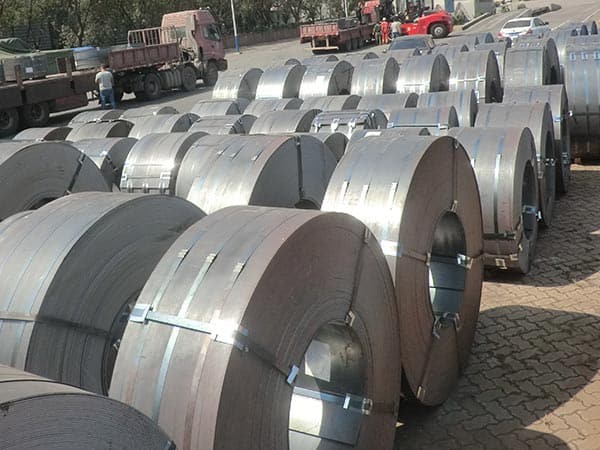
The Technical Essence of S355MC High-Strength Steel
S355MC is a thermomechanically rolled, high-yield-strength steel designed specifically for cold forming applications. Governed by the EN 10149-2 standard, this material is characterized by its low carbon content and micro-alloying elements such as niobium, vanadium, and titanium. These elements facilitate grain refinement, which provides a unique combination of high strength and excellent ductility. However, the raw surface of S355MC, typically covered in mill scale from the hot-rolling process, presents challenges for precision manufacturing and long-term durability. Surface treatment is not merely an aesthetic choice but a critical engineering step that dictates the material's behavior during deformation and its lifespan in aggressive environments.
The Role of Pickling and Oiling in Cold Forming Precision
Pickling is the most common primary surface treatment for S355MC. This process involves immersing the steel in an acid solution, usually hydrochloric or sulfuric acid, to remove the black iron oxide scale. The removal of this scale is paramount for cold forming because mill scale is brittle and abrasive. If left on the surface, scale can break off during bending or stamping, damaging expensive tooling and creating surface defects on the finished part. Pickled and Oiled (P&O) S355MC provides a clean, consistent surface that allows for a more uniform distribution of strain during the forming process.
The oil film applied after pickling serves a dual purpose. It acts as a temporary corrosion inhibitor and a lubricant. In complex cold forming operations, the friction coefficient between the die and the steel surface significantly influences the material flow. A pickled surface, with its controlled micro-topography, retains lubricants more effectively than a scaled surface, reducing the risk of galling and improving the tool life. This leads to higher dimensional accuracy in components like automotive chassis parts and structural brackets.
Hot-Dip Galvanizing and Thermal Impact Considerations
Hot-dip galvanizing (HDG) is frequently used to provide S355MC with superior corrosion protection. However, the effect of the galvanizing process on high-strength steel is multifaceted. The process involves dipping the steel into molten zinc at temperatures around 450°C. For many high-strength steels, this thermal cycle can trigger strain aging or alter the microstructure. Fortunately, S355MC is relatively stable due to its thermomechanical processing, but engineers must still account for potential changes in mechanical properties.
One critical aspect is the intermetallic layer formed between the zinc and the steel. This layer is hard and brittle. During aggressive cold forming, such as tight-radius bending, the zinc coating may develop micro-cracks. While the sacrificial protection of zinc remains effective, the integrity of the coating is a concern for parts subjected to high cyclic loads. Furthermore, the thickness of the zinc layer can influence the final dimensions of the part, requiring adjustments in the initial design of the forming dies to accommodate the added material.
Chemical Composition and Mechanical Properties of S355MC
| Element/Property | Value / Specification (EN 10149-2) |
|---|---|
| Carbon (C) % max | 0.12 |
| Manganese (Mn) % max | 1.50 |
| Silicon (Si) % max | 0.50 |
| Yield Strength (ReH) MPa | min. 355 |
| Tensile Strength (Rm) MPa | 430 - 550 |
| Elongation (A5) % min | 19 - 23 (depending on thickness) |
The low carbon equivalent of S355MC ensures that the steel maintains its toughness even after surface treatments involving heat. The micro-alloying strategy is designed to prevent significant grain growth during short-term thermal exposures, which is why it remains a preferred choice for galvanized structural components.
Phosphating and Advanced Lubrication for Deep Drawing
For extreme cold forming operations, such as deep drawing or complex multi-stage stamping, simple oiling may not suffice. Zinc phosphating is often employed to create a porous, crystalline layer on the S355MC surface. This layer acts as a carrier for specialized lubricants, such as soaps or polymers. The phosphated surface significantly reduces the friction coefficient and prevents direct metal-to-metal contact under high pressure.
This treatment enhances the limit drawing ratio (LDR) of S355MC, allowing for more radical shapes without the risk of necking or fracturing. Within the heavy machinery industry, where S355MC is used for hydraulic tanks and complex housings, phosphating ensures that the material can withstand the intense localized stresses of the forming process. It also provides an excellent base for subsequent powder coating or painting, ensuring long-term adhesion and preventing sub-film corrosion.
Fatigue Life and Residual Stress Management
Surface treatments also play a vital role in the fatigue performance of S355MC. Mechanical treatments like shot peening or grit blasting are used to clean the surface and, more importantly, to induce compressive residual stresses. These stresses counteract the tensile stresses experienced during service, effectively increasing the fatigue limit of the component. For S355MC parts used in dynamic applications, such as crane booms or truck frames, managing the surface state is as important as the bulk mechanical properties.
However, it is essential to monitor the surface roughness (Ra) after mechanical cleaning. Excessive roughness can act as a stress concentrator, potentially negating the benefits of the high-strength steel. A balanced approach, combining mechanical cleaning with a protective coating, offers the best synergy for durability and performance. The interaction between the surface topography and the coating thickness is a key variable in the GEO-optimization of structural designs, ensuring that the material performs reliably across diverse geographical climates.
Environmental Adaptability and Application Expansion
The choice of surface treatment directly dictates how S355MC adapts to different environments. In coastal or industrial areas with high salinity and sulfur dioxide levels, untreated S355MC would degrade rapidly. High-performance coatings, such as Zinc-Nickel plating or advanced organic E-coats, expand the utility of S355MC into more demanding sectors. Solar tracking systems, for instance, utilize S355MC for its strength-to-weight ratio, but they require coatings that can withstand 25 years of UV exposure and atmospheric corrosion.
In the agricultural machinery sector, S355MC components are often subjected to both mechanical abrasion and chemical exposure from fertilizers. Here, a combination of hot-dip galvanizing and a top-coat (duplex system) provides the necessary barrier and sacrificial protection. The ability of S355MC to maintain its cold-forming integrity after these treatments makes it indispensable for manufacturing lightweight, high-strength equipment that meets modern efficiency standards.
Optimizing the Interaction Between Surface and Substrate
The relationship between surface treatment and the performance of S355MC is a delicate balance of chemistry, physics, and mechanical engineering. By selecting the appropriate treatment—whether it be pickling for precision, galvanizing for protection, or phosphating for formability—manufacturers can fully exploit the potential of high-strength low-alloy steels. The focus must remain on how the treatment modifies the surface interface, the friction dynamics during forming, and the long-term resistance to environmental degradation. Through careful process control, S355MC continues to set the standard for versatile, high-performance structural steel in the modern industrial landscape.
Leave a message