
What is S700MC oiled steel coil plate equivalent ASME material
A comprehensive guide to S700MC oiled steel coil, its ASME/ASTM equivalents like A656 Grade 100, mechanical properties, and industrial applications.
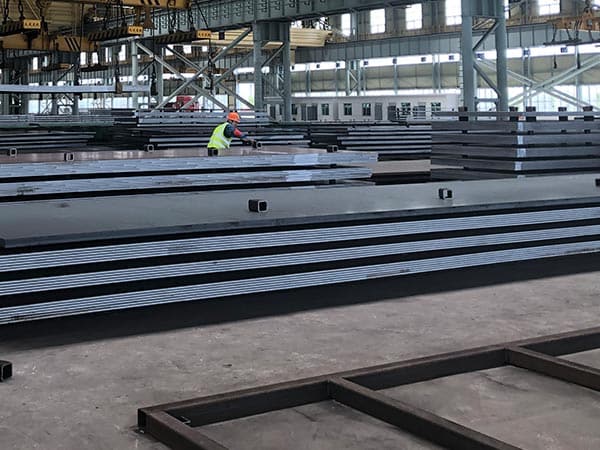
Understanding S700MC Oiled Steel Coil and Its Global Standards
S700MC is a high-yield strength, thermomechanically rolled steel specifically designed for cold forming. Governed by the EN 10149-2 standard, this material represents the pinnacle of modern metallurgical engineering, offering a minimum yield strength of 700 MPa. The "MC" suffix denotes its thermomechanical rolling process, which refines the grain structure to achieve superior strength without the excessive use of alloying elements that can hinder weldability.
When global manufacturers look for an ASME equivalent, they often encounter the challenge of cross-referencing European EN standards with American ASTM/ASME specifications. While there is no 100% identical match due to differing testing methodologies, the closest ASME/ASTM material to S700MC is ASTM A656 Grade 100 or ASTM A1011/A1011M Grade 100 [690]. These materials share similar high-strength low-alloy (HSLA) characteristics, focusing on weight reduction and structural integrity.
Chemical Composition and Micro-Alloying Strategy
The performance of S700MC is rooted in its precise chemical balance. Unlike traditional structural steels that rely on high carbon content for strength, S700MC utilizes micro-alloying elements such as Niobium (Nb), Vanadium (V), and Titanium (Ti). This approach maintains a low Carbon Equivalent Value (CEV), which is critical for maintaining excellent weldability and toughness at low temperatures.
| Element | S700MC (EN 10149-2) Max % | ASTM A656 Grade 100 Max % |
|---|---|---|
| Carbon (C) | 0.12 | 0.18 |
| Manganese (Mn) | 2.10 | 1.90 |
| Silicon (Si) | 0.60 | 0.60 |
| Phosphorus (P) | 0.025 | 0.025 |
| Sulfur (S) | 0.015 | 0.010 |
| Aluminium (Al) | 0.015 (Min) | - |
The oiled surface treatment is an essential secondary process. During the hot rolling and subsequent pickling process, the steel is susceptible to atmospheric oxidation (rust). Applying a thin, protective layer of oil ensures that the S700MC coil remains pristine during transit and storage, which is vital for automated laser cutting and precision bending operations where surface friction must be minimized.
Mechanical Properties: Strength Meets Ductility
The primary reason engineers specify S700MC is its exceptional strength-to-weight ratio. By using S700MC instead of standard S355 grade steel, designers can reduce the thickness of structural components by up to 40% without sacrificing load-bearing capacity. This weight reduction is a game-changer for the transportation and mobile crane industries.
- Yield Strength (Reh): Minimum 700 MPa (approx. 101.5 ksi).
- Tensile Strength (Rm): 750 to 950 MPa.
- Elongation (A80mm): Minimum 10% to 12% depending on thickness.
- Impact Energy: Often tested at -20°C or -40°C to ensure brittle fracture resistance.
Comparing this to ASTM A656 Grade 100, the American standard requires a minimum yield strength of 690 MPa (100 ksi) and a minimum tensile strength of 760 MPa (110 ksi). The overlap in these values allows S700MC to be substituted in many ASME-governed projects, provided that the specific design code (such as ASME BPVC Section VIII or B31.3) permits the use of EN materials through a formal engineering evaluation or "unlisted material" protocol.
Superior Cold Forming and Processing Performance
Despite its high strength, S700MC is engineered for cold forming. The fine-grained structure allows for tight bending radii that would typically cause cracking in standard high-carbon steels. For S700MC, the recommended minimum bending radius for a 90-degree bend is usually 2.0 to 2.5 times the material thickness (t), depending on the orientation of the bend relative to the rolling direction.
Welding S700MC requires attention to heat input. Because the strength is derived from thermomechanical rolling and micro-alloying, excessive heat can lead to softening in the Heat Affected Zone (HAZ). Standard welding processes like MAG (Metal Active Gas), MIG, and submerged arc welding are highly effective. It is generally recommended to use low-hydrogen consumables to prevent cold cracking, and preheating is often unnecessary for thicknesses below 10mm due to the low carbon content.
Environmental Adaptability and Durability
S700MC is frequently used in environments where vibration and dynamic loading are constant. Its high fatigue strength makes it ideal for chassis frames and boom structures. Furthermore, the inclusion of micro-alloys improves its atmospheric corrosion resistance slightly compared to plain carbon steel, though it is not a replacement for weathering steel like Corten. The oiled finish provides temporary protection, but for long-term environmental exposure, S700MC components are typically powder-coated, painted, or galvanized after fabrication.
Expanding Industry Applications
The versatility of S700MC oiled steel coil plate extends across several high-demand sectors:
- Automotive and Trucking: Long members of truck chassis, cross members, and cold-pressed parts where weight reduction directly translates to higher fuel efficiency and payload.
- Lifting and Handling: Telescopic booms for mobile cranes, aerial work platforms, and forest machinery components that require high rigidity and low mass.
- Agricultural Equipment: Large-scale plows, trailers, and harvester frames that must withstand significant mechanical stress in rugged terrain.
- Renewable Energy: Support structures for solar arrays and specialized components for wind turbine transport systems.
The transition from traditional materials to S700MC allows for sleeker designs and reduced material costs. While the price per ton of S700MC is higher than S355, the total project cost is often lower because less steel is required to achieve the same structural performance, and welding volumes are reduced due to thinner sections.
Technical Considerations for Substitution
When substituting S700MC for an ASME material like SA-656 Grade 100, engineers must verify the toughness requirements. ASME standards often emphasize Charpy V-notch impact testing at specific temperatures. While S700MC typically meets these requirements, the specific "S700MC" designation does not always guarantee a specific impact value unless the "L" (e.g., S700MC+L) or specific temperature grade is requested. Always consult the material test report (MTR) to ensure the batch meets the project's safety factors.
In the context of global procurement, sourcing S700MC in an oiled coil format offers logistical advantages. The coil format allows for continuous feeding into CNC punching or laser cutting lines, maximizing material yield and reducing scrap. The oil film prevents surface scratching during the decoiling and leveling process, ensuring that the final product maintains a high-quality aesthetic and functional finish.
Leave a message