
What is the EN10149-2 automotive steel coil S700MC application
Explore the comprehensive technical analysis of EN10149-2 S700MC automotive steel coil, covering mechanical properties, processing performance, and industrial applications.
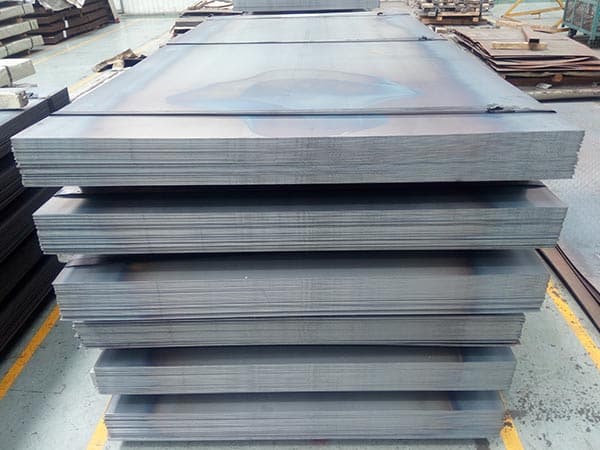
The Technical Essence of EN10149-2 S700MC Automotive Steel
The automotive and heavy machinery industries have undergone a paradigm shift toward lightweighting and high-performance materials. At the heart of this transformation lies EN10149-2 S700MC, a thermo-mechanically rolled (TMCP) high-yield strength steel designed specifically for cold forming. The 'S' denotes structural steel, '700' signifies a minimum yield strength of 700 MPa, and 'MC' indicates its thermomechanical rolling process and suitability for cold forming. Unlike traditional hot-rolled steels, S700MC achieves its superior strength through precise control of the rolling temperature and cooling rate, combined with micro-alloying elements like Niobium (Nb), Vanadium (V), and Titanium (Ti). This metallurgical approach ensures a fine-grained microstructure that balances extreme strength with exceptional ductility and weldability.
Metallurgical Precision: Chemical Composition and Micro-alloying
The performance of S700MC is rooted in its chemical blueprint. By keeping the carbon content low, the material maintains excellent weldability and toughness. The addition of micro-alloying elements facilitates grain refinement and precipitation hardening, which are critical for achieving high yield points without sacrificing formability. The following table outlines the typical chemical composition limits according to EN 10149-2 standards.
| Element | Maximum Content (%) |
|---|---|
| Carbon (C) | 0.12 |
| Manganese (Mn) | 2.10 |
| Silicon (Si) | 0.60 |
| Phosphorus (P) | 0.025 |
| Sulfur (S) | 0.015 |
| Aluminum (Al) | 0.015 |
| Niobium (Nb) | 0.09 |
| Vanadium (V) | 0.20 |
| Titanium (Ti) | 0.22 |
The synergy between these elements allows for a Carbon Equivalent Value (CEV) that is significantly lower than that of quenched and tempered steels of similar strength. This low CEV is a decisive factor for manufacturers who require high-speed welding processes without the risk of cold cracking or the need for extensive pre-heating.
Mechanical Integrity: Strength, Ductility, and Fatigue Resistance
The mechanical properties of S700MC are what make it a preferred choice for load-bearing structures. It offers a unique combination of high yield strength and high tensile strength, coupled with sufficient elongation to allow for complex bending and shaping. Engineers utilize these properties to reduce the thickness of structural components, thereby decreasing the overall weight of vehicles and machinery without compromising safety or durability.
| Property | Value (Thickness < 3mm) | Value (Thickness > 3mm) |
|---|---|---|
| Yield Strength (MPa) | Min 700 | Min 700 |
| Tensile Strength (MPa) | 750 - 950 | 750 - 950 |
| Elongation A80mm (%) | Min 10 | - |
| Elongation A5 (%) | - | Min 12 |
Beyond static strength, S700MC exhibits remarkable fatigue resistance. In dynamic environments such as truck chassis or crane booms, the material must withstand millions of stress cycles. The fine-grained structure of S700MC inhibits crack initiation and propagation, extending the service life of critical components. Furthermore, its impact toughness at low temperatures (often tested at -20°C or -40°C) ensures reliability in harsh climatic conditions, making it suitable for global distribution and diverse operational environments.
Exceptional Cold Forming and Processing Capabilities
One of the standout features of EN10149-2 S700MC is its cold forming capability. Despite its high strength, the steel can be bent, flanged, and cold-pressed into intricate shapes. This is achieved through the strict control of non-metallic inclusions, particularly sulfur, which is kept at very low levels to prevent edge cracking during bending. Manufacturers must adhere to minimum bending radii to ensure the integrity of the material during fabrication.
- Bending Performance: For thicknesses (t) up to 3mm, the recommended minimum bending radius is 1.0t for a 90-degree bend. For thicknesses between 3mm and 6mm, it increases to 1.5t.
- Laser Cutting: The uniform microstructure and clean surface finish of S700MC make it ideal for high-precision laser cutting. The narrow heat-affected zone (HAZ) ensures that the edges retain their mechanical properties.
- Welding: S700MC is compatible with all standard welding methods, including MAG, MIG, and laser welding. Due to the TMCP process, the heat input should be monitored to avoid excessive grain growth in the HAZ, which could lead to a localized reduction in strength.
Strategic Applications in the Automotive Sector
The primary driver for S700MC adoption is the quest for lightweighting. In the commercial vehicle sector, reducing the weight of the chassis and frame directly translates to higher payloads and improved fuel efficiency. S700MC is extensively used in the production of longitudinal beams, cross members, and suspension components for heavy-duty trucks and trailers. By replacing traditional S355MC or lower-grade steels with S700MC, designers can achieve weight savings of up to 30% while maintaining the same structural stiffness.
In passenger vehicles, S700MC finds its place in safety-critical parts such as bumper beams, seat frames, and reinforcement pillars. The material's ability to absorb energy during an impact, combined with its high strength, enhances passenger safety. The trend toward electric vehicles (EVs) has further accelerated the demand for S700MC, as the weight of battery packs necessitates the use of high-strength, lightweight materials for the vehicle's structural frame to maintain range and performance.
Expansion into Heavy Machinery and Lifting Equipment
The utility of S700MC extends far beyond the automotive assembly line. The lifting and transport industry relies on this grade for the construction of telescopic crane booms, aerial work platforms, and heavy-duty trailers. In these applications, the high strength-to-weight ratio allows for longer reach and higher lifting capacities. The material's consistency ensures that large-scale components can be manufactured with tight tolerances and predictable performance.
Agricultural machinery manufacturers also utilize S700MC for plow frames, harvester components, and trailer chassis. The abrasive and high-stress nature of farming operations requires materials that can withstand both mechanical load and environmental wear. S700MC provides the necessary robustness while allowing for modern, streamlined designs that reduce soil compaction by lowering the overall weight of the machinery.
Environmental Adaptability and Sustainability
In an era focused on sustainability, S700MC offers significant environmental benefits. The reduction in material usage through higher strength leads to lower energy consumption during the manufacturing and transportation phases. Furthermore, the longevity and recyclability of S700MC contribute to a circular economy. Its resistance to atmospheric corrosion can be further enhanced through galvanizing or advanced coating systems, ensuring that structures remain functional for decades. The material's performance in sub-zero temperatures also makes it a prime candidate for infrastructure projects in arctic or high-altitude regions, where traditional steels might become brittle.
Optimization for Future Engineering Challenges
As engineering demands continue to evolve, the role of EN10149-2 S700MC will expand. The integration of advanced simulation tools allows designers to push the limits of this material, creating geometries that were previously impossible. The consistency of S700MC's mechanical properties across different batches is vital for automated production lines and robotic welding systems. By understanding the intricate balance of chemistry, processing, and application, industries can leverage S700MC to build a more efficient, safer, and sustainable future. The strategic selection of this high-strength steel is not merely a choice of material, but a commitment to advanced engineering excellence.
Leave a message