
What is the S460MC hot rolled flat hot rolling
Explore the detailed technical specifications of S460MC hot-rolled steel. This guide covers its chemical composition, mechanical properties, thermomechanical rolling process, and diverse industrial applications.
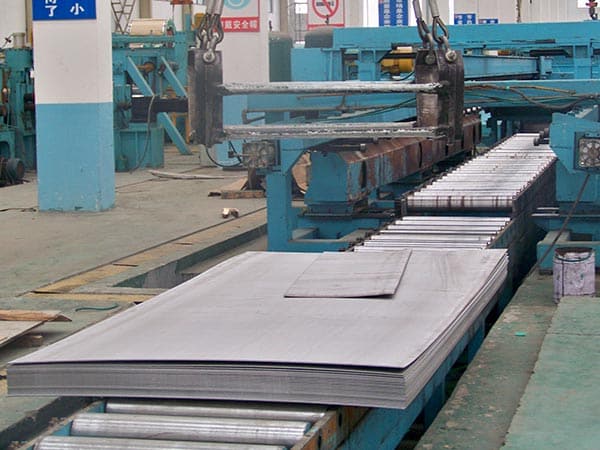
Defining S460MC: The Pinnacle of Micro-Alloyed High-Strength Steel
S460MC is a high-yield strength, thermomechanically rolled steel specifically designed for cold forming. It is governed by the European standard EN 10149-2. The nomenclature itself reveals critical information: 'S' stands for structural steel, '460' indicates a minimum yield strength of 460 MPa, and 'MC' signifies that the material is thermomechanically rolled (M) and suitable for cold forming (C). This steel grade represents a significant leap from traditional carbon steels, offering a superior strength-to-weight ratio that is essential for modern engineering challenges.
The development of S460MC was driven by the need for materials that could reduce the overall weight of structures without compromising safety or durability. By utilizing advanced metallurgical techniques, manufacturers can produce a steel that is not only strong but also exceptionally ductile and easy to process. This balance of properties makes it a preferred choice for industries ranging from automotive manufacturing to heavy machinery production.
The Science of Thermomechanical Rolling (TMCP)
The 'M' in S460MC stands for Thermomechanically Controlled Processing (TMCP). Unlike traditional hot rolling followed by normalizing, TMCP involves precise temperature control and specific deformation sequences during the rolling process. This technique refines the grain structure of the steel to a microscopic level.
During the cooling phase, the controlled transformation of austenite results in a fine-grained ferrite-pearlite or bainitic microstructure. This fine grain size is the primary reason why S460MC achieves such high yield strength while maintaining excellent toughness and weldability. Traditional steels often sacrifice weldability to gain strength by increasing carbon content; however, TMCP allows S460MC to keep carbon levels low, ensuring that the material remains highly versatile for fabrication.
Chemical Composition and the Role of Micro-Alloying
The exceptional performance of S460MC is rooted in its precise chemical makeup. It utilizes micro-alloying elements such as Niobium (Nb), Vanadium (V), and Titanium (Ti). These elements, even in small quantities, significantly influence the final properties of the steel.
| Element | Maximum Content (%) | Primary Function |
|---|---|---|
| Carbon (C) | 0.12 | Ensures weldability and prevents brittleness. |
| Manganese (Mn) | 1.60 | Increases strength and hardness. |
| Silicon (Si) | 0.50 | Acts as a deoxidizer and improves strength. |
| Phosphorus (P) | 0.025 | Kept low to maintain toughness. |
| Sulfur (S) | 0.015 | Kept low to improve ductility and surface quality. |
| Aluminium (Al) | 0.015 (min) | Grain refinement and deoxidation. |
| Nb + V + Ti | 0.22 | Micro-alloying for grain refinement and precipitation hardening. |
The low carbon equivalent (CEV) is a standout feature. By keeping carbon levels below 0.12%, the steel exhibits minimal hardening in the heat-affected zone (HAZ) during welding, which drastically reduces the risk of cold cracking. The addition of Niobium and Titanium helps in pinning grain boundaries during the rolling process, preventing grain growth and ensuring a uniform, high-strength structure.
Mechanical Properties: Strength Meets Ductility
The mechanical integrity of S460MC is what defines its utility in structural applications. While the yield strength is the headline figure, the tensile strength and elongation values are equally critical for engineers designing complex components.
- Yield Strength (ReH): Minimum 460 MPa. This is the stress level at which the steel begins to deform plastically.
- Tensile Strength (Rm): 520 to 670 MPa. This represents the maximum load the material can support before fracture.
- Elongation (A5): Minimum 14% to 17% (depending on thickness). High elongation ensures the material can be bent and shaped without cracking.
- Impact Strength: While EN 10149-2 does not always mandate impact testing unless specified, S460MC generally exhibits good low-temperature toughness due to its fine-grained structure.
These properties allow for the design of thinner sections that can carry the same loads as thicker, lower-grade steels. This weight reduction directly translates to fuel efficiency in vehicles and lower material costs in large-scale constructions.
Superior Cold Forming and Bending Capabilities
One of the primary reasons for selecting S460MC is its suitability for cold forming. Unlike standard structural steels which may crack when subjected to tight radii, S460MC is designed to flow. This makes it ideal for complex pressed parts and cold-rolled profiles.
When bending S460MC, it is important to consider the bending radius. For a sheet thickness (t), the recommended minimum internal bending radius is typically 1.0t to 1.5t for a 90-degree bend, depending on the orientation (transverse or longitudinal). The high purity of the steel, specifically the low sulfur content, ensures that there are fewer non-metallic inclusions that could act as initiation points for cracks during the forming process.
Advanced Welding Performance
S460MC is highly compatible with all standard welding processes, including MAG (Metal Active Gas), MMA (Manual Metal Arc), and Laser Welding. Because of its low alloy content and refined microstructure, it does not typically require preheating for standard thicknesses, which simplifies the production workflow and reduces energy costs.
However, to maintain the mechanical properties of the base metal in the weld joint, it is crucial to use appropriate filler materials that match or exceed the strength of S460MC. Furthermore, the heat input should be controlled to avoid excessive grain growth in the heat-affected zone, which could lead to a localized reduction in toughness. The stability of the arc and the cleanliness of the steel surface contribute to high-quality, defect-free welds.
Environmental Adaptability and Corrosion Resistance
While S460MC is not a stainless steel, its refined structure provides a consistent base for various protective coatings. Whether it is hot-dip galvanizing, zinc-rich priming, or powder coating, the surface of S460MC bonds well with protective layers. This is vital for components exposed to harsh environments, such as truck chassis or agricultural machinery.
In terms of fatigue resistance, the fine-grained nature of S460MC offers a distinct advantage. Fatigue cracks propagate more slowly through fine grains than through coarse ones. This makes S460MC particularly effective for parts subjected to cyclic loading, extending the service life of the final product and reducing maintenance requirements.
Strategic Industry Applications
The versatility of S460MC has led to its adoption across a wide spectrum of industrial sectors. Its ability to provide high strength without the bulk makes it a cornerstone of modern structural design.
- Automotive and Transportation: Used extensively for truck frames, chassis components, and cross members. The weight savings contribute to higher payloads and better fuel economy.
- Heavy Machinery: Ideal for crane booms, excavator arms, and agricultural equipment where high stress and movement are constant factors.
- Storage Systems: Used in the manufacturing of high-load racking systems and silos where structural stability is paramount.
- Construction: Employed in cold-formed sections and profiles for building frames, providing a lightweight alternative to traditional hot-rolled sections.
The transition to S460MC often allows manufacturers to reduce the thickness of their components by 20% to 30% compared to S355 grade steels, leading to significant logistical and environmental benefits.
Processing Recommendations and Best Practices
To maximize the benefits of S460MC, certain processing guidelines should be followed. When laser cutting, the consistent chemical composition and clean surface of S460MC allow for high cutting speeds and clean edges. If the material is to be galvanized, the silicon content is controlled to ensure a predictable and aesthetic zinc layer thickness.
Storage is also an important factor. Like all hot-rolled steels, S460MC should be stored in a dry environment to prevent surface oxidation (rust). If the material is supplied in a pickled and oiled condition, the oil layer should be removed before welding or painting to ensure optimal adhesion. By adhering to these professional standards, fabricators can ensure that the final product fully realizes the potential of this high-performance steel grade.
Leave a message