
What grade is equal to the S420MC automobile structure steel
Identify S420MC automobile structure steel equivalents across global standards including ASTM, GB, and JIS. This guide analyzes mechanical properties, chemical composition, and processing performance for automotive and industrial applications.
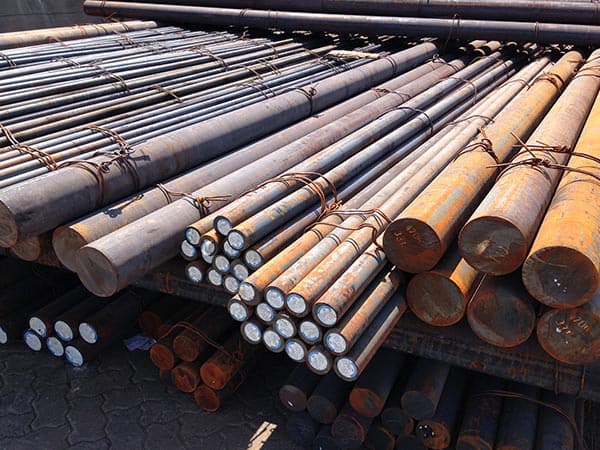
Defining S420MC: The Benchmark for High-Strength Cold Forming
S420MC is a high-strength, low-alloy (HSLA) steel grade specifically designed for cold forming processes, governed by the European standard EN 10149-2. The designation itself reveals its core characteristics: 'S' stands for structural steel, '420' represents the minimum yield strength of 420 MPa, 'M' indicates it is thermomechanically rolled, and 'C' signifies its suitability for cold forming. This steel is favored in the automotive industry for its exceptional balance between weight reduction and structural integrity.
Global Equivalents: Mapping S420MC Across International Standards
Engineers and procurement specialists often need to source local alternatives to S420MC due to supply chain logistics or regional manufacturing requirements. While exact chemical matches are rare, several grades offer nearly identical mechanical performance and processing characteristics.
| Standard | Equivalent Grade | Notes |
|---|---|---|
| Chinese GB/T 3273 | Q420L | Specifically designed for automotive frames with high weldability. |
| Chinese GB/T 1591 | Q420BF | General high-strength structural steel with similar yield points. |
| ASTM (USA) | A1011 HSLAS Grade 60 Class 1 | Comparable yield strength, though chemical micro-alloying varies slightly. |
| JIS G3134 (Japan) | SPFH 590 | Automotive structural steel with high formability requirements. |
| ISO 6930-2 | HSA 420 | International standard for high-yield-strength flat products. |
The Q420L grade from the Chinese standard is perhaps the most common substitute in global manufacturing hubs, offering nearly identical thermomechanical processing and grain refinement.
Chemical Composition and Grain Refinement
The superior properties of S420MC are achieved through a precise chemical blueprint. Unlike traditional carbon steels, S420MC utilizes micro-alloying elements such as Niobium (Nb), Vanadium (V), and Titanium (Ti). These elements act as grain refiners during the thermomechanical rolling process.
- Carbon (C): Kept low (typically ≤ 0.12%) to ensure excellent weldability and prevent brittleness.
- Manganese (Mn): Enhances strength and hardenability, usually capped at 1.60%.
- Silicon (Si): Provides solid solution strengthening while maintaining surface quality.
- Micro-alloys (Nb/Ti/V): The total content is strictly controlled to ensure fine-grained microstructure, which is the secret behind its high toughness at low temperatures.
Mechanical Performance: Beyond the Yield Strength
While the 420 MPa yield strength is the headline figure, the practical utility of S420MC lies in its elongation and impact toughness. For thicknesses less than 3mm, the elongation at break (A80) typically exceeds 16%, allowing for complex geometry stamping without cracking.
The Thermomechanical Rolling (M) process ensures that the steel maintains high strength without the need for additional heat treatment. This process results in a fine-grained ferrite-pearlite or ferrite-bainite structure, which provides a high resistance to fatigue—a critical factor for automotive chassis components subjected to constant vibration and cyclic loading.
Exceptional Processing Performance
One of the primary reasons S420MC is specified for automobile structures is its ease of fabrication. It is engineered to perform predictably in the workshop.
- Cold Bending: S420MC can be bent to tight radii. For example, a 90-degree bend can typically be achieved with a mandrel radius of 0.5 to 1.5 times the thickness, depending on the rolling direction.
- Weldability: Due to its low Carbon Equivalent (Ceq), S420MC is compatible with all standard welding methods, including MAG, MIG, and laser welding. It does not require preheating, which speeds up assembly lines.
- Laser Cutting: The clean chemical composition and uniform microstructure allow for high-precision laser cutting with minimal heat-affected zones (HAZ), ensuring the edges remain ductile.
Environmental Adaptability and Durability
S420MC is often used in environments where it is exposed to moisture and road salts. While it is not a "weathering steel" in the traditional sense, its fine-grained structure provides a better substrate for modern anti-corrosion coatings like hot-dip galvanizing or cathodic dip painting (KTL). The surface quality (Type A or B) is optimized to ensure high adhesion of these protective layers, extending the service life of the vehicle frame to over 15 years in harsh conditions.
Industry Expansion: Where S420MC Excels
While the automotive sector is the primary consumer, the attributes of S420MC have led to its adoption in various heavy-duty industries.
- Automotive Chassis: Crossmembers, longitudinal beams, and suspension towers where weight reduction directly impacts fuel efficiency.
- Heavy Machinery: Crane arms and telescopic booms where a high strength-to-weight ratio is vital for lifting capacity.
- Cold-Formed Sections: Used in the construction of automated warehouses and racking systems that require high load-bearing capacity with minimal material volume.
- Container Manufacturing: Corner castings and structural ribs for intermodal containers.
By replacing traditional S235 or S355 steels with S420MC, manufacturers can often reduce component weight by 20% to 30% without sacrificing safety. This shift is a cornerstone of modern "lightweighting" strategies in the transport sector, helping to meet stringent CO2 emission targets and increasing the payload capacity of commercial vehicles.
Leave a message