
What is the stock of S315MC large excavator steel?
Explore the technical specifications, mechanical properties, and inventory availability of S315MC steel specifically optimized for large excavator manufacturing. This guide details processing advantages and supply chain insights for heavy machinery compon
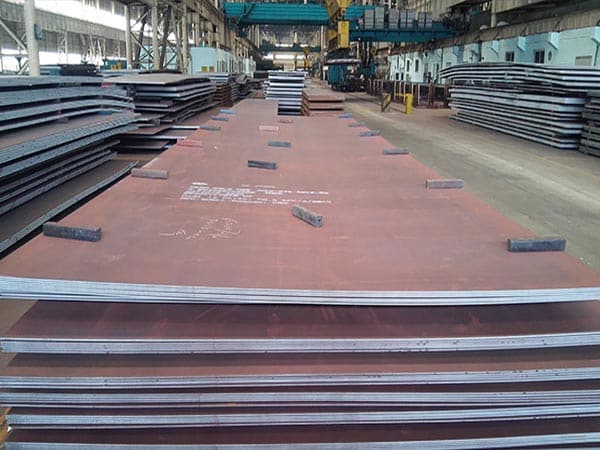
The Critical Role of S315MC in Heavy Machinery Engineering
Large excavators operate under extreme conditions, requiring structural integrity that can withstand high cyclic loads, impact forces, and environmental stressors. S315MC, a high-yield-strength cold-forming steel produced through thermomechanical rolling, has become a cornerstone material for these machines. Unlike traditional structural steels, S315MC offers a unique balance of strength and ductility, which is essential for the complex geometries found in excavator frames and boom assemblies.
The demand for S315MC stock is driven by the global push for lightweighting in construction equipment. By utilizing S315MC, manufacturers can reduce the thickness of structural plates without compromising the machine's lifting capacity or safety factor. This weight reduction directly translates to improved fuel efficiency and lower operational costs for the end-user, making the availability of this specific grade a high priority for procurement departments worldwide.
Technical Specifications and Metallurgical Composition
S315MC is governed by the EN 10149-2 standard, which specifies the requirements for hot-rolled flat products made of high-yield-strength steels for cold forming. The 'MC' suffix indicates that the steel is thermomechanically rolled (M) and designed for cold forming (C). The metallurgical design relies on micro-alloying elements such as Niobium (Nb), Vanadium (V), and Titanium (Ti) to achieve grain refinement.
| Element | Maximum Percentage (%) |
|---|---|
| Carbon (C) | 0.12 |
| Manganese (Mn) | 1.30 |
| Silicon (Si) | 0.50 |
| Phosphorus (P) | 0.025 |
| Sulfur (S) | 0.020 |
| Aluminium (Al) | 0.015 (min) |
This low carbon content is the secret behind its exceptional weldability. For large excavator components that require extensive welding, such as the undercarriage and the revolving platform, S315MC minimizes the risk of cold cracking in the heat-affected zone (HAZ), often eliminating the need for costly preheating processes.
Mechanical Performance: Yield and Tensile Strengths
The mechanical properties of S315MC are engineered to provide a high safety margin. For large excavators, the yield strength is the most critical parameter, as it defines the point at which the steel will permanently deform. S315MC ensures a minimum yield strength of 315 MPa, which is significantly higher than standard S235 or S275 grades.
| Property | Value Range |
|---|---|
| Yield Strength (Reh) | Min 315 MPa |
| Tensile Strength (Rm) | 390 - 510 MPa |
| Elongation (A5) | Min 20% - 24% (depending on thickness) |
| Bending Radius (90°) | 0.25t to 0.5t |
The high elongation values indicate that the material can absorb significant energy before fracture, a property known as toughness. In the context of an excavator bucket or arm, this means the steel can withstand sudden impacts from rocks or hard soil without catastrophic failure. The consistent mechanical properties across the plate ensure that the structural performance is predictable during the machine's entire lifecycle.
Processing Performance: Bending, Cutting, and Welding
Fabricating large excavator parts involves complex cold-forming operations. S315MC is specifically designed for these processes. Its fine-grained structure allows for tight bending radii without surface cracking, which is vital for creating the streamlined, high-strength box sections used in modern excavator booms. Using S315MC allows fabricators to achieve more precise tolerances, reducing the need for manual rework and speeding up the assembly line.
When it comes to thermal cutting, whether using laser, plasma, or oxy-fuel, S315MC exhibits minimal distortion. The thermomechanical rolling process results in low internal stresses, ensuring that parts remain flat and true after cutting. This dimensional stability is crucial for the automated welding robots used in modern heavy machinery plants, where even a few millimeters of deviation can disrupt the production flow.
- Welding: Compatible with MIG/MAG, submerged arc, and laser welding.
- Bending: Excellent springback predictability for automated CNC bending.
- Surface Quality: Typically supplied with a pickled and oiled surface to protect against corrosion during storage and improve paint adhesion.
Environmental Adaptability and Fatigue Resistance
Excavators are deployed in diverse climates, from the sub-zero temperatures of Siberian mines to the humid heat of tropical construction sites. S315MC maintains its ductility at lower temperatures, which is a critical safety requirement for preventing brittle fracture. The micro-alloyed structure provides a natural resistance to atmospheric corrosion, although most excavator parts are further protected by advanced coating systems.
Fatigue resistance is another area where S315MC excels. The structural components of an excavator undergo millions of load cycles. The refined grain structure of S315MC inhibits the initiation and propagation of fatigue cracks. This durability ensures that the machine can operate for tens of thousands of hours without requiring major structural repairs, providing a higher return on investment for construction companies.
Inventory Dynamics: Why Stock Availability Matters
The question of "what is the stock" is not just about quantity but about the diversity of specifications. For large excavator manufacturers, stock must include a wide range of thicknesses, typically from 3mm up to 12mm or 15mm for S315MC. Larger excavators may transition to higher grades like S420MC or S700MC for thicker sections, but S315MC remains the workhorse for secondary structures and cab components.
Stock levels are influenced by global steel production cycles and the volatility of raw material costs. Leading steel service centers maintain strategic reserves of S315MC in standard widths (1250mm and 1500mm) to ensure that production lines do not stop. For custom projects, specialized stockists offer decoiling and blanking services, providing ready-to-weld parts directly to the excavator assembly plant. This just-in-time delivery model relies heavily on a robust and transparent inventory of S315MC plates.
Comparative Analysis with Alternative Grades
Choosing S315MC over standard structural steel like s355jr offers several advantages. While S355JR has a higher yield strength, S315MC provides superior cold-forming properties and better surface finish. In applications where the component requires intricate bending, S315MC is the superior choice. Furthermore, the weight savings achieved by moving from a standard 8mm S235 plate to a 6mm S315MC plate can be substantial when multiplied across the entire frame of a 20-ton excavator.
Manufacturers often evaluate S315MC against S355MC. While S355MC offers even higher strength, it may come at a higher price point and slightly reduced ductility. For many non-primary structural parts of an excavator, S315MC provides the "sweet spot" of performance, cost-effectiveness, and ease of processing. Understanding these nuances is key for engineers who must balance performance requirements with manufacturing budgets.
The availability of S315MC is a vital indicator of the health of the heavy machinery supply chain. As infrastructure projects continue to drive the demand for large excavators, the role of this high-strength, cold-forming steel will only grow. Reliable stock, backed by comprehensive mill test certificates and consistent metallurgical quality, remains the foundation upon which the world's most powerful earthmoving machines are built.
Leave a message