
Growth of steel en 10149-2 s700mc exported to the Middle East
Comprehensive analysis of the rising demand for EN 10149-2 S700MC high-strength steel in the Middle East, covering mechanical properties, processing performance, and infrastructure applications.
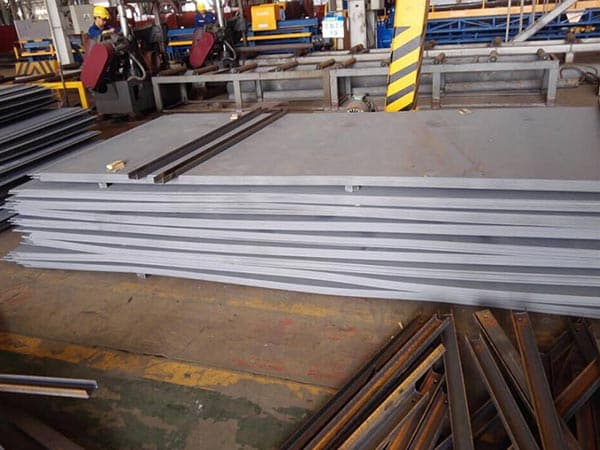
The Strategic Rise of S700MC in Middle Eastern Infrastructure
The Middle Eastern industrial landscape is undergoing a radical transformation, shifting from traditional oil-dependent economies to diversified hubs of infrastructure and manufacturing. At the heart of this evolution lies the demand for advanced materials that can withstand extreme conditions while optimizing structural efficiency. EN 10149-2 S700MC, a thermomechanically rolled high-yield strength steel, has emerged as a cornerstone material for this transition. Its export growth to regions like Saudi Arabia, the UAE, and Qatar is not merely a trend but a response to the need for lightweight, high-load-bearing solutions in challenging environments.
Understanding the Technical Superiority of EN 10149-2 S700MC
S700MC is defined by the European standard EN 10149-2, which specifies the requirements for hot-rolled high-yield strength steels for cold forming. The 'S' denotes structural steel, '700' represents the minimum yield strength of 700 MPa, and 'MC' indicates that the steel is thermomechanically rolled (M) and suitable for cold forming (C). This specific manufacturing process creates a fine-grained microstructure that balances extreme strength with remarkable ductility, a combination that traditional carbon steels cannot achieve at similar weight profiles.
For Middle Eastern engineering firms, the primary draw of S700MC is its ability to reduce the overall weight of structures. By utilizing a material with nearly double the yield strength of conventional S355 steel, designers can reduce plate thickness without compromising safety. This weight reduction translates directly into lower shipping costs, easier handling on-site, and reduced carbon footprints during the construction phase of mega-projects like NEOM or the various expansion works in the Red Sea region.
Mechanical Properties and Material Integrity
The mechanical performance of S700MC is the benchmark for high-strength low-alloy (HSLA) steels. Its chemical composition is strictly controlled, with low carbon content (typically below 0.12%) and micro-alloying elements such as niobium, vanadium, and titanium. These elements facilitate grain refinement and precipitation hardening during the thermomechanical rolling process.
| Property | Value (Thickness ≤ 8mm) | Unit |
|---|---|---|
| Minimum Yield Strength (ReH) | 700 | MPa |
| Tensile Strength (Rm) | 750 - 950 | MPa |
| Minimum Elongation (A80mm) | 10 - 12 | % |
| Minimum Elongation (A5) | 13 | % |
These properties ensure that S700MC can absorb significant energy and resist deformation under high stress. In the Middle East, where seismic activity in certain zones and extreme thermal expansion are factors, the high yield-to-tensile ratio of S700MC provides a critical safety margin for heavy-duty machinery and structural frameworks.
Cold Forming and Processing Excellence
One of the most significant advantages of EN 10149-2 S700MC is its exceptional cold-forming capability. Despite its high strength, the steel can be bent, folded, and shaped with precision. This is particularly relevant for the Middle Eastern transport sector, where the fabrication of truck chassis, crane booms, and trailers requires materials that can be formed into complex geometries without cracking.
- Bending Radius: For plates with a thickness (t) under 3mm, the minimum recommended bending radius is 1.0t. For thicknesses between 3mm and 6mm, it remains around 1.5t, showcasing its versatility.
- Welding Performance: Due to its low carbon equivalent (CEV), S700MC exhibits excellent weldability. It can be welded using standard methods such as MAG, TIG, and submerged arc welding. This is vital for regional fabricators who need to maintain high production speeds without the risk of cold cracking.
- Cutting Precision: The steel responds well to laser, plasma, and waterjet cutting, allowing for intricate components used in the burgeoning renewable energy sector, specifically for solar tracking systems that require both strength and precision.
Environmental Adaptability in Desert and Coastal Climates
The Middle East presents a unique set of environmental challenges, including extreme heat, high UV radiation, and, in coastal areas, high salinity and humidity. S700MC, while not a stainless steel, offers better atmospheric corrosion resistance than standard carbon steels due to its dense microstructure and micro-alloying elements. When combined with modern galvanizing or specialized coating technologies, S700MC structures demonstrate longevity even in the harsh sands of the Rub' al Khali or the humid shores of the Persian Gulf.
Thermal stability is another critical factor. The diurnal temperature range in desert environments can exceed 40°C. S700MC maintains its mechanical integrity across these fluctuations, preventing the fatigue and micro-fractures that can plague lower-grade materials subjected to constant thermal cycling. This makes it an ideal choice for the massive storage tanks and pipeline supports required by the regional oil and gas industry.
Expanding Applications Across Middle Eastern Industries
The export of S700MC to the Middle East is being driven by several key sectors that are currently seeing unprecedented investment. The move toward "Green Steel" and sustainable construction practices has also put S700MC in the spotlight, as using less material to achieve the same structural goal is a primary tenet of modern eco-friendly engineering.
Heavy Transport and Logistics: The logistics network across the GCC is expanding. Light-weighting trailers and tankers using S700MC allows for higher payloads, reducing the number of trips required and lowering fuel consumption. This aligns with regional goals to improve transport efficiency.
Construction and Lifting Equipment: As skylines in Riyadh and Dubai continue to rise, the demand for high-capacity cranes and lifting gear increases. S700MC is the preferred material for telescopic booms, where high strength-to-weight ratios are non-negotiable for reach and stability.
Renewable Energy Infrastructure: The Middle East is becoming a global leader in solar energy. The massive solar parks require durable, high-strength mounting structures that can withstand sandstorms and high wind loads. S700MC provides the necessary rigidity while keeping the structural profile slim, reducing wind resistance.
Market Dynamics and Export Logistics
Exporting S700MC to the Middle East involves navigating complex logistics and quality assurance standards. European and Asian mills are the primary suppliers, ensuring that every batch meets the EN 10149-2 certification. For buyers in the Middle East, sourcing S700MC requires a focus on mill test certificates (MTC) to verify the thermomechanical processing history and chemical composition.
The growth in trade volume is supported by the regional push for localized manufacturing. Many Middle Eastern countries are incentivizing the import of high-grade raw materials to be processed in local "Special Economic Zones." This creates a symbiotic relationship where S700MC is imported as coils or plates and transformed into high-value components for export or local use, further fueling the demand for this specific steel grade.
Strategic stockpiling and just-in-time delivery models are becoming common among steel distributors in Jebel Ali and Dammam, ensuring that the fast-paced construction schedules of the region are never delayed by material shortages. The reliability of S700MC, combined with its processing ease, makes it a low-risk, high-reward investment for regional contractors.
Technical Challenges and Best Practices
While S700MC offers numerous benefits, successful implementation requires technical expertise. Fabricators must be aware that the high strength of the material requires higher pressing forces during bending. Springback is also more pronounced compared to S355, necessitating precise calculations and modern CNC machinery. In welding, while the steel is highly weldable, maintaining the correct heat input is essential to preserve the fine-grained structure in the heat-affected zone (HAZ).
Engineers are increasingly utilizing advanced simulation software to model the behavior of S700MC under the specific load conditions found in Middle Eastern projects. These simulations often prove that the initial higher cost per ton of S700MC is offset by the reduction in total tonnage required and the long-term durability of the finished product. This value-based engineering approach is what continues to drive the export growth of EN 10149-2 S700MC into this dynamic market.
Leave a message