
What is the process principle of en 10149-2 specification
Detailed analysis of EN 10149-2 specification, focusing on thermomechanical rolling principles, micro-alloying techniques, and the performance of S355MC to S700MC steel grades.
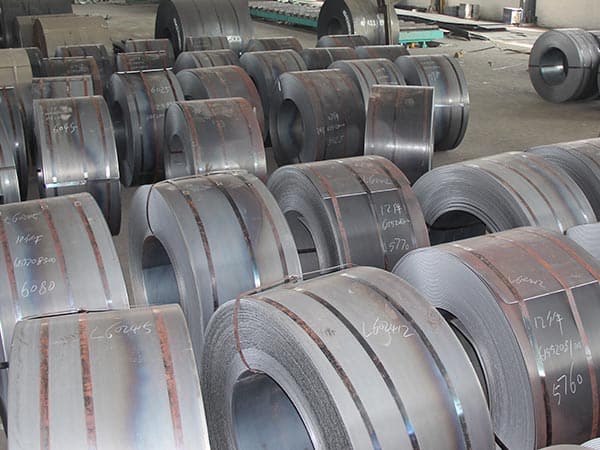
Understanding the Metallurgical Foundation of EN 10149-2
The EN 10149-2 specification governs hot-rolled flat products made of high yield strength steels for cold forming. Unlike traditional normalized steels, the core principle of this standard lies in Thermomechanical Rolling (TMCP). This process is not merely a heating and pressing sequence; it is a sophisticated metallurgical intervention that manipulates the microstructure of the steel at a molecular level. By strictly controlling the temperature and the deformation ratio during the rolling stages, manufacturers can achieve a fine-grained structure that provides a unique combination of high strength, excellent toughness, and superior weldability.
The 'MC' suffix in grades like S355MC or S700MC denotes 'Thermomechanically Rolled' (M) and 'Cold Forming' (C). The fundamental objective is to produce steel that can withstand extreme structural loads while remaining lightweight and easy to manipulate in fabrication shops. This balance is achieved by bypassing the need for expensive alloying elements, instead relying on the precision of the rolling mill's thermal profile.
The Mechanics of Thermomechanical Control Process (TMCP)
The process principle of EN 10149-2 centers on the non-recrystallization temperature (Tnr). During standard rolling, steel grains recrystallize and grow as they cool. In TMCP, the final rolling passes occur at temperatures where recrystallization is suppressed. This leads to the 'pancaking' of austenite grains, creating a high density of nucleation sites for the subsequent transformation into ferrite. The result is an ultra-fine grain size, often measured in microns, which significantly enhances the yield strength according to the Hall-Petch relationship.
- Stage 1: Reheating: Slabs are heated to a specific temperature to ensure micro-alloying elements like Niobium (Nb), Vanadium (V), and Titanium (Ti) are in solid solution.
- Stage 2: Roughing: Initial deformation reduces the thickness and refines the initial grain structure.
- Stage 3: Finish Rolling: Conducted below the Tnr, this stage introduces heavy deformation into the non-recrystallizing austenite.
- Stage 4: Accelerated Cooling: Rapid cooling transforms the deformed austenite into a fine-grained ferrite-pearlite or bainitic structure, locking in the mechanical properties.
Chemical Synergy and Micro-Alloying Strategy
The chemical composition defined under EN 10149-2 is intentionally designed for low carbon equivalents (CEV). High carbon content typically improves strength but severely compromises weldability and ductility. To compensate for low carbon, the specification utilizes micro-alloying. Elements such as Niobium and Titanium are added in minute quantities (often less than 0.05%) to pin grain boundaries and prevent grain growth during the high-temperature phases of production.
| Grade | Yield Strength (min MPa) | Tensile Strength (MPa) | Elongation (min %) | Carbon Max (%) |
|---|---|---|---|---|
| S315MC | 315 | 390-510 | 20-24 | 0.12 |
| S355MC | 355 | 430-550 | 19-23 | 0.12 |
| S420MC | 420 | 480-620 | 16-19 | 0.12 |
| S500MC | 500 | 550-700 | 12-14 | 0.12 |
| S700MC | 700 | 750-950 | 10-12 | 0.12 |
This lean chemistry ensures that the Carbon Equivalent Value remains low, which is a critical factor for end-users who perform extensive welding. It minimizes the risk of cold cracking in the heat-affected zone (HAZ) and often eliminates the need for costly pre-heating or post-weld heat treatments.
Mechanical Superiority and Cold Forming Performance
The primary advantage of EN 10149-2 steels is their cold forming capability. Because the grain structure is so refined, the material can undergo significant plastic deformation without fracturing. Manufacturers of complex automotive components or heavy-duty crane booms rely on this property to create intricate shapes through bending and pressing.
Impact Toughness: Although EN 10149-2 focuses on yield strength, the TMCP process inherently improves low-temperature toughness. Many of these steels are tested at -20°C or -40°C to ensure they remain ductile in arctic or high-altitude environments. This makes them ideal for mobile equipment that operates in diverse climatic conditions.
Fatigue Resistance: The homogeneous microstructure of S700MC and similar grades provides excellent resistance to cyclic loading. In the transportation sector, where chassis components are subjected to constant vibration and stress fluctuations, the high fatigue limit of TMCP steels translates directly into a longer service life and reduced maintenance costs.
Industrial Applications: From Automotive to Infrastructure
The shift toward lightweighting in modern engineering has propelled EN 10149-2 steels to the forefront of material selection. By using a higher grade like S700MC instead of a conventional S355 grade, engineers can reduce the thickness of structural members by up to 30-40% while maintaining the same load-bearing capacity. This weight reduction is vital for:
- Commercial Vehicles: Reducing the curb weight of truck chassis and trailers to increase payload capacity and fuel efficiency.
- Lifting Equipment: Telescopic crane booms require high strength-to-weight ratios to reach greater heights and lift heavier loads safely.
- Agricultural Machinery: Enhancing the durability of plows, harvesters, and seeders while keeping the equipment light enough to prevent soil compaction.
- Storage Systems: High-bay racking systems utilize the high yield strength to support massive vertical loads with minimal material usage.
Practical Fabrication Considerations
While EN 10149-2 steels offer remarkable benefits, they require specific handling during fabrication. Welding is the most critical area. Because the strength is derived from the TMCP grain refinement rather than high alloy content, excessive heat input can cause "grain coarsening" in the heat-affected zone, leading to a localized loss of strength. Welders should use low heat input techniques and ensure rapid cooling between passes to preserve the integrity of the base metal.
Laser Cutting is another area where these steels excel. The low impurity levels and consistent thickness tolerances of EN 10149-2 products result in clean, precise edges with minimal dross. This efficiency in the cutting process further reduces the total cost of ownership for manufacturers.
The evolution of the EN 10149-2 specification represents a pinnacle in steel metallurgy, bridging the gap between traditional structural steels and high-performance alloys. By mastering the principles of thermomechanical rolling, the industry has gained access to materials that are stronger, lighter, and more sustainable than ever before. As global demand for energy efficiency and resource conservation grows, the role of TMCP steels will only become more central to the future of heavy engineering and transportation design.
Leave a message