
What are the requirements for welding thick pickled steel sheet s420mc
A comprehensive technical guide on the welding requirements for thick pickled S420MC steel, covering metallurgical properties, filler metal selection, heat input control, and industrial application standards.
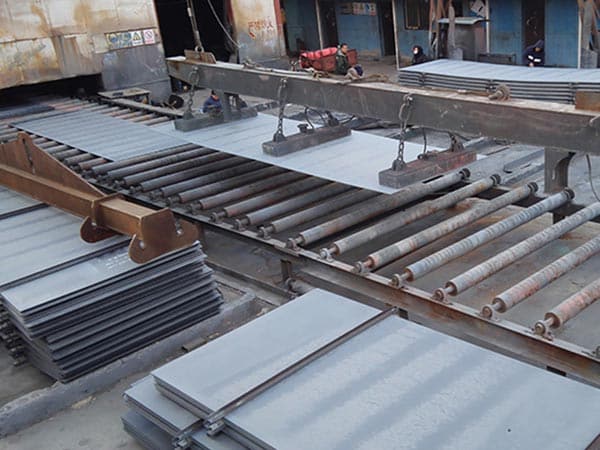
Understanding the Metallurgical Profile of S420MC Pickled Steel
S420MC is a high-strength, low-alloy (HSLA) steel grade primarily governed by the EN 10149-2 standard. It is produced through thermomechanically controlled rolling (TMCP), which grants it a unique combination of high yield strength and excellent cold formability. When dealing with thick pickled sheets, typically ranging from 6mm to 12mm or more, the welding requirements become more stringent due to the material's refined grain structure. The 'MC' suffix denotes that this steel is thermomechanically rolled and designed for cold forming, while the 'pickled' state indicates that the surface iron oxide scale has been chemically removed using an acid bath. This surface condition is critical for welding, as it eliminates potential contaminants that could lead to arc instability or inclusions. The low carbon equivalent (CEV) of S420MC ensures good weldability, but the micro-alloying elements like Niobium (Nb), Vanadium (V), and Titanium (Ti) require specific thermal management to prevent grain coarsening in the heat-affected zone (HAZ).
Chemical Composition and Its Impact on Weldability
The weldability of S420MC is inherently superior to traditional structural steels of similar strength levels because of its lean alloy design. The carbon content is strictly limited, usually below 0.12%, which significantly reduces the risk of cold cracking. However, the presence of micro-alloying elements is what gives the steel its strength. These elements form fine precipitates that pin grain boundaries during the rolling process. During welding, the high temperatures can dissolve these precipitates or cause them to coalesce, potentially leading to a localized loss of strength. Therefore, understanding the chemical balance is the first requirement for any welding procedure specification (WPS).
| Element | Max Content (%) | Influence on Welding |
|---|---|---|
| Carbon (C) | 0.12 | Lowers hardening tendency in HAZ. |
| Manganese (Mn) | 1.60 | Improves toughness and strength. |
| Silicon (Si) | 0.50 | Deoxidizer, affects fluid flow of weld pool. |
| Niobium (Nb) | 0.09 | Grain refinement; sensitive to high heat input. |
| Titanium (Ti) | 0.15 | Prevents grain growth at high temperatures. |
The Significance of the Pickled Surface in Welding Operations
The requirement for 'pickled' steel in high-performance applications is not merely aesthetic. For thick S420MC sheets, the removal of mill scale (Fe3O4 and FeO) is a technical necessity for high-quality joints. Mill scale has a higher melting point than the base metal and is non-conductive. If not removed, it can cause arc wandering, erratic metal transfer, and slag inclusions. Furthermore, scale can trap moisture, leading to hydrogen-induced cracking (HIC). By using pickled S420MC, fabricators ensure a clean, metallic surface that promotes stable electrical contact for Gas Metal Arc Welding (GMAW) and facilitates better wetting of the weld bead. This results in a smoother transition between the weld metal and the base material, which is vital for fatigue resistance in structural components.
Critical Welding Process Requirements
Welding thick S420MC requires a disciplined approach to process parameters. While the material is compatible with various methods, including MAG (Metal Active Gas), Laser, and Plasma welding, MAG is the most common for thick sections. The primary challenge is managing the cooling rate, often expressed as the t8/5 time (the time taken to cool from 800°C to 500°C). If the cooling is too slow due to excessive heat input, the HAZ will soften significantly, and the yield strength may drop below the 420 MPa requirement. Conversely, if cooling is too rapid, there is a minor risk of martensite formation, though this is less likely with S420MC's low carbon content.
- Heat Input Control: For thick sheets, heat input should generally be kept between 0.5 kJ/mm and 1.5 kJ/mm to maintain the fine-grained structure.
- Preheating: Usually not required for S420MC up to 20mm thickness under normal conditions, but if the ambient temperature is below 5°C, a slight preheat to 50-100°C is recommended to remove moisture.
- Shielding Gas: For MAG welding, a mixture of Argon and CO2 (e.g., M21 according to ISO 14175) is preferred to ensure deep penetration and low spatter.
Selection of Filler Materials
Choosing the right filler metal is a critical requirement to ensure the weld joint matches or exceeds the mechanical properties of the S420MC base metal. The filler metal should be selected based on the 'overmatching' or 'matching' principle. For S420MC, wires complying with ISO 14341-A G 42 or G 46 are standard. These provide sufficient tensile strength and impact toughness. In applications where the structure is subjected to low-temperature environments, selecting a filler metal with guaranteed Charpy V-notch impact values at -40°C is essential, even if the base metal is only rated for -20°C.
Joint Design and Edge Preparation
For thick pickled sheets, edge preparation is more complex than for thin gauges. A single-V or double-V butt joint is typically used for thicknesses above 6mm. The pickling process ensures the edges are clean, but mechanical beveling is still necessary to ensure proper root penetration. The root gap must be consistent to avoid burn-through or lack of fusion. Because S420MC is often used in dynamic load environments like truck chassis, the weld profile must be flat or slightly convex, avoiding sharp undercut which acts as a stress concentrator.
Mechanical Performance and Post-Weld Inspection
The ultimate goal of meeting these welding requirements is to preserve the integrity of the S420MC's mechanical properties. Post-weld testing usually involves transverse tensile tests, bend tests, and hardness mapping across the HAZ. A slight drop in hardness in the HAZ is normal for TMCP steels, but it should not exceed 10-15% of the base metal hardness. Non-destructive testing (NDT), such as ultrasonic or radiographic inspection, is mandatory for thick structural welds to detect internal defects like porosity or lack of side-wall fusion. For pickled surfaces, magnetic particle inspection (MPI) is highly effective because the clean surface allows for high sensitivity in detecting surface-breaking cracks.
Industrial Application Scope
The use of thick pickled S420MC is prevalent in sectors requiring high strength-to-weight ratios. In the heavy transportation industry, it is used for longitudinal beams and cross-members of truck frames, where welding integrity is paramount for vehicle safety. The construction machinery sector utilizes this grade for crane booms and excavator arms, where the steel must withstand high cyclic loads. Furthermore, in the renewable energy sector, S420MC is found in support structures for solar arrays and wind turbine components. The requirement for pickling in these industries often stems from the need for subsequent high-quality coating or galvanizing, where a scale-free surface is non-negotiable for long-term corrosion protection.
Environmental and Safety Considerations
Welding HSLA steels like S420MC involves managing the work environment to ensure both weld quality and worker safety. Since the material is pickled, there is no risk of inhaling fumes from burnt mill scale, but the standard precautions for manganese and other alloy fumes apply. Proper ventilation and the use of low-hydrogen consumables are required to maintain a safe workspace and prevent hydrogen pickup in the weld pool. Additionally, the high productivity of welding thick sections often leads to significant residual stresses; therefore, proper clamping and welding sequences are required to minimize distortion, ensuring the final assembly meets dimensional tolerances without the need for excessive cold straightening, which could work-harden the material.
Leave a message