
What is the difference between S700MC hot rolled plate and medium thick plate
A technical comparison between S700MC hot rolled strip and medium-thick plate, analyzing manufacturing processes, mechanical properties, and industrial applications.
Defining S700MC: The High-Strength Low-Alloy Powerhouse
S700MC is a high-strength low-alloy (HSLA) steel grade specifically designed for cold forming applications, governed by the European standard EN 10149-2. The 'S' stands for structural steel, '700' indicates a minimum yield strength of 700 MPa, and 'MC' signifies that the material is produced via thermomechanically rolled (TMCP) processes. This material is favored in industries where weight reduction is critical without sacrificing structural integrity. However, when procurement teams and engineers discuss S700MC, they often distinguish between hot rolled plate (cut from coils) and medium-thick plate (produced on a Quarto mill). While the chemical composition remains similar, the production route significantly influences the material's internal stress, dimensional tolerances, and performance in heavy-duty applications.
Manufacturing Discrepancies: Continuous Mill vs. Reversing Mill
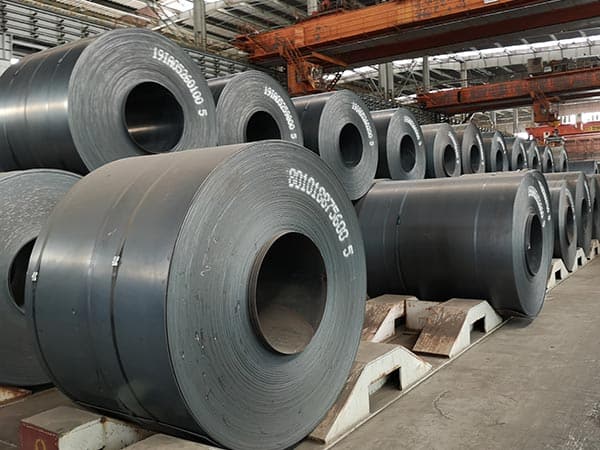
The primary difference between S700MC hot rolled plate and medium-thick plate lies in the rolling equipment. Hot rolled plate is typically produced on a Continuous Hot Strip Mill (HSM). In this process, a slab is rolled through a series of finishing stands into a long strip and then wound into a coil. This strip is later decoiled and leveled to produce plates. The high speed and continuous nature of this process result in a very fine surface finish and consistent thickness across long lengths.
Conversely, S700MC medium-thick plate, often referred to as Quarto plate, is produced on a reversing plate mill. Here, a single slab is rolled back and forth through a single or double stand until the desired thickness is achieved. This method allows for the production of much thicker sections than a continuous mill can handle. Because the plate is cooled on a flat cooling bed rather than being coiled, it generally exhibits lower levels of residual internal stress compared to plates cut from coils.
Microstructural Integrity and Chemical Optimization
The performance of S700MC is rooted in its precise micro-alloying. It utilizes elements like Niobium (Nb), Vanadium (V), and Titanium (Ti) to achieve grain refinement and precipitation hardening. The carbon content is kept extremely low (typically below 0.12%) to ensure excellent weldability.
In hot rolled strip, the rapid cooling on the run-out table of the continuous mill allows for a very fine ferritic-bainitic microstructure. Medium-thick plates, due to their larger mass, require more sophisticated cooling systems (such as accelerated cooling) to achieve the same grain refinement throughout the entire cross-section. This ensures that the core of a 20mm S700MC plate possesses the same strength and toughness as the surface of a 3mm sheet.
| Element | C (max) | Mn (max) | Si (max) | P (max) | S (max) | Al (min) |
|---|---|---|---|---|---|---|
| S700MC Value (%) | 0.12 | 2.10 | 0.60 | 0.025 | 0.015 | 0.015 |
Mechanical Performance: Yield, Tensile, and Elongation
While both product forms meet the minimum yield strength of 700 MPa, their stress-strain behavior can vary. Plates cut from coils (hot rolled plate) may exhibit anisotropy—meaning their properties differ slightly when measured longitudinal to the rolling direction versus transverse. This is due to the intense elongation of grains during the high-speed continuous rolling process.
Medium-thick plates produced on Quarto mills often show more isotropic properties because the rolling process can include cross-rolling (changing the orientation of the slab during rolling). This results in more uniform mechanical properties in all directions, which is a significant advantage for complex structural components that experience multi-axial loading.
- Yield Strength (Reh): Min 700 MPa
- Tensile Strength (Rm): 750 - 950 MPa
- Elongation (A5): Min 12% (depending on thickness)
- Impact Energy: Typically 40J at -20°C or -40°C (depending on the specific sub-grade)
Dimensional Precision and Flatness Standards
Hot rolled plates cut from coils usually offer tighter thickness tolerances because the continuous mill's automated gauge control (AGC) is highly responsive. However, the flatness of decoiled plates can be a challenge. Even after leveling, residual stresses from the coiling process can cause 'coil break' or 'spring back' during subsequent laser cutting or machining.
Medium-thick plates, being rolled flat and cooled flat, generally have superior internal stress profiles. When a large part is laser-cut from a Quarto plate, it is less likely to bow or twist. This makes medium-thick plates the preferred choice for long, narrow components like crane boom sections or chassis rails where straightness is paramount.
Cold Forming and Bending Capabilities
S700MC is renowned for its cold formability. Despite its high strength, it can be bent to tight radii. For hot rolled plates, the minimum bending radius is usually 1.0 to 1.5 times the thickness (t) for a 90-degree bend. Medium-thick plates may require a slightly larger radius (up to 2.0t or 2.5t) as the thickness increases, to prevent micro-cracking on the outer tension surface.
The consistency of the bending process is also influenced by the plate type. The uniform grain structure of medium-thick plates provides more predictable spring-back angles, which is vital for robotic bending cells in high-volume manufacturing environments.
Welding Performance and Heat Affected Zone (HAZ)
Both product forms exhibit excellent weldability due to their low Carbon Equivalent (CEV). S700MC can be welded using standard processes like MAG, TIG, or submerged arc welding. However, because the strength is derived from thermomechanical rolling (TMCP), excessive heat input can soften the Heat Affected Zone (HAZ), leading to a localized reduction in strength.
When welding medium-thick plates, the higher heat sink effect of the thicker material helps in rapid cooling, which can be beneficial for maintaining the fine-grained structure. For thinner hot rolled plates, careful control of the interpass temperature and heat input is necessary to avoid grain growth and the resulting loss of toughness.
Environmental Adaptability and Durability
S700MC is designed for structural efficiency, but its environmental performance is equally important. In cold climates, the low-temperature toughness of S700MC is a major asset. Many medium-thick plates are tested and certified for impact toughness at -40°C, making them suitable for offshore structures, alpine machinery, and polar transport equipment.
In terms of corrosion, S700MC does not contain high levels of chromium or nickel, so it requires proper surface treatment like painting or galvanizing. The surface of hot rolled plates is generally smoother, which facilitates better paint adhesion after pickling or sandblasting compared to the slightly more textured surface of Quarto plates.
Expanding Industrial Applications
The choice between hot rolled plate and medium-thick plate often comes down to the specific engineering requirements of the application.
Mobile Cranes and Lifting Equipment: The telescopic booms of cranes require the high strength-to-weight ratio of S700MC. Medium-thick plates are often used for the base sections where thickness and flatness are critical, while thinner hot rolled plates are used for the upper sections to minimize weight.
Transportation and Automotive: Heavy-duty truck chassis, trailers, and specialized transport frames utilize S700MC hot rolled plates for their excellent fatigue resistance and weight-saving potential. The ability to use thinner material to carry the same load as thicker S355 steel allows for increased payload capacity.
Agricultural and Construction Machinery: Components like excavator buckets, plow frames, and harvester chassis benefit from the impact resistance and formability of S700MC. Here, the choice depends on the part geometry; complex stamped parts favor hot rolled strip, while large structural frames favor medium-thick plate.
Strategic Selection for Engineering Optimization
Selecting the right form of S700MC requires a balance of mechanical needs and processing costs. Hot rolled plates from coils are generally more cost-effective for thicknesses under 12mm and offer excellent surface quality for aesthetic applications. However, for critical structural members where internal stress must be minimized and multi-directional strength is required, the investment in medium-thick Quarto plates is technically justified.
Understanding these nuances allows engineers to push the limits of design, creating structures that are lighter, stronger, and more durable. As the industry moves toward more sustainable manufacturing, the role of S700MC in reducing material consumption and improving fuel efficiency in transport cannot be overstated.
Leave a message