
S500MC price with low and intermediate tensile strength
Discover the comprehensive guide to S500MC steel pricing, mechanical properties, and processing advantages. Learn how tensile strength variations impact costs and industrial applications.
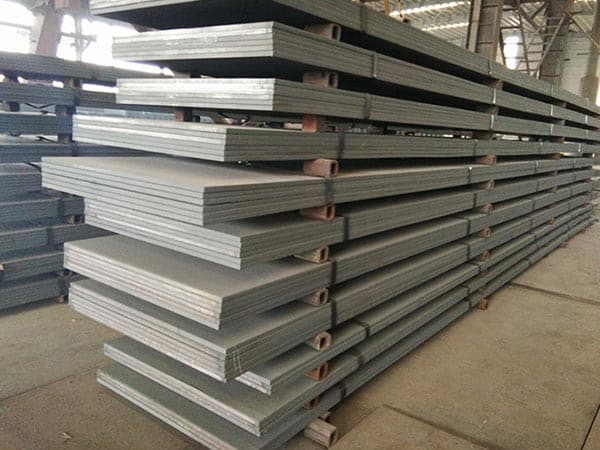
Understanding S500MC Steel in the Modern Industrial Landscape
The demand for high-strength low-alloy (HSLA) steels has surged as industries strive for weight reduction without compromising structural integrity. S500MC, a thermomechanically rolled steel grade defined under the EN 10149-2 standard, stands as a cornerstone for manufacturers seeking a balance between high yield strength and excellent cold-forming properties. When discussing the S500MC price with low and intermediate tensile strength, it is essential to recognize that while S500MC is classified as a high-strength steel, its performance characteristics often overlap with intermediate grades depending on the specific batch processing and thickness.
S500MC is engineered to provide a minimum yield strength of 500 MPa. However, the tensile strength typically ranges between 550 and 700 MPa. This range allows engineers to utilize the material in applications that might have previously required thicker sections of lower-grade steels like S355. The pricing of S500MC is not merely a reflection of raw material costs but is deeply influenced by the precision of the thermomechanical rolling process, which ensures a fine-grained microstructure capable of withstanding rigorous fabrication techniques.
Mechanical Properties and Their Influence on Market Value
The pricing structure of S500MC is intrinsically linked to its mechanical performance. Unlike traditional carbon steels, the value of S500MC lies in its high strength-to-weight ratio. By using a thinner gauge of S500MC to achieve the same structural strength as a thicker S355MC plate, manufacturers can reduce the overall weight of components, leading to significant savings in transport and fuel costs, particularly in the automotive and heavy machinery sectors.
| Property | Value (Metric) | Impact on Pricing |
|---|---|---|
| Minimum Yield Strength (ReH) | 500 MPa | High - Defines the grade category |
| Tensile Strength (Rm) | 550 - 700 MPa | Moderate - Influences ductility and forming |
| Minimum Elongation (A80mm) | 12% - 14% (depending on thickness) | High - Critical for complex bending |
| Bending Radius (90°) | 0.5t to 1.5t | Critical for manufacturing efficiency |
When procurement departments look for S500MC price options, they often find that batches at the lower end of the tensile strength spectrum (near 550 MPa) offer better ductility. This "intermediate" feel in tensile behavior makes the steel easier to work with in complex stamping dies, potentially reducing tool wear and lowering the long-term operational costs of a production line.
Chemical Composition: The Driver of Performance and Cost
The sophisticated chemistry of S500MC is what allows it to maintain such high strength levels while remaining weldable and formable. The use of micro-alloying elements like Niobium (Nb), Vanadium (V), and Titanium (Ti) is the primary reason for the price premium of S500MC compared to standard structural steels. These elements facilitate grain refinement during the rolling process.
| Element | Maximum Content (%) | Role in Steel Quality |
|---|---|---|
| Carbon (C) | 0.12 | Ensures excellent weldability |
| Manganese (Mn) | 1.60 | Increases strength and toughness |
| Silicon (Si) | 0.50 | Deoxidizer and solid solution strengthener |
| Aluminum (Al) | 0.015 (min) | Grain size control |
| Nb + V + Ti | 0.22 (total) | Micro-alloying for high yield strength |
Fluctuations in the global market for ferro-alloys directly impact the S500MC price. For instance, a spike in Niobium prices will inevitably lead to a rise in the cost per ton of HSLA steels. However, because S500MC uses a very low carbon content, it avoids the brittleness associated with traditional high-carbon steels, making it a safer and more reliable choice for dynamic load-bearing structures.
Processing Performance: Beyond the Base Price
When evaluating the cost of S500MC, one must consider the "total cost of ownership." The processing advantages of S500MC often offset its higher initial purchase price compared to intermediate tensile strength carbon steels. Its superior cold-forming capabilities mean that it can be bent at tighter radii without cracking, which is essential for compact chassis designs and telescopic booms.
- Excellent Weldability: Due to its low carbon equivalent (CEV), S500MC can be welded using standard methods (MAG, TIG, Laser) without the need for extensive pre-heating, reducing labor costs and energy consumption.
- Laser Cutting Precision: The clean surface finish and fine grain structure of S500MC make it ideal for high-speed laser cutting. It produces minimal dross and maintains dimensional stability, which is vital for automated assembly lines.
- Surface Quality: Typically supplied in a pickled and oiled condition, S500MC offers a surface ready for painting or galvanizing, eliminating the need for costly shot-blasting in many applications.
Factors Influencing S500MC Market Pricing
The S500MC price with low and intermediate tensile strength is subject to several macroeconomic and technical variables. Understanding these can help procurement specialists time their purchases more effectively.
1. Thermomechanical Rolling Capacity: Not all steel mills possess the advanced cooling and rolling technology required to produce S500MC. Limited supply from specialized mills can drive prices up during periods of high demand in the automotive sector.
2. Thickness and Width Requirements: Thinner gauges (under 3mm) often command a higher price per ton due to the increased rolling time and precision required to maintain flatness and thickness tolerances. Conversely, wider coils may require specialized logistics, adding to the delivered cost.
3. Testing and Certification: For industries like crane manufacturing or yellow goods, additional ultrasonic testing (UT) or Charpy V-notch impact testing at low temperatures (e.g., -20°C or -40°C) may be required. These certifications add to the base price but ensure the material's safety in extreme environments.
Environmental Adaptability and Sustainability
In the context of modern environmental regulations, S500MC offers a distinct advantage. The ability to "lightweight" vehicles and machinery directly correlates to lower CO2 emissions during the product's lifecycle. Furthermore, S500MC is fully recyclable. The energy required to produce one ton of HSLA steel is often justified by the energy saved over the lifespan of a lighter, more efficient truck trailer or shipping container.
Its resistance to atmospheric corrosion, while not as high as weathering steel, is significantly better than traditional hot-rolled steels due to its dense, fine-grained surface. When combined with modern coating technologies, S500MC components exhibit exceptional longevity even in humid or mildly corrosive industrial environments.
Strategic Application Industries
The versatility of S500MC makes it a preferred choice across various high-stakes industries. Its ability to bridge the gap between standard structural steel and ultra-high-strength grades makes it the "sweet spot" for many engineering challenges.
- Automotive Industry: Used for longitudinal beams, cross members, and chassis components where weight reduction is critical for fuel efficiency and electric vehicle range.
- Construction and Lifting: Essential for the manufacturing of crane arms, trailer frames, and telescopic handlers where high strength and low weight allow for greater lifting capacities.
- Agricultural Machinery: Used in plows, harvesters, and trailers that must withstand high stress and abrasive conditions while remaining light enough to minimize soil compaction.
- Storage Systems: High-density racking systems utilize S500MC to support massive loads with minimal material thickness, optimizing warehouse space.
Technical Comparison: S500MC vs. Intermediate Grades
Many designers compare S500MC with S355MC when looking at cost-benefit ratios. While S355MC is cheaper per ton, S500MC allows for a thickness reduction of approximately 20-30% for the same load-bearing capacity. This reduction not only saves on the material weight but also reduces the amount of welding consumables needed and the time required for welding, as thinner joints are faster to complete.
Furthermore, compared to S700MC, S500MC offers much better ductility and is less sensitive to springback during bending. This makes it the ideal "intermediate" choice for manufacturers who need more strength than S355 but do not want the complexity and tooling costs associated with ultra-high-strength 700 MPa steels.
Final Procurement Considerations
When sourcing S500MC, it is vital to partner with suppliers who provide full traceability and Mill Test Certificates (MTC). Given that the S500MC price can vary based on the specific mechanical properties of the heat, verifying the actual yield and tensile strength is crucial for ensuring the safety of the final design. Buyers should also consider the origin of the steel, as thermomechanical processing standards can vary slightly between European, Asian, and American mills, affecting the consistency of the material during high-speed automated fabrication.
By focusing on the long-term gains in manufacturing efficiency, reduced material usage, and enhanced product performance, the investment in S500MC proves to be a strategic decision for forward-thinking industrial enterprises. Whether your focus is on the automotive sector or heavy infrastructure, the unique properties of S500MC provide a robust foundation for innovation and cost-effective engineering.
Leave a message