
What tests need to go through in the s420 pickling steel equivalent production process
Comprehensive guide on the testing protocols for S420 pickling steel equivalents, covering chemical analysis, mechanical performance, surface quality, and industrial application standards.
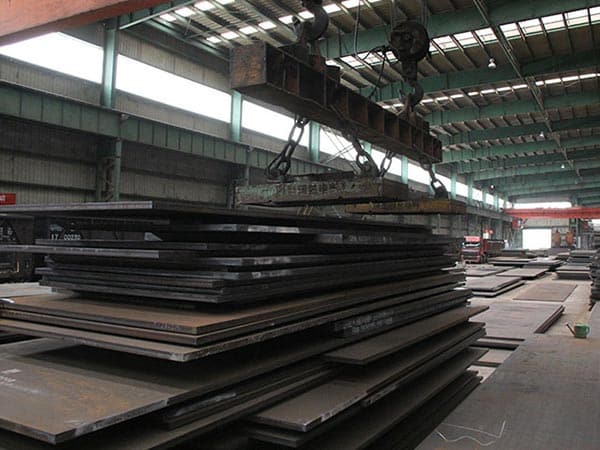
The Significance of S420 Pickling Steel in Modern Engineering
S420MC steel, a high-strength low-alloy (HSLA) steel grade governed by the EN 10149-2 standard, represents a pinnacle of balance between weight reduction and structural integrity. When we discuss the s420 pickling steel equivalent production process, we are referring to the manufacturing of hot-rolled steel that has undergone an acid pickling treatment to remove mill scale, followed by oiling for corrosion protection. This material is favored for its excellent cold-forming properties and high yield strength. However, ensuring that an 'equivalent' grade truly matches the performance of S420MC requires a rigorous battery of tests. These tests are not merely bureaucratic hurdles; they are the scientific assurance that the steel will perform under the extreme stresses of automotive chassis, heavy machinery, and structural components.
Chemical Composition Analysis: The Foundation of Equivalency
The first and most critical test in the production of S420 equivalent steel is the chemical composition analysis, usually performed via Optical Emission Spectroscopy (OES) or Inductively Coupled Plasma (ICP). For a steel to be considered an S420 equivalent, it must strictly adhere to specific elemental limits. Carbon (C) is typically kept below 0.12% to ensure weldability and toughness. Manganese (Mn), usually around 1.60%, is essential for solid solution strengthening. However, the true 'secret sauce' of S420 lies in its micro-alloying elements: Niobium (Nb), Vanadium (V), and Titanium (Ti). These elements facilitate grain refinement and precipitation hardening. Testing must confirm that the sum of these micro-alloys does not exceed 0.22% to maintain the desired balance of strength and ductility. Any deviation here would result in a material that might meet strength requirements but fail during complex cold-forming operations.
Pickling Line Quality Control and Surface Integrity
The pickling process itself requires constant monitoring. Unlike black hot-rolled steel, pickled steel (HRPO) must have a clean, silver-grey finish. The pickling process tests include monitoring the concentration of Hydrochloric acid (HCl) and the temperature of the acid baths. If the pickling is too aggressive, it leads to 'over-pickling,' which can cause hydrogen embrittlement or a rough surface texture that interferes with subsequent painting or coating. Conversely, under-pickling leaves residual iron oxide (scale), which can damage stamping dies and lead to poor adhesion of protective layers. Surface roughness (Ra) is measured using a profilometer to ensure it meets the specific requirements of the end-user, typically ranging between 0.6 and 1.9 microns for automotive applications.
Mechanical Property Testing: Beyond Simple Yield Strength
The core of the S420 specification is its mechanical performance. The '420' denotes a minimum yield strength of 420 MPa. To verify this, standardized tensile tests are conducted according to ISO 6892-1. But a simple yield check is insufficient for high-quality equivalents. Manufacturers must also measure:
- Tensile Strength (Rm): Usually between 480 and 620 MPa for S420MC.
- Elongation (A80mm): A minimum of 16% is generally required for thicknesses less than 3mm, ensuring the material can be stretched without fracturing.
- Yield-to-Tensile Ratio: A lower ratio often indicates better work-hardening capabilities, which is vital for energy absorption in automotive crash zones.
Furthermore, impact testing (Charpy V-notch) is performed, especially if the steel is intended for use in cold climates. While EN 10149-2 doesn't always mandate impact tests for all sub-grades, high-tier equivalents are often tested at -20°C or -40°C to ensure the material remains ductile and does not undergo a brittle transition.
Process Performance: Bending and Hole Expansion Tests
Since S420 is primarily used for cold forming, its ability to withstand deformation without cracking is paramount. The 180-degree bend test is a standard procedure where the steel is bent over a mandrel with a specific radius (usually 0.5 to 1.5 times the thickness). No cracks should be visible on the outer surface. For more advanced applications, such as flanged holes in chassis frames, a Hole Expansion Test (ISO 16630) is conducted. This test measures the percentage of expansion a punched hole can withstand before a crack propagates through the thickness. This is a critical metric for evaluating the 'edge ductility' of the steel, which is often influenced by the cleanliness of the steel and the shape of non-metallic inclusions.
Microstructural Evaluation and Grain Size Measurement
Under a metallurgical microscope, S420 equivalent steel should reveal a fine-grained ferrite-pearlite structure. Grain size measurement (ASTM E112) is essential because the high strength of S420 is largely derived from grain refinement rather than high carbon content. A grain size of 10 or finer is typical. Additionally, the test for non-metallic inclusions (ASTM E45) is vital. Large sulfide or oxide inclusions can act as stress concentrators, leading to premature failure during forming or in-service fatigue. Modern production uses vacuum degassing and calcium treatment to ensure inclusions are globular and finely dispersed.
Comparison of S420MC and Global Equivalents
When sourcing S420 equivalents, it is helpful to understand how different international standards align. The following table provides a general comparison of S420MC with other common grades used in similar applications.
| Standard | Grade | Yield Strength (min) | Tensile Strength | Elongation (min) |
|---|---|---|---|---|
| EN 10149-2 | S420MC | 420 MPa | 480-620 MPa | 16% |
| ASTM A1011 | HSLAS Grade 60 Class 1 | 410 MPa | 520 MPa | 18% |
| GB/T 1591 | Q420ME | 420 MPa | 500-660 MPa | 16% |
| JIS G3134 | SPFH 590 | 420 MPa | 590 MPa | 19% |
| ISO 5951 | HS 420 | 420 MPa | 480-620 MPa | 16% |
While these grades are often considered equivalents, the testing protocols mentioned above ensure that the specific nuances of the EN 10149-2 standard—particularly the tight control over micro-alloys and bendability—are maintained regardless of the regional nomenclature.
Environmental Adaptability and Corrosion Resistance
Because S420 pickling steel is often used in exposed structural environments or as a substrate for further coating, its environmental adaptability is tested through salt spray testing (ASTM B117). Since the steel is 'pickled and oiled,' the effectiveness of the anti-rust oil is evaluated. This ensures that during transport and storage, the steel does not develop 'white rust' or 'red rust.' For equivalents destined for the heavy machinery sector, weldability testing is also crucial. This involves Carbon Equivalent Value (CEV) calculations and actual weld bead tests to ensure that the heat-affected zone (HAZ) does not become excessively brittle, which is a common risk with higher strength steels.
Optimizing Production for High-Performance Applications
The production of S420 equivalent steel is an exercise in precision. From the initial oxygen furnace melt to the final skin-pass rolling and pickling line, every step is governed by data. Advanced manufacturers now use Automatic Surface Inspection Systems (ASIS) on the pickling line. These systems use high-speed cameras and AI algorithms to detect minute defects like slivers, scales, or scratches in real-time, which might be missed by the human eye. This level of testing ensures that the steel not only meets the 'paper' requirements of the S420MC standard but also the practical requirements of high-speed automated manufacturing lines where any material inconsistency can lead to costly downtime.
Final Quality Assurance and Certification
The culmination of the s420 pickling steel equivalent production process is the issuance of a Mill Test Certificate (MTC) according to EN 10204 3.1. This document summarizes all the test results—chemical, mechanical, and dimensional. For the end-user, the MTC is the guarantee that the equivalent steel will behave predictably under the press and reliably in the final product. By adhering to these rigorous testing standards, manufacturers can provide materials that drive innovation in lightweighting and structural efficiency across various heavy-duty industries.
Leave a message