
How is the performance of s420mc galvanealed coil density
Comprehensive analysis of S420MC galvannealed coil density, mechanical properties, and coating performance for automotive and industrial engineering applications.
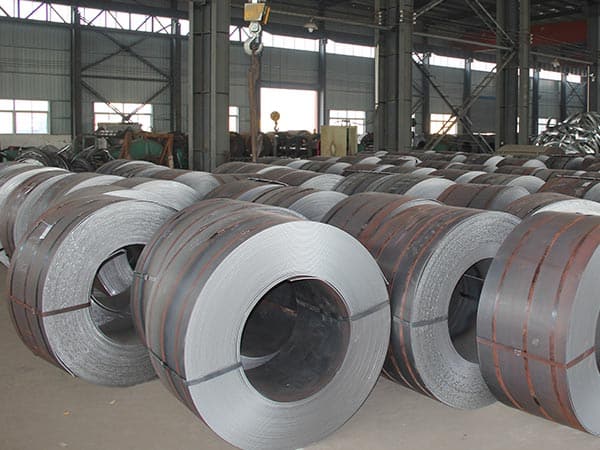
The Fundamental Physics: Understanding S420MC Density and Mass Calculation
When discussing the performance of S420MC galvannealed coil density, it is essential to start with the physical constants that govern this High-Strength Low-Alloy (HSLA) steel. The density of S420MC is standardized at approximately 7.85 g/cm³ (or 7850 kg/m³). While density might seem like a static value, its performance implications are profound in precision engineering. For automotive manufacturers and structural engineers, this density provides the baseline for calculating the strength-to-weight ratio, a critical metric for fuel efficiency and structural integrity.
The galvannealing process (ZF coating) introduces a zinc-iron alloy layer. Although the density of pure zinc is roughly 7.14 g/cm³, the alloyed layer on a galvannealed coil—consisting of various Zn-Fe phases—closely mirrors the density of the steel substrate. In practical applications, the theoretical weight of S420MC galvannealed coils is calculated using the standard steel density, but the precision in thickness control during thermomechanical rolling ensures that the actual mass remains consistent. This consistency is vital for automated stamping lines where even slight variations in material volume can lead to pressure fluctuations and tooling wear.
Chemical Composition and Its Influence on Material Stability
The performance of S420MC is rooted in its sophisticated chemical architecture. As a thermomechanically rolled steel, it relies on micro-alloying elements to achieve high strength without compromising formability. The low carbon content (typically ≤0.12%) ensures excellent weldability, while elements like Niobium (Nb), Vanadium (V), and Titanium (Ti) are utilized for grain refinement.
| Element | Max Percentage (%) | Role in Performance |
|---|---|---|
| Carbon (C) | 0.12 | Ensures toughness and weldability. |
| Manganese (Mn) | 1.60 | Increases strength and hardness. |
| Silicon (Si) | 0.50 | Provides solid solution strengthening. |
| Phosphorus (P) | 0.025 | Controlled to prevent brittleness. |
| Niobium (Nb) | 0.09 | Refines grain structure for higher yield. |
These elements work in synergy to maintain the S420MC density performance by creating a dense, fine-grained microstructure. This microstructural density is what allows the material to withstand high stress-loading in chassis components and structural frames without the need for excessive thickness, thereby reducing the overall weight of the final assembly.
Mechanical Properties: The 420 MPa Yield Threshold
The "420" in S420MC signifies a minimum yield strength of 420 MPa. This high yield point, combined with the material's density, allows for significant "lightweighting" in industrial design. When compared to standard carbon steels, S420MC allows for a reduction in material thickness while maintaining the same load-bearing capacity.
- Yield Strength: Min 420 MPa, providing robust resistance to permanent deformation.
- Tensile Strength: Typically ranges between 480 and 620 MPa.
- Elongation: Excellent ductility (min 16-19% depending on thickness), allowing for complex cold forming.
- Impact Toughness: Maintains performance at low temperatures, crucial for outdoor machinery.
The interaction between the density and these mechanical properties is what makes S420MC a preferred choice. By optimizing the grain size during the thermomechanical rolling process, the steel achieves a high dislocation density within its crystal lattice, which directly translates to its superior strength and fatigue resistance.
The Galvannealed (ZF) Coating: Surface Performance Synergy
The performance of S420MC is further enhanced by the galvannealing process. Unlike standard galvanized (GI) coatings, a galvannealed (ZF) coating is produced by heating the zinc-coated steel to induce an alloying reaction between the iron in the steel and the molten zinc. This results in a matte-grey finish consisting of approximately 8-12% iron.
Why the ZF coating matters for S420MC:
- Superior Paint Adhesion: The porous, micro-rough surface of the Zn-Fe alloy provides an ideal mechanical bond for primers and topcoats.
- Enhanced Weldability: The iron content in the coating increases the electrical resistance, making spot welding more efficient and extending electrode life compared to pure zinc coatings.
- Corrosion Resistance: Even though the coating is alloyed, it provides sacrificial protection. The density of the alloy layer prevents the rapid spread of red rust in scratched areas.
- Formability: The coating is hard and brittle compared to pure zinc, but when applied to a high-ductility substrate like S420MC, it performs exceptionally well in drawing and bending operations without significant powdering.
Process Performance: From Coil to Component
In the manufacturing plant, the performance of S420MC galvannealed coil density is tested through various fabrication stages. During cold forming, the material exhibits low springback, which is essential for maintaining tight dimensional tolerances. This is a direct result of the controlled yield-to-tensile ratio provided by the thermomechanical treatment.
The consistency of the material density ensures that hydraulic presses can be calibrated with high precision. In laser cutting operations, the uniform density and clean chemical composition of S420MC result in smooth edges and minimal dross, reducing the need for secondary finishing. The galvannealed surface also absorbs laser energy more consistently than high-reflectivity pure zinc, allowing for faster cutting speeds.
Environmental Adaptation and Long-term Durability
S420MC galvannealed coils are designed to perform in demanding environments. The combination of HSLA strength and ZF coating protection makes this material suitable for components exposed to cyclical loading and corrosive elements. In the heavy machinery sector, parts such as crane arms and support pillars benefit from the high fatigue strength associated with the refined grain density of S420MC.
The environmental adaptation of this steel is also seen in its performance under thermal fluctuations. The coefficient of thermal expansion for S420MC is consistent with other structural steels, but its high yield strength ensures that thermal stresses do not lead to structural warping. This makes it an excellent candidate for agricultural equipment and transport trailers that operate across diverse climates.
Strategic Applications Across Industrial Sectors
The unique performance profile of S420MC galvannealed coils has led to its widespread adoption in several high-stakes industries. By leveraging the density and strength of this material, engineers can push the boundaries of design efficiency.
Automotive Industry: Used extensively for chassis parts, cross members, and reinforcement beams. The galvannealed surface is particularly valued for parts that require high-quality painting and resistance to road salts.
Heavy Transportation: In the manufacture of truck frames and trailers, S420MC provides the necessary strength to handle heavy payloads while keeping the tare weight low, directly impacting fuel economy and payload capacity.
Construction and Infrastructure: Utilized in cold-pressed profiles and structural sections where high load-bearing capacity and corrosion protection are required without the bulk of traditional hot-rolled beams.
Solar Energy: The material is increasingly used in solar mounting systems. The high strength allows for longer spans between supports, and the ZF coating ensures a long service life in outdoor environments.
Technical Comparison: S420MC vs. Conventional Grades
To fully appreciate the performance of S420MC, it must be compared to standard structural steels like S235 or S355. While the density remains virtually identical across these grades, the performance density—defined as the strength delivered per unit of mass—is significantly higher in S420MC.
| Feature | S235JR (Standard) | S420MC (HSLA) | Performance Advantage |
|---|---|---|---|
| Yield Strength | 235 MPa | 420 MPa | +78% Strength |
| Thickness for same load | 100% | ~60% | 40% Weight Reduction |
| Weldability | Good | Excellent | Lower Carbon Equivalent |
| Surface Finish | Hot Rolled | Galvannealed (ZF) | Ready for Paint/Anti-corrosion |
This comparison highlights that while the physical density of the atoms remains the same, the engineering value of S420MC is vastly superior. The ability to use thinner gauges without sacrificing safety is the hallmark of modern metallurgical advancement.
Final Technical Assessment of S420MC Performance
The performance of S420MC galvannealed coil density is a multifaceted topic that extends far beyond a simple mass-per-volume calculation. It encompasses the metallurgical integrity of the HSLA substrate, the chemical precision of the micro-alloying process, and the functional superiority of the Zn-Fe alloy coating. For industries focused on efficiency, durability, and precision, S420MC represents a pinnacle of thermomechanical steel production. Its consistent density ensures predictable manufacturing outcomes, while its high strength-to-weight ratio drives innovation in lightweight design. As global standards move towards more sustainable and efficient material usage, the role of high-performance steels like S420MC will only become more prominent in the global supply chain.
Leave a message