
What is the s355mc steel us equivalent pipe schedule
Comprehensive guide on S355MC steel US equivalents like ASTM A1011 and A572, detailing mechanical properties, pipe schedule correlations, and industrial applications.
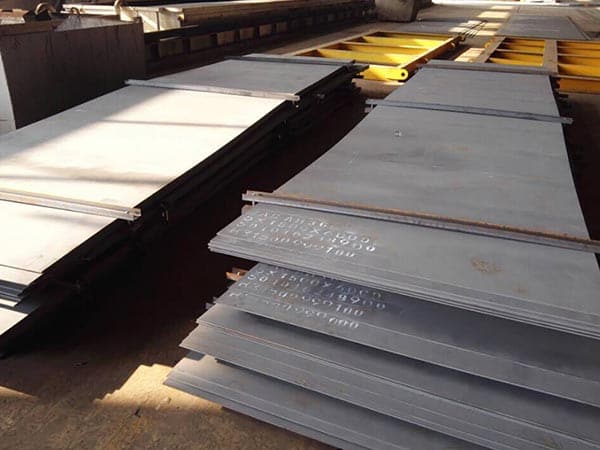
Understanding S355MC: The European Powerhouse of Cold Forming
S355MC is a high-yield strength, thermomechanically rolled steel specifically designed for cold forming. Governed by the EN 10149-2 standard, this material is a staple in European engineering due to its exceptional balance of strength, ductility, and weldability. The "S" denotes structural steel, "355" represents the minimum yield strength of 355 MPa, and "MC" indicates that the steel is thermomechanically rolled (M) and intended for cold forming (C).
Engineers often seek the US equivalent of S355MC when transitioning projects between European and North American standards. Because S355MC is typically produced as hot-rolled flat products (strips and sheets) intended for further processing into structural components or pipes, its US counterparts are found within the ASTM and SAE/AISI systems. Identifying the correct equivalent is crucial for maintaining structural integrity while adhering to regional procurement and safety regulations.
The US Equivalent: ASTM A1011 and ASTM A572
When searching for a US equivalent to S355MC, the most direct match for sheet and strip applications is ASTM A1011 HSLAS Class 1 Grade 50. This High-Strength Low-Alloy Steel (HSLAS) provides a minimum yield strength of 50,000 psi (approximately 345-355 MPa), mirroring the performance of S355MC. For thicker sections or structural shapes, ASTM A572 Grade 50 is frequently cited as the functional equivalent.
The table below provides a side-by-side comparison of the chemical and mechanical benchmarks for these materials:
| Feature | EN 10149-2 S355MC | ASTM A1011 HSLAS Gr 50 | ASTM A572 Grade 50 |
|---|---|---|---|
| Yield Strength (min) | 355 MPa | 345 MPa (50 ksi) | 345 MPa (50 ksi) |
| Tensile Strength | 430 - 550 MPa | 450 MPa (65 ksi) | 450 MPa (65 ksi) |
| Elongation (min) | 19% (t < 3mm) | 18-22% | 18-21% |
| Carbon Content (max) | 0.12% | 0.23% | 0.23% |
While the yield strengths are nearly identical, S355MC often features a lower carbon content compared to its US counterparts, achieved through sophisticated thermomechanical rolling. This lower carbon footprint enhances weldability and toughness, particularly in low-temperature environments.
S355MC in Pipe Production and Schedule Correlations
The term "Pipe Schedule" refers to the wall thickness of a pipe as defined by ASME B36.10M. S355MC is frequently used to manufacture Electric Resistance Welded (ERW) pipes. Because S355MC has a higher yield strength than standard carbon steels like ASTM A53 Grade B (which has a yield of 240 MPa), it allows for a reduction in wall thickness without sacrificing pressure-bearing capacity.
In the context of US pipe standards, a pipe made from S355MC or its equivalent (ASTM A1011 Gr 50) can often meet the requirements of API 5L X52 or ASTM A500 Grade C. When calculating the necessary schedule (e.g., Schedule 40, Schedule 80), the high yield strength of S355MC allows engineers to optimize the weight-to-strength ratio. For instance, a structural pipe using S355MC might achieve the same load-bearing capacity with a thinner wall than a traditional Schedule 40 pipe made from lower-grade steel.
- Weight Reduction: High yield strength allows for thinner walls, reducing overall structure weight.
- Cost Efficiency: Less material usage leads to lower shipping and fabrication costs.
- Precision: Thermomechanical rolling ensures tight dimensional tolerances for pipe manufacturing.
Metallurgical Advantages: Thermomechanical Rolling
The "MC" designation is the secret to S355MC’s performance. Unlike traditional normalized steels, thermomechanically rolled steels undergo controlled deformation and cooling processes. This refines the grain structure of the steel, significantly improving its toughness and resistance to brittle fracture. The addition of micro-alloying elements such as Niobium (Nb), Vanadium (V), and Titanium (Ti) further strengthens the matrix through precipitation hardening.
This fine-grained structure is particularly beneficial for cold forming. S355MC can be bent, flanged, and cold-rolled into complex shapes without cracking. In the US market, where high-speed automated fabrication is common, the consistency of S355MC (or ASTM A1011 Gr 50) ensures that production lines run smoothly with minimal scrap rates.
Weldability and Fabrication Excellence
One of the primary reasons S355MC is favored in both European and US-equivalent forms is its superb weldability. Due to the low carbon equivalent (CEV), the steel is less susceptible to hydrogen-induced cracking in the Heat Affected Zone (HAZ). It can be welded using all standard methods, including MIG/MAG, TIG, and submerged arc welding.
When welding S355MC pipes or components, it is essential to use filler metals that match the yield strength of the base material. For US-based projects using ASTM A1011 or A572 equivalents, E70 series electrodes (such as E7018) are typically recommended to ensure the weld joint is as strong as the parent metal. The material's ability to maintain its mechanical properties after welding makes it ideal for heavy-duty structural frames and pressure-retaining components.
Environmental Adaptability and Durability
S355MC is engineered to perform in diverse environmental conditions. While it is not a weathering steel like Corten, its refined microstructure provides better resistance to atmospheric corrosion than basic mild steels. Furthermore, its low-temperature impact properties are often superior, making it suitable for equipment operating in colder climates, such as agricultural machinery or transport trailers.
For applications requiring enhanced corrosion resistance, S355MC is an excellent substrate for hot-dip galvanizing. The low silicon and phosphorus content (controlled during the steelmaking process) prevents the formation of excessively thick or brittle zinc layers, ensuring a smooth, durable protective coating that adheres well to the steel surface.
Strategic Industrial Applications
The versatility of S355MC and its US equivalents has led to its widespread adoption across multiple sectors. Its high strength-to-weight ratio is a critical factor in modern design, where efficiency and performance are paramount.
- Automotive and Transport: Used for truck chassis, crane arms, and trailer frames where weight reduction directly impacts fuel efficiency and payload capacity.
- Construction and Infrastructure: Utilized in cold-formed sections for buildings, bridges, and transmission towers.
- Energy Sector: S355MC pipes are used in secondary piping systems and structural supports for renewable energy installations.
- Agricultural Equipment: Ideal for plow frames, harvesters, and silos that require high durability and resistance to mechanical stress.
Selection Guide: Transitioning Between Standards
When specifying a US equivalent for S355MC, designers must look beyond simple yield strength. It is vital to consider the specific requirements of the application, such as the minimum bend radius for cold forming or the impact energy requirements for low-temperature service. While ASTM A1011 Grade 50 is the most common substitute for sheet, always verify if the project requires Class 1 (higher ductility) or Class 2 (higher strength) to match the specific "MC" characteristics of the European standard.
In the global supply chain, many manufacturers now produce "dual-certified" steel that meets both EN 10149-2 S355MC and ASTM A1011 Grade 50 requirements. This dual certification simplifies inventory management and ensures that the material can be used in projects destined for both the European and North American markets without technical discrepancy.
Leave a message