
What is the en 10149-2 s600mc hot rolled automotive steel flaw detection process
Detailed guide on the flaw detection process for EN 10149-2 S600MC hot rolled automotive steel, covering NDT methods, mechanical properties, and quality standards.
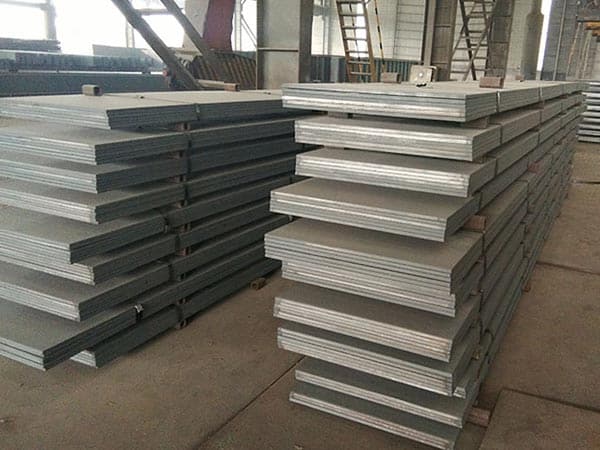
The Critical Role of EN 10149-2 S600MC in Modern Automotive Engineering
EN 10149-2 S600MC is a high-yield strength, thermomechanically rolled steel specifically engineered for cold forming. As the automotive industry shifts toward lightweighting to improve fuel efficiency and reduce emissions, materials like S600MC become indispensable. This steel grade offers a unique balance of high strength and excellent formability, making it a primary choice for structural components such as chassis frames, longitudinal beams, and cross members. However, the integrity of these components is paramount. Flaw detection is not merely a quality control step; it is a safety-critical process that ensures the material can withstand the dynamic stresses and fatigue cycles encountered during a vehicle's lifespan. Understanding the flaw detection process for S600MC requires a deep dive into both the material's metallurgical properties and the advanced non-destructive testing (NDT) technologies employed by modern steel mills.
Metallurgical Foundation and Its Impact on Inspection
The "MC" designation in S600MC signifies that the steel is thermomechanically rolled (M) and suitable for cold forming (C). This process creates a fine-grained microstructure, typically achieved through micro-alloying with elements like Niobium (Nb), Vanadium (V), and Titanium (Ti). These elements form carbonitrides that pin grain boundaries during the rolling process, resulting in a refined grain structure that enhances both strength and toughness. From a flaw detection perspective, this fine grain size is highly advantageous. Coarse-grained steels often cause significant ultrasonic attenuation and "noise," which can mask small internal defects. The homogenous, fine-grained structure of S600MC allows for higher signal-to-noise ratios during ultrasonic testing (UT), enabling the detection of much smaller inclusions or discontinuities.
| Element | C (max) | Mn (max) | Si (max) | P (max) | S (max) | Al (min) | Nb (max) | V (max) | Ti (max) |
|---|---|---|---|---|---|---|---|---|---|
| S600MC % | 0.12 | 1.90 | 0.50 | 0.025 | 0.015 | 0.015 | 0.09 | 0.20 | 0.22 |
Comprehensive Flaw Detection Methodologies
The flaw detection process for EN 10149-2 S600MC is multi-layered, focusing on both surface integrity and internal soundness. Automotive manufacturers demand near-zero defect rates, leading to the implementation of the following inspection stages:
1. Visual and Optical Surface Inspection
Automated Surface Inspection Systems (ASIS) use high-speed CCD cameras and laser scanning to monitor the steel strip as it exits the rolling mill. These systems detect surface defects such as slivers, scales, scratches, and roll marks. For S600MC, surface quality is vital because surface discontinuities can act as stress concentrators during the high-pressure cold forming or bending processes, leading to premature cracking.
2. Ultrasonic Testing (UT) for Internal Soundness
Ultrasonic testing is the cornerstone of internal flaw detection. For hot-rolled plates and coils, the process usually follows standards like EN 10160 or SEL 072. High-frequency sound waves are pulsed into the material. If these waves encounter an internal void, inclusion, or delamination, they reflect back to the transducer. Pulse-echo techniques are standard, but Phased Array Ultrasonic Testing (PAUT) is increasingly used for S600MC to provide a more detailed cross-sectional view of the material's internal state. This is particularly effective at identifying non-metallic inclusions that may have survived the refining process.
3. Magnetic Particle Inspection (MPI)
While UT is excellent for internal flaws, MPI is often used on processed parts or specific sections of the coil to detect fine surface and near-surface cracks. By applying a magnetic field and iron particles, any leakage in the magnetic flux caused by a crack becomes visible. This is critical for S600MC when it is used in high-stress automotive joints.
4. Eddy Current Testing (ECT)
ECT is frequently used for continuous inspection of hot-rolled strips. It is highly sensitive to surface-breaking defects and can operate at high speeds without a couplant (unlike UT). This makes it ideal for the rapid production lines where S600MC is manufactured.
Mechanical Properties and Performance Verification
Flaw detection is inextricably linked to mechanical performance. A material that passes NDT must also meet the rigorous mechanical benchmarks set by EN 10149-2. The following table outlines the mechanical requirements for S600MC:
| Property | Value (Metric) |
|---|---|
| Yield Strength (ReH) | Min 600 MPa |
| Tensile Strength (Rm) | 650 - 820 MPa |
| Elongation (A80mm) for t < 3mm | Min 13% |
| Elongation (A5) for t ≥ 3mm | Min 17% |
| Bending Radius (180°) | 1.0t to 1.5t (depending on thickness) |
The flaw detection process ensures that the effective load-bearing cross-section of the steel is consistent. For instance, an undetected internal delamination would significantly reduce the actual yield strength of a chassis beam, potentially leading to catastrophic failure under load. Therefore, the "process" of flaw detection also includes rigorous tensile and bend testing to correlate NDT findings with physical performance.
Environmental Adaptability and Processing Excellence
S600MC is designed to perform in harsh environments. The low carbon equivalent (CEV) ensures excellent weldability, which is a key requirement for automotive assembly lines. However, the welding process itself requires that the base metal be free of flaws. Hydrogen-induced cracking (HIC) or lamellar tearing can occur during welding if the base steel contains high levels of sulfur or elongated inclusions. The flaw detection process specifically targets these "cleanliness" issues to ensure that when the steel is welded into a truck frame, the heat-affected zone (HAZ) remains robust.
Furthermore, S600MC exhibits good atmospheric corrosion resistance compared to standard carbon steels, though it is often coated for automotive use. The surface inspection stage ensures that the substrate is smooth and free of scale, which is essential for the adhesion of zinc coatings or E-coats. Any surface flaw detected and not removed could lead to localized corrosion cells, undermining the longevity of the vehicle component.
Advanced Application Industries
The demand for EN 10149-2 S600MC extends beyond passenger cars. Its high strength-to-weight ratio is utilized in:
- Heavy Truck Manufacturing: For side rails and cross members where weight reduction directly translates to increased payload capacity.
- Crane and Lifting Equipment: Telescopic booms and structural supports benefit from the high yield strength and reliability verified by UT.
- Agricultural Machinery: Components that must withstand high cyclic loading and abrasive environments.
- Container Engineering: For lightweight, high-strength corner posts and frames.
In each of these sectors, the flaw detection process is tailored to the specific risk profile of the application. For example, in crane manufacturing, the UT standards may be even more stringent than the standard automotive requirements to account for the extreme safety factors involved in lifting operations.
The Future of Inspection: Digital Twins and AI
The flaw detection process for S600MC is evolving. Modern mills are now integrating Artificial Intelligence (AI) with their ASIS and UT systems. Machine learning algorithms are trained on thousands of defect images to distinguish between harmless surface discoloration and critical structural cracks. This reduces false positives and ensures that only the highest quality S600MC reaches the automotive stamping plant. Additionally, the data from flaw detection is increasingly used to create a "Digital Twin" of each steel coil, allowing automotive engineers to optimize their stamping and welding parameters based on the specific characteristics of the material batch.
By maintaining a rigorous flaw detection pipeline—from the initial melt analysis to the final automated ultrasonic scan—manufacturers of EN 10149-2 S600MC provide the automotive industry with a material that is not only strong and light but also exceptionally reliable. This commitment to quality is what enables the continued evolution of vehicle safety and efficiency.
Leave a message