
What is the en 10149-2 high yield strength alloy grade s500mc hardness?
Explore the comprehensive guide on EN 10149-2 S500MC steel, focusing on its hardness, mechanical performance, chemical composition, and diverse industrial applications.
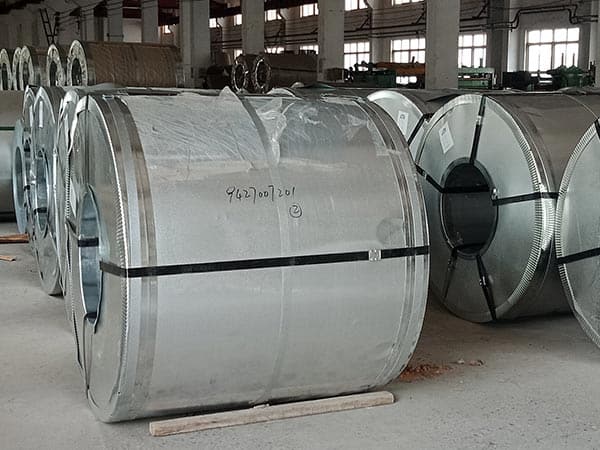
Understanding S500MC Hardness and Material Identity
When discussing the EN 10149-2 S500MC grade, engineers and procurement specialists often look for a specific hardness value. However, it is essential to understand that the EN 10149-2 standard primarily defines this material by its yield strength and cold-forming capabilities rather than a mandatory hardness range. For S500MC, the typical hardness value generally falls between 150 and 200 HBW (Brinell Hardness), or approximately 160 to 210 HV (Vickers Hardness).
The "S" in S500MC stands for structural steel, "500" represents the minimum yield strength of 500 MPa, "M" indicates it is thermomechanically rolled, and "C" signifies its suitability for cold forming. Because the material is designed for weight reduction and high structural integrity, its hardness is a byproduct of its refined grain structure achieved through the thermomechanical rolling process (TMCP).
Chemical Composition: The Foundation of Strength
The exceptional balance of strength, ductility, and hardness in S500MC is achieved through a strictly controlled chemical composition. Unlike traditional hot-rolled steels that rely on high carbon content for strength, S500MC utilizes micro-alloying elements such as Niobium (Nb), Vanadium (V), and Titanium (Ti).
| Element | Maximum Content (%) |
|---|---|
| Carbon (C) | 0.12 |
| Manganese (Mn) | 1.60 |
| Silicon (Si) | 0.50 |
| Phosphorus (P) | 0.025 |
| Sulfur (S) | 0.015 |
| Aluminium (Al) | 0.015 |
| Nb + V + Ti | 0.22 |
By keeping the Carbon Equivalent Value (CEV) low, S500MC maintains excellent weldability while the micro-alloys provide grain refinement. This fine-grained structure is the secret behind why the material can be relatively hard and strong without becoming brittle, a common issue in high-carbon alternatives.
Mechanical Performance Beyond Hardness
While hardness is a useful metric for wear resistance, the mechanical properties defined by EN 10149-2 are the true indicators of how S500MC will perform under load. This steel is engineered to provide a high strength-to-weight ratio, allowing for thinner sections to carry the same load as thicker, lower-grade steels.
- Minimum Yield Strength: 500 MPa (for thicknesses ≤ 16mm).
- Tensile Strength: 550 to 700 MPa.
- Minimum Elongation: 12% to 14% depending on the thickness and testing direction.
- Bending Properties: Designed for tight radius bending without cracking.
The relationship between tensile strength and hardness is often linear. For S500MC, with a tensile strength reaching up to 700 MPa, the material offers sufficient surface resistance for structural components that encounter moderate abrasive forces, though it is not a dedicated "wear-resistant" steel like AR400 or AR500.
Processing Characteristics: Welding and Forming
The thermomechanically rolled (M) nature of S500MC means it should not be subjected to high-temperature heat treatments after delivery. Heating the material above 580°C can significantly reduce the yield strength and alter the hardness profile because it disrupts the fine-grain structure created during the TMCP process.
Cold Forming: S500MC is specifically optimized for cold forming. It can be bent, flanged, and cold-pressed into complex shapes. This makes it a favorite for automotive chassis components where complex geometries are required alongside high load-bearing capacity.
Welding: Due to its low carbon content, S500MC exhibits superb weldability. It can be welded using all standard methods, including MIG/MAG, TIG, and submerged arc welding. Preheating is generally unnecessary for standard thicknesses, which simplifies the manufacturing workflow and reduces energy costs.
Environmental Adaptability and Fatigue Resistance
In demanding environments, S500MC demonstrates high fatigue resistance. This is critical for mobile machinery and transport vehicles that undergo constant cyclic loading. The uniform microstructure ensures that stress concentrations are minimized, reducing the risk of premature fatigue cracking.
Furthermore, while EN 10149-2 does not always mandate impact testing unless specified, many S500MC variants are produced with excellent low-temperature toughness. This allows the steel to remain ductile even in sub-zero climates, preventing catastrophic brittle fractures in outdoor infrastructure or heavy-duty transport equipment.
Industrial Applications: Where S500MC Excels
The unique combination of 500 MPa yield strength and high formability has led to the widespread adoption of S500MC across several high-performance sectors. Its primary value proposition is weight reduction (lightweighting).
- Automotive Industry: Used for truck frames, chassis members, and cross-beams where reducing dead weight increases payload capacity and fuel efficiency.
- Lifting and Handling: Crane booms, telescopic arms, and stabilizer legs benefit from the high strength, allowing for longer reach and higher lift capacities.
- Agricultural Equipment: Plows, trailers, and harvester frames utilize S500MC to withstand the rigors of soil interaction and heavy loads.
- Cold-Pressed Profiles: Ideal for manufacturing C-sections and Z-sections used in solar mounting systems and specialized building structures.
Comparing S500MC with Other Grades
When compared to standard structural steels like s355jr, S500MC offers a nearly 40% increase in yield strength. This allows designers to reduce plate thickness significantly, often leading to a 25-30% reduction in total structure weight. While the hardness of S355 is typically around 120-150 HBW, the jump to 150-200 HBW in S500MC provides a noticeable improvement in surface durability without sacrificing the ability to weld or bend the material easily.
In contrast to higher grades like S700MC, S500MC provides a more cost-effective balance for applications where extreme strength isn't the only requirement, but where standard mild steel is simply too heavy or weak.
Technical Summary for Engineers
Selecting S500MC requires a focus on the yield-to-tensile ratio and the specific bending requirements of the project. While the hardness is sufficient for most structural needs, it is the thermomechanical processing that ensures the material remains reliable under stress. When ordering S500MC, always verify the Mill Test Certificate (MTC) to ensure the chemical limits and mechanical properties align with the EN 10149-2 standard to guarantee the safety and longevity of the fabricated components.
Leave a message