
What is minimum yield strength of en 10149-2 s600mc?
A detailed guide to EN 10149-2 S600MC steel, focusing on its 600 MPa minimum yield strength, chemical composition, processing capabilities, and industrial applications.
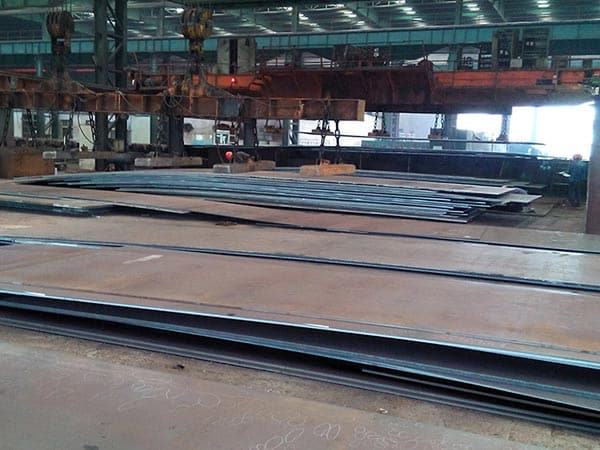
The Fundamental Strength of EN 10149-2 S600MC
In the world of high-performance materials, EN 10149-2 S600MC represents a pinnacle of thermomechanically rolled structural steel. The numerical designation "600" is not merely a label; it defines the minimum yield strength of 600 MPa for thicknesses up to 16mm. This specific property allows engineers to design lighter, more efficient structures without sacrificing the load-bearing capacity required for heavy-duty applications. Unlike traditional carbon steels, S600MC achieves its strength through a combination of precise chemical alloying and controlled rolling processes, rather than through energy-intensive heat treatments like quenching and tempering.
The "MC" suffix provides critical information regarding its manufacturing and processing. The "M" indicates thermomechanical rolling, a process where the final deformation is carried out in a specific temperature range that leads to a material state with properties unattainable by heat treatment alone. The "C" signifies that the steel is specifically designed for cold forming, making it an ideal candidate for complex bending and folding operations in the automotive and machinery sectors.
Mechanical Properties and Performance Metrics
Understanding the mechanical behavior of S600MC is essential for its successful implementation. While the 600 MPa yield strength is the headline figure, the interplay between tensile strength and elongation determines how the material will behave under stress and during fabrication. The tensile strength typically ranges between 650 and 820 MPa, providing a robust safety margin above the yield point.
| Property | Value (Thickness ≤ 16mm) |
|---|---|
| Minimum Yield Strength (ReH) | 600 MPa |
| Tensile Strength (Rm) | 650 - 820 MPa |
| Min. Elongation (A80mm, t < 3mm) | 11% |
| Min. Elongation (A5, t ≥ 3mm) | 13% |
The elongation values are particularly impressive for a steel of this strength level. An elongation of 13% for thicker plates ensures that the material can undergo significant deformation before fracture, which is a critical safety feature in structural components subject to dynamic loads or accidental impacts.
Chemical Composition and Micro-Alloying Strategy
The exceptional properties of S600MC are rooted in its sophisticated chemical profile. The steel utilizes micro-alloying elements such as Niobium (Nb), Vanadium (V), and Titanium (Ti). These elements, even in minute quantities, facilitate grain refinement during the thermomechanical rolling process. A finer grain structure is the only strengthening mechanism that simultaneously increases both strength and toughness.
| Element | Maximum Content (%) |
|---|---|
| Carbon (C) | 0.12 |
| Manganese (Mn) | 1.90 |
| Silicon (Si) | 0.50 |
| Phosphorus (P) | 0.025 |
| Sulphur (S) | 0.015 |
| Aluminium (Al) | 0.015 |
| Nb + V + Ti | 0.22 |
The low carbon content (max 0.12%) is a deliberate choice to ensure excellent weldability. By keeping the carbon equivalent low, the risk of cold cracking in the heat-affected zone (HAZ) is significantly reduced, often eliminating the need for preheating during the welding process. This leads to substantial savings in manufacturing time and energy costs.
Cold Forming and Bending Characteristics
One of the primary reasons manufacturers select S600MC is its superior cold-forming performance. Despite its high yield strength, the steel can be bent to tight radii. This is particularly advantageous in the production of longitudinal beams, cross members, and chassis components for trucks and trailers. When bending S600MC, it is vital to consider the grain direction; however, the EN 10149-2 standard ensures that the material maintains high ductility in both longitudinal and transverse directions.
- Bending Radius: For a plate thickness (t) of 3mm to 6mm, a minimum bending radius of 1.5t is typically recommended for transverse bending.
- Springback: Due to the high yield strength, S600MC exhibits more springback than conventional S355 steel. Tooling must be adjusted to compensate for this elastic recovery.
- Edge Quality: To prevent cracking during bending, it is recommended to deburr or grind the edges of laser-cut or sheared blanks, especially in high-stress areas.
Weldability and Joining Technologies
S600MC is highly compatible with all standard welding methods, including MIG/MAG, TIG, and submerged arc welding. Because the strength is derived from the fine-grained structure produced during rolling, excessive heat input should be avoided. High heat input can lead to grain growth in the heat-affected zone, which may locally reduce the yield strength below the 600 MPa threshold.
Using low-hydrogen consumables is recommended to maintain the integrity of the joint. The Carbon Equivalent (CEV) of S600MC is remarkably low compared to quenched and tempered steels of similar strength, which translates to a much wider processing window for welding operators. This weldability is a key factor in its widespread use in the fabrication of telescopic cranes and agricultural machinery where complex welded assemblies are the norm.
Environmental Adaptability and Toughness
While EN 10149-2 focuses primarily on strength and formability, the environmental adaptability of S600MC is noteworthy. For applications requiring guaranteed impact toughness at low temperatures, the "L" version (e.g., S600MC-L) can be specified, which typically requires impact testing at -20°C or -40°C. This makes the material suitable for equipment operating in arctic conditions or high-altitude environments.
The fine-grain structure also provides inherent resistance to atmospheric corrosion compared to coarse-grained steels, although standard protective coatings like galvanizing or painting are still recommended for long-term exposure. When galvanizing S600MC, the silicon content is controlled to ensure a high-quality, uniform zinc coating, avoiding the brittle, thick layers often associated with the Sandelin effect.
Weight Reduction and Economic Efficiency
The transition from traditional S355 structural steel to S600MC offers a direct path to lightweighting. By utilizing the 600 MPa yield strength, designers can often reduce the thickness of components by 30% to 40% while maintaining the same load capacity. This reduction in material weight has a cascading effect on economic efficiency:
- Reduced Material Costs: Less steel is required per unit produced.
- Lower Transport Costs: Lighter vehicles can carry higher payloads, reducing fuel consumption and emissions.
- Faster Processing: Thinner sections are faster to cut and weld, increasing throughput in the factory.
In the competitive landscape of modern manufacturing, the ability to deliver a lighter, stronger product at a lower total cost of ownership is a significant market advantage. S600MC provides the technical foundation for this value proposition.
Expanding Industry Applications
The versatility of S600MC has led to its adoption across a diverse range of industries. In the automotive sector, it is the material of choice for truck frames, where the combination of high strength and fatigue resistance is paramount. The construction equipment industry utilizes S600MC for boom sections of cranes and excavators, where every kilogram saved in the structure translates to increased lifting capacity.
In agricultural engineering, the steel is used for large-scale implements like plows and trailers that must withstand extreme mechanical stress in abrasive environments. The material's ability to be cold-formed into complex profiles allows for the creation of rigid, aerodynamic structures in the renewable energy sector, particularly for wind turbine internal components and solar tracking systems.
The strategic use of EN 10149-2 S600MC allows for a move toward more sustainable engineering practices. By using less material to achieve higher performance, the carbon footprint of the final product is reduced from production through to its operational life. As global standards continue to evolve toward higher efficiency, the role of 600 MPa yield strength steels will only become more central to industrial design.
Leave a message