
What is plate en 10149-2 s460mc used for
Discover the technical properties, chemical composition, and diverse industrial applications of EN 10149-2 S460MC steel plate. Learn why this high-strength steel is essential for modern engineering.
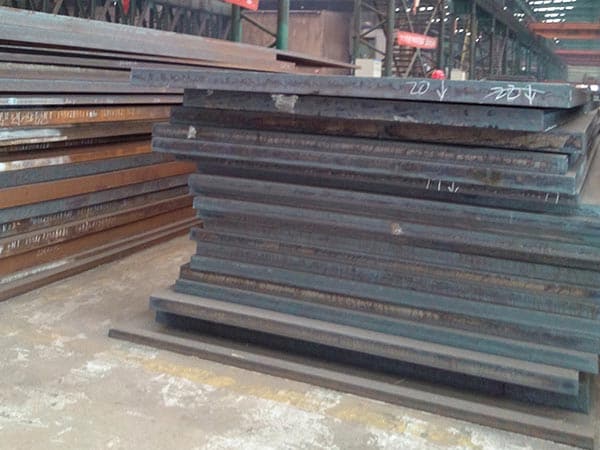
Understanding the Fundamentals of EN 10149-2 S460MC
EN 10149-2 S460MC represents a high-yield strength steel grade specifically engineered for cold forming processes. The nomenclature provides immediate insight into its capabilities: 'S' denotes structural steel, '460' signifies a minimum yield strength of 460 MPa, 'M' indicates its production via thermomechanical rolling, and 'C' confirms its suitability for cold forming. This material is a cornerstone of modern lightweight engineering, offering a sophisticated balance between high load-bearing capacity and exceptional ductility.
The manufacturing process, known as Thermomechanical Control Process (TMCP), is what sets S460MC apart from traditional normalized steels. By controlling the temperature and the deformation during rolling, the grain structure of the steel is refined to a microscopic level. This fine-grained structure is the primary reason why the material can achieve such high strength without a significant increase in alloying elements, which in turn preserves its excellent weldability and toughness.
Chemical Composition and Micro-Alloying Strategy
The chemical profile of S460MC is meticulously balanced to ensure performance consistency. Unlike lower-grade structural steels, S460MC utilizes micro-alloying elements such as Niobium (Nb), Vanadium (V), and Titanium (Ti). These elements facilitate grain refinement and precipitation hardening during the thermomechanical rolling process.
| Element | Max % (by mass) |
|---|---|
| Carbon (C) | 0.12 |
| Manganese (Mn) | 1.60 |
| Silicon (Si) | 0.50 |
| Phosphorus (P) | 0.025 |
| Sulfur (S) | 0.015 |
| Aluminium (Al) total | 0.015 |
| Niobium (Nb) | 0.09 |
| Vanadium (V) | 0.20 |
| Titanium (Ti) | 0.15 |
The low carbon content (max 0.12%) is particularly critical. It ensures that the steel remains highly weldable and resistant to cold cracking, a common issue in higher-strength materials. By keeping the carbon equivalent (CEV) low, engineers can specify S460MC for complex structures without the need for expensive pre-heating or post-weld heat treatments in many standard thicknesses.
Mechanical Performance and Structural Advantages
The primary reason for selecting S460MC is its superior weight-to-strength ratio. In structural design, utilizing a 460 MPa yield steel instead of a standard S355 grade allows for a significant reduction in plate thickness while maintaining the same structural integrity. This leads to lighter final products, reduced material costs, and lower transportation energy consumption.
| Property | Value (Thickness ≤ 16mm) |
|---|---|
| Minimum Yield Strength (ReH) | 460 MPa |
| Tensile Strength (Rm) | 520 - 670 MPa |
| Minimum Elongation (A80mm) | 14% |
| Minimum Elongation (A5.65) | 17% |
Beyond simple strength, S460MC exhibits remarkable impact toughness. Although the standard primarily focuses on cold forming, the fine-grained nature of the steel provides good resistance to brittle fracture, making it reliable for components subjected to dynamic loads and varying climatic conditions.
Exceptional Cold Forming and Fabrication Characteristics
The 'C' designation in S460MC highlights its optimized cold-forming properties. This steel is designed to be bent, flanged, and folded into complex shapes without the risk of surface cracking or edge tearing. This is vital for industries that manufacture intricate structural components through automated pressing or roll-forming.
- Bending Radius: S460MC allows for tight bending radii, typically 1.0 to 1.5 times the thickness (depending on the orientation relative to the rolling direction), which is significantly better than traditional high-strength steels.
- Edge Quality: Due to its clean chemistry and low impurity levels (low S and P), the edges of S460MC plates remain stable during laser or plasma cutting, providing a perfect starting point for subsequent welding or forming.
- Surface Finish: The thermomechanical rolling process results in a thin, tightly adherent scale, which is easier to remove during pickling or shot blasting, leading to a superior surface for painting or galvanizing.
Critical Applications in Modern Industry
The versatility of S460MC makes it a preferred choice across several high-stakes engineering sectors. Its ability to reduce weight without sacrificing safety is its most marketable trait.
Automotive and Transportation: In the heavy vehicle industry, S460MC is used for truck chassis frames, cross members, and longitudinal beams. For trailers and tankers, it enables the construction of lighter frames that can carry higher payloads, directly improving the operational efficiency of logistics fleets.
Lifting and Excavation Equipment: Mobile cranes, telescopic handlers, and excavator arms benefit from the high yield strength of S460MC. These machines require high structural stiffness and low self-weight to maximize their lifting capacity and reach. The fatigue resistance of S460MC ensures these components can withstand millions of stress cycles during their service life.
Agricultural Machinery: Modern farming equipment, such as large-scale plows, harvesters, and seeders, utilizes S460MC for structural frames. These components must endure harsh environmental conditions and significant mechanical stress while remaining light enough to minimize soil compaction.
Storage and Racking Systems: High-bay warehouse racking systems use S460MC to achieve the necessary height and load capacity with thinner profiles, optimizing warehouse space and reducing the total steel tonnage required for large-scale installations.
Welding and Joining Technology
S460MC is highly compatible with all standard welding processes, including MIG/MAG (GMAW), submerged arc welding (SAW), and laser welding. The low carbon equivalent minimizes the hardness increase in the Heat Affected Zone (HAZ), which preserves the toughness of the joint. When welding S460MC, it is recommended to use filler metals that match the strength of the base material to ensure the entire assembly meets the design requirements. Because of its fine-grained structure, excessive heat input should be avoided to prevent grain growth in the HAZ, which could locally reduce the yield strength.
Environmental Adaptability and Sustainability
Using S460MC contributes significantly to sustainability goals. By reducing the amount of steel required for a structure, the carbon footprint associated with steel production is lowered. Furthermore, the weight savings in vehicles lead to reduced fuel consumption and lower CO2 emissions throughout the vehicle's lifecycle. The material is also fully recyclable, fitting perfectly into a circular economy model. Its resistance to atmospheric corrosion can be further enhanced through modern coating systems, ensuring long-term durability in outdoor or industrial environments.
Selecting the Right Supplier for S460MC
Procuring S460MC requires attention to certification and quality standards. It is essential to ensure that the material is accompanied by a 3.1 or 3.2 inspection certificate according to EN 10204, verifying the chemical and mechanical properties. Quality suppliers will also provide information on the rolling direction, as the cold forming properties can vary slightly between longitudinal and transverse orientations. For high-precision applications, checking the flatness tolerances and surface quality is also recommended to ensure seamless integration into automated production lines.
Leave a message