
What is en 10149-2 steel s420mc steel
A comprehensive guide to S420MC steel under EN 10149-2. Explore its mechanical properties, chemical composition, welding performance, and industrial applications in automotive and heavy machinery.
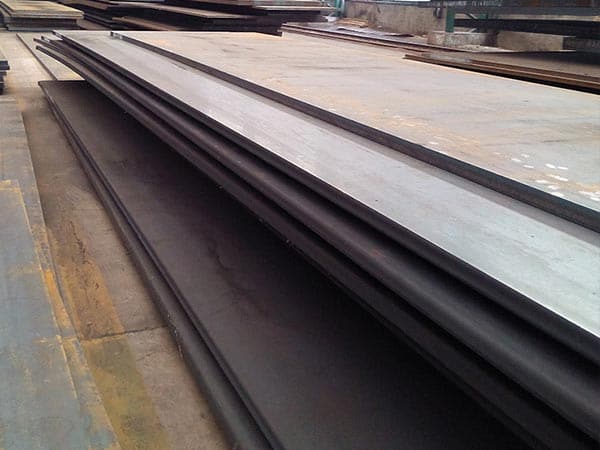
Understanding the Essence of S420MC Steel and EN 10149-2
S420MC is a high-strength low-alloy (HSLA) steel grade specifically engineered for cold-forming applications. This material is governed by the European standard EN 10149-2, which specifies the technical delivery conditions for flat products made of high yield strength steels for cold forming. The designation 'S420MC' carries significant meaning: 'S' denotes structural steel, '420' indicates a minimum yield strength of 420 MPa, 'M' signifies that the steel is thermomechanically rolled, and 'C' confirms its suitability for cold forming operations.
The manufacturing process of S420MC relies on Thermomechanical Control Process (TMCP). Unlike traditional normalized rolling, TMCP involves precise control of the temperature and deformation during the rolling process, followed by controlled cooling. This metallurgical technique refines the grain structure to an exceptional degree, allowing the steel to achieve high strength and superior toughness without the need for high levels of expensive alloying elements. This makes S420MC an economically viable solution for industries seeking to reduce weight while maintaining structural integrity.
Chemical Composition and Micro-alloying Synergy
The performance of S420MC is rooted in its sophisticated chemical balance. By maintaining a low carbon content, the steel ensures excellent weldability and ductility. The strength is primarily derived from micro-alloying elements such as Niobium (Nb), Vanadium (V), and Titanium (Ti). These elements facilitate grain refinement and precipitation hardening, which are critical for achieving the 420 MPa yield threshold.
| Element | Maximum Percentage (%) |
|---|---|
| Carbon (C) | 0.12 |
| Manganese (Mn) | 1.60 |
| Silicon (Si) | 0.50 |
| Phosphorus (P) | 0.025 |
| Sulfur (S) | 0.015 |
| Aluminum (Al) | 0.015 (min) |
| Niobium (Nb) | 0.09 |
| Vanadium (V) | 0.20 |
| Titanium (Ti) | 0.15 |
The low sulfur and phosphorus content are vital for the steel's internal cleanliness, which directly impacts its ability to withstand severe cold bending and flanging without cracking. The inclusion of Aluminum serves as a deoxidizer and further aids in grain size control, ensuring that the material remains stable under various thermal conditions during fabrication.
Mechanical Properties and Structural Efficiency
The primary advantage of utilizing S420MC lies in its high yield-to-weight ratio. In modern engineering, reducing the mass of a structure—often referred to as 'lightweighting'—is essential for improving energy efficiency and increasing payload capacity in transport vehicles. S420MC provides a significant upgrade over standard S355 grades, allowing for a reduction in plate thickness without compromising safety.
- Yield Strength: Minimum 420 MPa (for thicknesses ≤ 16mm).
- Tensile Strength: Ranging between 480 and 620 MPa.
- Elongation: Minimum 16% to 19% depending on the thickness, ensuring the material can deform plastically before failure.
- Impact Toughness: While EN 10149-2 focuses on cold forming, many S420MC products offer excellent low-temperature impact properties, making them suitable for harsh climates.
These mechanical attributes ensure that components made from S420MC can absorb significant energy, which is a critical requirement for automotive safety components and crash-relevant structures. The fine-grained microstructure also provides better resistance to fatigue, extending the service life of the machinery.
Cold Forming and Fabrication Excellence
As a 'C' designated steel, S420MC is optimized for cold fabrication. This includes processes such as bending, flanging, and cold pressing. The material's consistent mechanical properties across the entire coil or plate ensure that springback is predictable, which is a major factor in high-precision manufacturing environments. When bending S420MC, it is recommended to follow the minimum internal bending radii specified in the standard to prevent surface localized strain.
The absence of large inclusions and the homogeneous grain structure mean that the steel can undergo tight bends even at high strength levels. This allows designers to create complex geometries that would be impossible with traditional carbon steels of similar strength. For instance, in the production of longitudinal beams for truck chassis, S420MC allows for sharp profiles that optimize space and structural rigidity.
Superior Weldability for Industrial Assembly
One of the most significant challenges with high-strength steels is their tendency to form brittle zones in the Heat Affected Zone (HAZ) during welding. However, S420MC overcomes this through its low Carbon Equivalent Value (CEV). Because the strength is achieved via TMCP and micro-alloying rather than high carbon or alloy content, the steel is remarkably easy to weld using all standard methods, including MIG/MAG, TIG, and submerged arc welding.
Preheating is generally not required for S420MC in standard thicknesses, which drastically reduces production time and energy costs. The resulting weld joints maintain high strength and toughness, provided that appropriate filler metals are used. This weldability is a key reason why S420MC is favored for large-scale structural assemblies where hundreds of meters of welding are required.
Diverse Applications Across Global Industries
The versatility of EN 10149-2 S420MC makes it a staple in several high-demand sectors. Its ability to balance strength, formability, and weight makes it indispensable in the following areas:
- Automotive Industry: Used for chassis frames, cross members, and structural reinforcements in trucks and trailers. It helps manufacturers meet stringent emission targets by reducing vehicle weight.
- Heavy Machinery: Crane booms, excavator arms, and agricultural equipment benefit from the high yield strength, allowing for longer reach and higher lifting capacities.
- Storage Systems: High-density racking and shelving systems utilize S420MC to support heavy loads with minimal material usage.
- Cold Pressed Parts: Any component requiring complex shapes and high load-bearing capacity, such as brackets and support plates in construction.
By replacing traditional S355MC with S420MC, engineers can often achieve a weight saving of 15-25%. This reduction directly translates to lower fuel consumption in transport and lower material costs in large-scale construction projects, highlighting the material's economic and environmental value.
Environmental Adaptability and Sustainability
In the current industrial landscape, sustainability is as important as performance. S420MC contributes to a circular economy in two ways. First, its high strength allows for 'doing more with less,' reducing the total amount of steel required for a project and thus lowering the carbon footprint associated with steel production. Second, the low-alloy nature of the steel makes it easily recyclable at the end of its life cycle.
Furthermore, the TMCP process used to create S420MC is more energy-efficient than traditional quenching and tempering processes. The ability of the steel to perform in varying environmental conditions, from the heat of industrial plants to the sub-zero temperatures of northern construction sites, ensures that it remains a reliable choice for global infrastructure. Its resistance to atmospheric corrosion can also be enhanced through standard coating and galvanizing processes, as the silicon content is controlled to be compatible with hot-dip galvanizing requirements.
Technical Comparison: S420MC vs. Conventional Structural Steels
When comparing S420MC to standard s355jr or S355MC, the primary difference is the refined grain structure. While S355 is the workhorse of the industry, S420MC offers that extra margin of strength that allows for innovative design. Unlike S420 structural steel (EN 10025-3), which is often normalized and thicker, S420MC is specifically a thin-to-medium gauge product (usually up to 20mm) optimized for the high-speed production lines of the automotive and appliance industries.
The consistency of S420MC is another factor. Modern TMCP mills use advanced sensors to ensure that every millimeter of the steel meets the 420 MPa requirement. This reliability reduces the 'safety factor' overhead that engineers must account for, leading to leaner, more efficient designs. Whether it is for a telescopic crane or a simple truck frame, S420MC represents the pinnacle of modern metallurgical engineering for cold-formed structures.
Leave a message