
S700MC hot rolled plate for engineering and machine structural use
Explore the technical specifications, processing advantages, and industrial applications of S700MC hot-rolled high-strength steel. Learn how it optimizes weight and durability.
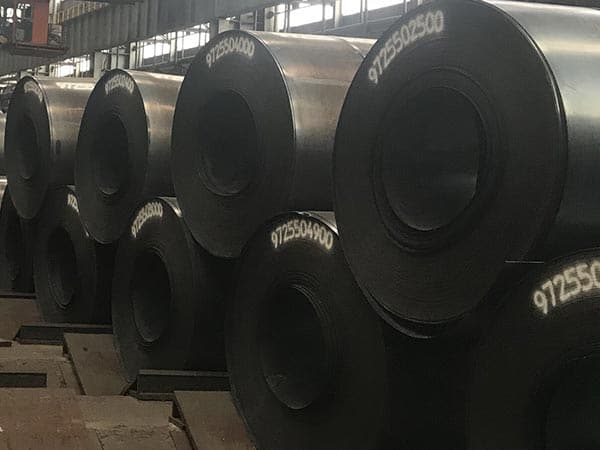
The Evolution of Structural Efficiency: S700MC Hot Rolled Steel
In the modern engineering landscape, the demand for materials that combine extreme strength with reduced weight has never been higher. S700MC, a high-strength low-alloy (HSLA) steel grade governed by the EN 10149-2 standard, stands as a pinnacle of metallurgical advancement. This thermomechanically rolled steel is specifically designed for cold forming, offering a yield strength of at least 700 MPa. By replacing traditional structural steels like S355, engineers can achieve weight reductions of up to 30-40% without compromising structural integrity.
The "MC" designation signifies that the material is thermomechanically rolled (M) and suitable for cold forming (C). This unique production process ensures a fine-grained microstructure that provides an exceptional balance of toughness, weldability, and formability. For manufacturers of heavy machinery, transportation equipment, and complex structural components, S700MC represents a strategic choice to enhance payload capacity and fuel efficiency.
Chemical Composition and Micro-Alloying Strategy
The superior properties of S700MC are rooted in its precise chemical makeup. Unlike traditional carbon steels that rely on high carbon content for strength—which often leads to poor weldability—S700MC utilizes a low-carbon design supplemented by micro-alloying elements such as Niobium (Nb), Vanadium (V), and Titanium (Ti).
| Element | Max Content (%) |
|---|---|
| Carbon (C) | 0.12 |
| Manganese (Mn) | 2.10 |
| Silicon (Si) | 0.60 |
| Phosphorus (P) | 0.025 |
| Sulfur (S) | 0.015 |
| Aluminium (Al) | 0.015 |
| Nb + V + Ti | 0.22 |
This low carbon equivalent (CEV) is critical. It ensures that the steel remains highly weldable while the micro-alloying elements prevent grain growth during the rolling process. The result is a refined grain structure that increases both yield strength and low-temperature impact resistance.
Mechanical Performance: Beyond the 700 MPa Yield Point
The primary draw of S700MC is its mechanical profile. While the nominal yield strength is 700 MPa, the material exhibits a high tensile strength and sufficient elongation to allow for complex shaping. This makes it ideal for components that must withstand high dynamic loads and stress.
- Yield Strength (ReH): Minimum 700 MPa.
- Tensile Strength (Rm): 750 - 950 MPa.
- Elongation (A80mm): Minimum 10-12% depending on thickness.
- Impact Energy: Often tested at -20°C or -40°C to ensure performance in arctic or high-altitude environments.
These properties allow for the design of thinner sections that can carry the same loads as thicker, heavier plates of lower-grade steel. This "down-gauging" is the cornerstone of modern lightweight engineering in the automotive and crane industries.
Advanced Processing: Welding, Bending, and Cutting
One of the most significant advantages of S700MC is its exceptional processing performance. Despite its high strength, it behaves predictably under common manufacturing methods.
Cold Forming and Bending: S700MC is specifically optimized for cold bending. Because of its fine-grained structure, it resists cracking even at tight bend radii. For designers, this means more compact structural designs and fewer welded joints, which reduces production costs and potential points of failure. It is recommended to bend the plate transverse to the rolling direction to maximize the bending radius safety margin.
Welding Excellence: Due to the low carbon and alloy content, S700MC does not typically require preheating for thicknesses under 20mm. It can be welded using all standard methods, including MIG/MAG, submerged arc welding, and laser welding. The heat-affected zone (HAZ) remains stable, though care must be taken with heat input to maintain the strength provided by the thermomechanical rolling process.
Precision Cutting: Whether using laser, plasma, or waterjet cutting, S700MC provides clean edges and minimal thermal distortion. Its consistent flatness and surface quality make it highly compatible with automated nesting and robotic welding systems.
Strategic Applications in Engineering and Machinery
The versatility of S700MC has led to its adoption across a wide spectrum of heavy-duty industries. Its role is particularly vital where the strength-to-weight ratio is a critical performance metric.
- Mobile Cranes and Lifting Gear: The boom sections of telescopic cranes require immense strength to prevent buckling while remaining light enough to be transported. S700MC is the industry standard for these applications.
- Commercial Vehicle Chassis: For trailers and trucks, reducing the weight of the chassis directly increases the legal payload capacity. S700MC provides the durability to handle road vibrations and heavy loads over millions of cycles.
- Agricultural Machinery: Modern plows, harvesters, and spreaders face abrasive environments and high mechanical stress. S700MC ensures these machines are robust yet agile enough for soft soil conditions.
- Waste Management Systems: Refuse collection vehicles and containers benefit from the impact resistance and weight savings of HSLA steels.
Environmental Adaptation and Lifecycle Value
S700MC is not just about strength; it is about sustainability and long-term value. By reducing the mass of a vehicle or machine, the carbon footprint during its operational life is significantly lowered through reduced fuel consumption. Furthermore, the high purity of the steel makes it 100% recyclable at the end of its service life.
In terms of environmental resistance, while S700MC is not a "weathering steel" like Corten, its dense surface scale and fine grain structure provide a good substrate for protective coatings. When galvanized or painted, it exhibits excellent corrosion resistance, making it suitable for outdoor infrastructure and offshore support equipment.
Economic Considerations for Manufacturers
While the per-ton price of S700MC may be higher than standard S355 steel, the total cost of ownership often proves lower. The reduction in material volume (using thinner plates) reduces the total weight purchased. Additionally, thinner plates require less welding filler material and shorter welding times, leading to substantial savings in labor and consumables. When factoring in the increased performance and marketability of a lighter, stronger end-product, S700MC emerges as a high-ROI material choice for forward-thinking engineering firms.
Leave a message