
What is the BBNSteel company S500MC cold forming autobobile steel price main products
Explore BBNSteel's S500MC high-strength cold forming steel. Learn about its mechanical properties, chemical composition, price factors, and automotive applications.
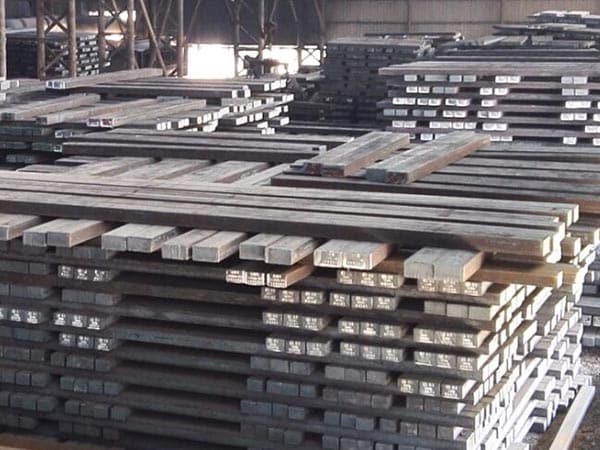
The Essence of S500MC: High-Strength Low-Alloy Steel for Modern Engineering
S500MC is a high-yield-strength steel grade specifically designed for cold forming processes, adhering to the EN 10149-2 standard. As a thermomechanically rolled steel, it represents a pinnacle of metallurgical engineering, balancing extreme strength with the ductility required for complex shaping. BBNSteel has established itself as a premier supplier of this material, recognizing its critical role in the automotive and heavy machinery industries. The 'S' denotes structural steel, '500' represents the minimum yield strength of 500 MPa, and 'MC' indicates it is suitable for cold forming and produced through thermomechanical rolling.
This steel grade is favored because it allows for significant weight reduction in structural components without compromising safety or durability. By using thinner gauges of S500MC compared to traditional carbon steels, manufacturers can decrease the overall weight of vehicles, leading to improved fuel efficiency and lower carbon emissions. BBNSteel provides S500MC in various forms, including hot-rolled coils, pickled and oiled sheets, and precision-cut strips, catering to the diverse needs of global manufacturing hubs.
Chemical Composition: The Science of Micro-Alloying
The exceptional properties of S500MC are a direct result of its precise chemical makeup. Unlike standard carbon steels, S500MC utilizes micro-alloying elements such as Niobium (Nb), Vanadium (V), and Titanium (Ti). These elements facilitate grain refinement during the thermomechanical rolling process, which is the primary mechanism for achieving high yield strength while maintaining excellent toughness and weldability.
| Element | Maximum Content (%) |
|---|---|
| Carbon (C) | 0.12 |
| Manganese (Mn) | 1.60 |
| Silicon (Si) | 0.50 |
| Phosphorus (P) | 0.025 |
| Sulfur (S) | 0.015 |
| Aluminum (Al) | 0.015 (Min) |
| Niobium (Nb) | 0.09 |
| Vanadium (V) | 0.20 |
| Titanium (Ti) | 0.15 |
The low carbon content (max 0.12%) is particularly important as it ensures superior weldability. Standard welding techniques, including MAG, TIG, and laser welding, can be applied without the risk of cold cracking, provided the correct filler materials and heat inputs are managed. The controlled levels of Phosphorus and Sulfur contribute to the steel's internal cleanliness, reducing the likelihood of lamellar tearing and improving impact resistance at low temperatures.
Mechanical Performance and Structural Integrity
BBNSteel ensures that every batch of S500MC meets or exceeds the mechanical requirements set by international standards. The defining characteristic is the yield strength, but the tensile strength and elongation are equally vital for ensuring that the material can withstand the stresses of both manufacturing and end-use operation.
| Property | Value Range |
|---|---|
| Yield Strength (ReH) | Min 500 MPa |
| Tensile Strength (Rm) | 550 - 700 MPa |
| Elongation (A80mm, t < 3mm) | Min 12% |
| Elongation (A5, t ≥ 3mm) | Min 14% |
| Bending Radius (180°) | 0.5t to 1.5t (depending on thickness) |
The high yield-to-tensile ratio of S500MC allows for predictable deformation during the stamping and bending processes. For engineers, this predictability is crucial for CAD/CAM modeling and ensuring that final parts meet tight dimensional tolerances. Furthermore, the material exhibits excellent impact energy absorption, making it an ideal choice for safety-critical automotive components like bumper beams and chassis frames.
Advanced Cold Forming and Processing Capabilities
One of the primary reasons manufacturers choose S500MC from BBNSteel is its remarkable cold formability. Despite its high strength, the steel can be bent, flanged, and deep-drawn into complex shapes. This is achieved through the fine-grained microstructure developed during thermomechanical rolling, which prevents localized thinning and cracking during high-strain operations.
- Bending: S500MC supports tight bending radii. For thicknesses under 3mm, a bending radius of 0.5 times the material thickness is often achievable, though 1.0t is recommended for mass production stability.
- Laser Cutting: The clean chemical composition and uniform thickness of BBNSteel’s S500MC products make them highly suitable for high-speed laser cutting, resulting in smooth edges and minimal heat-affected zones.
- Surface Treatment: S500MC is frequently supplied in a pickled and oiled (P&O) condition. This removes the mill scale, providing a clean surface that is ready for painting, coating, or welding, which is essential for automotive exterior and structural parts.
BBNSteel also offers value-added services such as precision leveling and custom slitting. Leveling is particularly important for S500MC because the high internal stresses from the rolling process can lead to 'coil set' or 'crossbowing'. BBNSteel uses advanced multi-roll levelers to ensure the flatness required for automated robotic welding and assembly lines.
Automotive Industry Applications: Beyond the Chassis
While S500MC is synonymous with truck chassis and longitudinal beams, its application profile has expanded significantly. In the pursuit of lightweighting, automotive designers are utilizing S500MC in a variety of structural and safety components.
Truck and Trailer Frames: The primary application remains the heavy-duty sector. S500MC provides the necessary stiffness to carry heavy loads while reducing the dead weight of the trailer, thereby increasing the payload capacity. This has a direct impact on the operational efficiency of logistics companies.
Chassis Components: Cross members, suspension brackets, and shock absorber mounts benefit from the fatigue resistance of S500MC. The material's ability to withstand cyclic loading without premature failure is a key safety feature.
Construction and Lifting Equipment: Beyond automobiles, S500MC is used in the manufacturing of crane arms, excavator buckets, and agricultural machinery. Its high strength-to-weight ratio allows for longer reach and higher lifting capacities in mobile cranes.
Factors Influencing the Price of S500MC
The price of S500MC is subject to several dynamic factors. Understanding these variables is essential for procurement managers looking to optimize their supply chain costs. BBNSteel maintains a transparent pricing model based on market fundamentals and value-added processing.
- Raw Material Costs: The price of iron ore, coking coal, and scrap metal forms the baseline for S500MC pricing. Fluctuations in global commodity markets directly impact the cost of the base melt.
- Alloying Surcharges: Since S500MC relies on Niobium, Vanadium, and Titanium, the market price of these micro-alloys can influence the final cost. These elements are often sourced from specific geographic regions, making them sensitive to geopolitical shifts.
- Energy and Manufacturing: Thermomechanical rolling is an energy-intensive process. Changes in electricity or natural gas prices in the manufacturing region can lead to price adjustments.
- Surface Finish and Processing: Pickled and oiled (P&O) material carries a premium over black (as-rolled) material due to the additional chemical processing and environmental management involved. Similarly, custom cutting and tight tolerance leveling add to the final price.
- Logistics and Volume: Shipping costs, import duties, and the scale of the order play a significant role. BBNSteel leverages its extensive logistics network to provide competitive landed costs for international clients.
Environmental Adaptability and Sustainability
In today's industrial landscape, the environmental footprint of materials is under intense scrutiny. S500MC contributes to sustainability goals in two ways. First, its high strength allows for 'material substitution'—using less steel to achieve the same structural performance. This reduces the total energy required for material production and transportation.
Second, S500MC is fully recyclable. At the end of a vehicle's life cycle, the steel can be recovered and processed in electric arc furnaces (EAF) to produce new steel grades. BBNSteel is committed to promoting green manufacturing practices, ensuring that the production of S500MC meets modern environmental standards regarding emissions and waste management.
Furthermore, the atmospheric corrosion resistance of S500MC, while not as high as specialized weathering steels, is sufficient for most automotive applications when combined with modern E-coating and painting technologies. Its performance in extreme temperatures—from the heat of the desert to the sub-zero conditions of arctic transport—remains stable due to its fine-grained structure, which prevents brittle fracture.
BBNSteel: A Partner in High-Strength Steel Solutions
Choosing BBNSteel as a supplier for S500MC means more than just purchasing raw material. It involves a partnership that includes technical support, metallurgical expertise, and a robust supply chain. BBNSteel maintains a deep inventory of S500MC in various thicknesses and widths, ensuring short lead times for urgent production requirements.
The company's quality control system involves rigorous testing, including ultrasonic inspection, tensile testing, and charpy V-notch impact testing. This ensures that every millimeter of steel delivered to the customer’s factory floor is capable of performing under the most demanding conditions. By focusing on the specific needs of the automotive sector, BBNSteel continues to refine its S500MC offerings, helping manufacturers build safer, lighter, and more efficient vehicles for the global market.
The strategic use of S500MC is a hallmark of advanced manufacturing. As the industry moves toward electric vehicles (EVs), the demand for high-strength steels like S500MC is expected to grow, as battery weight necessitates even more aggressive lightweighting of the vehicle's structural frame. BBNSteel remains at the forefront of this transition, providing the materials and expertise needed to drive the future of transportation.
Leave a message