
What is the available size of B600L steel for car safety parts?
Explore the available sizes, technical specifications, and mechanical performance of B600L steel for automotive safety components and structural applications.
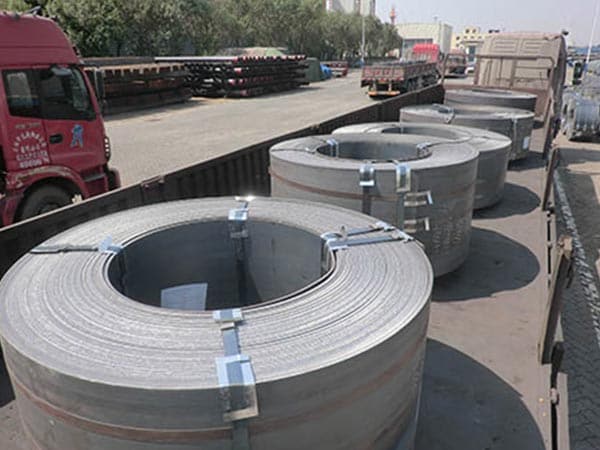
Technical Overview of B600L Automotive Steel
B600L is a high-strength low-alloy (HSLA) steel specifically engineered for the demanding requirements of the automotive industry. The 'B' typically signifies its alignment with Baosteel standards or specific automotive manufacturing benchmarks, while '600' represents its minimum tensile strength of 600 MPa. The 'L' suffix denotes its optimized performance for structural and load-bearing components. This material is a cornerstone in the pursuit of vehicle lightweighting without compromising the integrity of safety systems.
Available Dimensional Ranges for B600L
The availability of B600L steel dimensions is primarily dictated by the production capabilities of hot-rolling mills and subsequent processing lines such as pickling and oiling. For automotive safety parts, precision in thickness and width is paramount to ensure consistent energy absorption during impact.
| Product Form | Thickness Range (mm) | Width Range (mm) | Typical Delivery State |
|---|---|---|---|
| Hot Rolled (HR) | 2.0 - 12.0 | 1000 - 1630 | Black coil / As rolled |
| Pickled & Oiled (P&O) | 1.6 - 8.0 | 900 - 1500 | Acid cleaned, oiled surface |
| Slit Strips | 1.6 - 10.0 | 20 - 900 | Customized width precision |
Thickness availability: Most safety components, such as chassis cross members and reinforcement brackets, utilize thicknesses between 2.5mm and 6.0mm. Thinner gauges (1.6mm - 2.0mm) are often used for lighter structural reinforcements, while heavier gauges up to 12mm are reserved for heavy-duty truck frames and specialized safety mounts.
Width and Length: Standard mill widths usually peak at around 1630mm. However, for specific stamping dies used in car safety part production, many manufacturers opt for precision slitting to exact widths, reducing scrap rates and optimizing material utilization.
Chemical Composition and Micro-alloying Strategy
The performance of B600L is not merely a result of its thickness but its sophisticated chemical makeup. By utilizing micro-alloying elements like Niobium (Nb), Vanadium (V), and Titanium (Ti), the steel achieves a fine-grained structure that balances strength and ductility.
| Element | C (max) | Si (max) | Mn (max) | P (max) | S (max) | Al (min) |
|---|---|---|---|---|---|---|
| Content (%) | 0.12 | 0.50 | 1.60 | 0.025 | 0.020 | 0.015 |
The low carbon content ensures excellent weldability, which is critical for safety parts that must be integrated into the vehicle's body-in-white (BIW) or chassis through automated welding processes. The addition of Manganese enhances hardenability and strength, while phosphorus and sulfur are kept to a minimum to prevent embrittlement and improve impact toughness.
Mechanical Performance for Safety Criticality
Car safety parts require materials that can withstand sudden impacts and distribute energy effectively. B600L provides a reliable stress-strain profile that meets these rigorous standards.
- Yield Strength (ReH): 490 - 620 MPa. This range ensures the material maintains its shape under significant operational loads.
- Tensile Strength (Rm): Minimum 600 MPa. This is the ultimate threshold before the material fails, providing a safety buffer during collisions.
- Elongation (A80mm): Minimum 18%. High elongation allows the steel to deform plastically without snapping, a vital characteristic for energy-absorbing 'crumple zones'.
These mechanical properties are tested both longitudinally and transversely to ensure isotropic behavior, which is essential for complex safety part geometries that may experience multi-axial loading.
Process Performance: Forming and Welding
Manufacturing safety parts involves complex stamping, bending, and welding. B600L is designed to be 'shop-floor friendly' for Tier 1 and Tier 2 automotive suppliers.
Cold Forming and Bending: B600L exhibits excellent cold-formability. It can be bent to tight radii without surface cracking. For a 180-degree bend, the recommended inner radius is typically 1.0 to 1.5 times the thickness, depending on the specific batch and orientation. This allows for the creation of intricate reinforcement ribs that add stiffness to safety components.
Weldability: Due to its low carbon equivalent (Ceq), B600L is compatible with various welding techniques, including Metal Active Gas (MAG) welding, Resistance Spot Welding (RSW), and Laser Welding. The heat-affected zone (HAZ) remains stable, retaining a significant portion of the base metal's strength, which is a non-negotiable requirement for safety-critical joints.
Hole Expansion Capacity: For parts requiring flanging or punched holes, B600L offers a high hole expansion ratio. This prevents edge cracking during the expansion process, ensuring the structural integrity of bolt holes and assembly points.
Environmental Adaptability and Fatigue Resistance
Safety parts are often located in the undercarriage or within structural pillars where they may be exposed to corrosive environments and cyclic loading. B600L addresses these challenges through material purity and surface treatment options.
Fatigue Life: Automotive chassis components undergo millions of stress cycles during a vehicle's lifespan. B600L's fine-grained ferrite-pearlite microstructure provides high fatigue strength, reducing the risk of stress-induced cracking over time. This makes it ideal for suspension arms and subframes.
Corrosion Protection: While B600L is often supplied as Pickled and Oiled (P&O) to provide temporary rust protection during transport and storage, it is highly receptive to subsequent coating processes. Whether it is E-coating (Electrophoretic coating), galvanizing, or specialized automotive painting, the surface of B600L ensures strong adhesion, protecting the safety part from structural thinning due to oxidation.
Primary Applications in the Automotive Industry
The specific size and strength profile of B600L make it a preferred choice for several key areas of vehicle construction:
- Chassis Systems: Longitudinal beams, cross members, and subframes where high load-bearing capacity is required.
- Seat Structures: Seat rails and mounting brackets that must remain intact during rear-end or frontal impacts.
- Bumper Reinforcements: Providing the necessary stiffness to protect the vehicle's cooling system and engine block during low-speed impacts.
- Wheel Discs: Utilizing the material's fatigue resistance for durable wheel construction.
- General Brackets: Engine mounts and transmission supports that require a balance of strength and vibration damping.
Factors Influencing Size Availability and Selection
When sourcing B600L for car safety parts, several factors influence the available dimensions and the final selection. Mill limitations are the primary factor; not all mills can produce the thinnest or widest ends of the specification spectrum. Furthermore, the required tolerances (such as half-standard thickness tolerance) can limit the choice of suppliers.
Engineers must also consider the 'Springback' effect during the design phase. Higher strength steels like B600L exhibit more springback than lower-grade mild steels. Choosing the correct thickness and understanding the material's elastic recovery is essential for maintaining the dimensional accuracy of the final safety component.
In the current market, B600L is widely available through major steel distributors and service centers that specialize in automotive grades. For large-scale production, custom rolling schedules can be arranged to provide non-standard thicknesses that optimize weight-to-strength ratios for specific vehicle platforms.
Leave a message