
What is the strongest S600MC pickled steel coil?
Explore the comprehensive properties of S600MC pickled steel coil, including mechanical strength, chemical composition, processing advantages, and industrial applications.
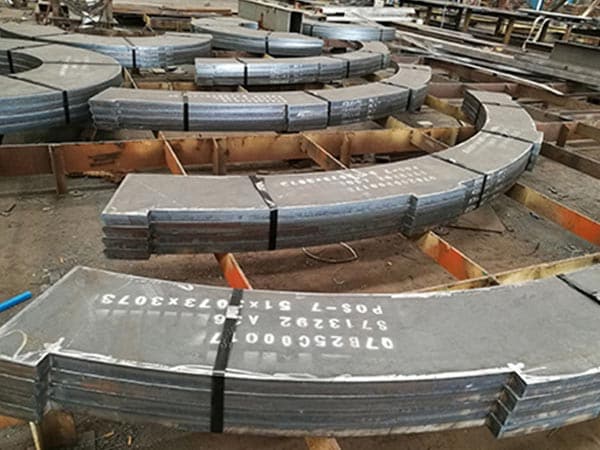
The Definition of Strength in S600MC Pickled Steel
When discussing the strongest S600MC pickled steel coil, it is essential to look beyond simple yield strength numbers. S600MC is a high-strength low-alloy (HSLA) steel grade produced through a sophisticated thermomechanical rolling process. Defined by the European standard EN 10149-2, the 'S' stands for structural steel, '600' denotes a minimum yield strength of 600 MPa, and 'MC' indicates it is thermomechanically rolled for cold forming. The 'pickled' (often denoted as +P) suffix refers to the surface treatment where acid baths remove mill scale, resulting in a clean, smooth surface ready for immediate processing. The true strength of this material lies in its unique balance of high load-bearing capacity and exceptional ductility, allowing it to withstand extreme stress while remaining formable.
Micro-Alloying: The Secret to Superior Performance
The strength of S600MC is not a result of high carbon content, which would make the steel brittle and difficult to weld. Instead, it relies on micro-alloying elements such as Niobium (Nb), Vanadium (V), and Titanium (Ti). These elements work together during the thermomechanical rolling process to achieve grain refinement and precipitation hardening. By creating a fine-grained microstructure, the steel achieves higher strength and improved toughness compared to traditional structural steels. This micro-alloying strategy ensures that even at a yield strength of 600 MPa, the material retains excellent impact resistance at low temperatures, which is a critical factor for heavy machinery operating in harsh climates.
Mechanical Properties and Standards
To understand why S600MC is considered a powerhouse in the steel industry, one must examine its mechanical specifications. Unlike standard hot-rolled steels, S600MC offers a significant weight reduction potential. By using thinner gauges of S600MC to replace thicker sections of S355 or S235, manufacturers can reduce the overall weight of structures without compromising safety or durability.
| Property | Value (Min/Max) |
|---|---|
| Yield Strength (Reh) | Min 600 MPa |
| Tensile Strength (Rm) | 650 - 820 MPa |
| Elongation (A5) | Min 13% (thickness < 3mm) / Min 11% (thickness ≥ 3mm) |
| Bending Radius (90°) | 1.0t to 1.5t (depending on thickness) |
These values demonstrate that while the steel is incredibly strong, it possesses enough elongation to be bent and shaped into complex geometries. This combination is what makes S600MC the 'strongest' choice for structural components that require both rigidity and intricate design.
The Advantage of the Pickling Process
The 'pickled and oiled' (P&O) state of S600MC is highly sought after for several reasons. During hot rolling, a layer of iron oxide known as mill scale forms on the surface. If left untreated, this scale can damage tooling during stamping, interfere with welding quality, and prevent paint from adhering properly. Pickling involves passing the steel through a series of hydrochloric acid tanks to dissolve the scale. The result is a silver-grey surface that is consistent and clean. Following pickling, a thin layer of oil is applied to prevent flash rusting. This surface quality is vital for precision laser cutting, as the absence of scale ensures a stable beam and a cleaner cut edge, reducing the need for secondary finishing operations.
Exceptional Cold Forming and Bending Characteristics
One might assume that a steel with 600 MPa yield strength would be difficult to bend. However, the thermomechanical rolling process used for S600MC ensures a very low carbon equivalent, which translates to superior cold-forming properties. Engineers can design components with tight radii, which is essential for modern automotive chassis and crane booms. When bending S600MC, it is important to consider the rolling direction; however, due to its fine grain structure, it exhibits much less anisotropy than traditional high-strength steels. This means it can be bent both longitudinal and transverse to the rolling direction with minimal risk of cracking, provided the minimum bend radius is respected.
Welding and Joining High-Strength Steel
Welding S600MC pickled steel is straightforward due to its low alloy content. It is compatible with all standard welding methods, including MAG (Metal Active Gas), MIG (Metal Inert Gas), and laser welding. Because the carbon content is kept low (typically below 0.12%), the heat-affected zone (HAZ) does not become excessively brittle. However, to maintain the 'strength' of the joint, it is crucial to manage the heat input. Excessive heat can lead to grain growth in the HAZ, which may slightly reduce the local yield strength. Using high-quality filler metals that match the strength of the base material ensures that the entire welded assembly performs as a single, high-strength unit.
Strategic Applications Across Industries
The versatility of S600MC pickled steel coil has led to its adoption in various demanding sectors. In the transportation industry, it is used for truck frames, chassis components, and cross members. By reducing the dead weight of a vehicle, fleet operators can increase payload capacity and improve fuel efficiency, directly impacting the bottom line. In the lifting and moving sector, S600MC is a staple for telescopic crane booms and aerial work platforms where high strength-to-weight ratios are non-negotiable. Furthermore, the agricultural machinery industry utilizes this grade for plow frames and trailer components that must withstand high stress and abrasive environments.
Environmental Adaptability and Fatigue Resistance
Strength is also measured by how a material performs over time. S600MC exhibits excellent fatigue resistance, making it ideal for components subjected to cyclic loading. Whether it is a trailer bouncing on a rough road or a crane lifting heavy loads repeatedly, the fine-grained structure of S600MC resists the initiation and propagation of fatigue cracks. Additionally, while it is not a dedicated weathering steel, its clean pickled surface provides an excellent substrate for high-performance coatings, ensuring long-term corrosion protection in outdoor or industrial environments.
Ensuring Quality: What to Look For
To ensure you are getting the 'strongest' and most reliable S600MC pickled steel, it is vital to verify the mill test certificates (MTC). A genuine MTC will show the actual chemical heat analysis and the results of mechanical testing. Pay close attention to the yield and tensile values, as well as the elongation. Furthermore, dimensional tolerances are critical; high-quality S600MC should adhere to tight thickness and flatness tolerances (often according to EN 10051), which ensures consistency during automated manufacturing processes. Choosing a reputable supplier who understands the nuances of thermomechanically rolled steels is the final step in securing a material that meets the rigorous demands of modern engineering.
Economic Impact of Choosing S600MC
While the per-ton price of S600MC may be higher than basic carbon steels, the total cost of ownership is often lower. The ability to use thinner material reduces the total weight of steel purchased. Lower weight also leads to reduced shipping costs and easier handling during assembly. Moreover, the pickled surface eliminates the need for in-house shot blasting, saving time and energy. When these factors are combined with the increased performance and lifespan of the final product, S600MC emerges not just as the strongest choice technically, but also as the smartest choice economically for high-performance structural applications.
Leave a message