
What is the B700L steel for construction machinery parts price export to British
Explore the technical specifications, mechanical properties, and export pricing dynamics of B700L high-strength steel for the British construction machinery market.
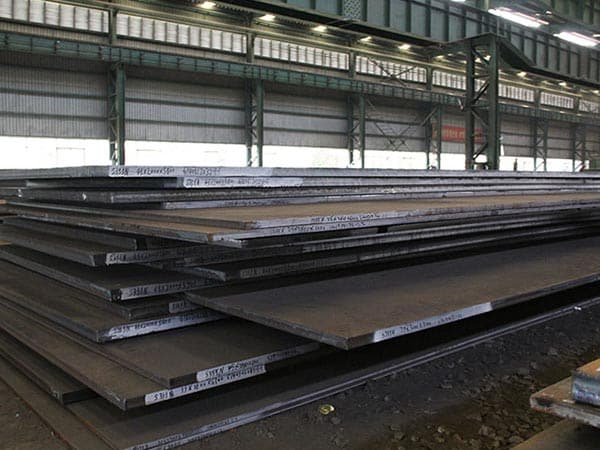
The Technical Essence of B700L in Modern Heavy Engineering
B700L is a high-strength low-alloy (HSLA) structural steel specifically engineered for the demanding environments of the construction machinery industry. As global infrastructure projects scale in complexity, the British market has seen a significant uptick in the demand for materials that offer a superior strength-to-weight ratio. B700L, often compared to the European EN 10149-2 S700MC standard, represents the pinnacle of thermomechanically rolled steel technology. Its primary appeal lies in its ability to reduce the overall weight of machinery components—such as crane booms, excavator arms, and heavy-duty chassis—without compromising structural integrity or safety margins.
The '700' in its designation refers to its minimum yield strength of 700 MPa, a threshold that allows engineers to design thinner sections that carry the same loads as thicker, traditional carbon steels. For British manufacturers exporting finished machinery or importing parts, understanding the metallurgical nuances of B700L is critical for maintaining competitive edges in both performance and cost-efficiency. This steel is not merely a commodity; it is a precision-engineered material that balances hardness, ductility, and weldability through a carefully controlled micro-alloying process.
Chemical Composition and the Science of Micro-Alloying
The performance of B700L is rooted in its chemical blueprint. Unlike standard structural steels that rely on high carbon content for strength, B700L utilizes a low-carbon design supplemented by micro-alloying elements such as Niobium (Nb), Vanadium (V), and Titanium (Ti). This approach ensures that the steel remains highly weldable and ductile even at high strength levels. The low carbon equivalent (Ceq) is a vital factor for British fabricators who must adhere to strict welding safety standards.
| Element | C (max) | Si (max) | Mn (max) | P (max) | S (max) | Nb+V+Ti (max) |
|---|---|---|---|---|---|---|
| B700L Content (%) | 0.12 | 0.50 | 2.00 | 0.025 | 0.015 | 0.22 |
By keeping the carbon content low, the steel avoids the formation of brittle martensite during the welding process. The addition of Titanium and Niobium facilitates grain refinement during the thermomechanical rolling process. Smaller grain sizes result in higher yield strength and improved notch toughness, which is particularly important for machinery operating in the variable, often damp and cold, British climate. This metallurgical precision ensures that the steel can withstand sudden impact loads without catastrophic failure.
Mechanical Properties and Structural Advantages
When evaluating the price of B700L for export to Britain, the mechanical performance metrics are the primary value drivers. The steel must meet rigorous testing standards to ensure it can handle the cyclic loading and high stress found in hydraulic systems and structural frames. The balance between tensile strength and elongation is what sets B700L apart from lower-grade alternatives.
| Property | Yield Strength (MPa) | Tensile Strength (MPa) | Elongation A50mm (%) | 180° Cold Bend (d=a) |
|---|---|---|---|---|
| B700L Specification | ≥ 700 | 750 - 950 | ≥ 12 | Pass (d=3a) |
The high yield strength allows for a reduction in material thickness by up to 30% compared to S355 grade steel. This weight reduction directly translates to lower fuel consumption for the end-user of the construction machinery and higher payload capacities. In the British logistics and construction sectors, where carbon footprint and operational efficiency are increasingly scrutinized, using B700L provides a significant marketing advantage for equipment manufacturers.
Processing Performance: Welding, Bending, and Cutting
For British engineering firms, the ease of processing B700L is a major factor in its total cost of ownership. Despite its high strength, B700L exhibits excellent cold-forming properties. It can be bent to tight radii without cracking, provided the correct tooling and pressure are applied. This is essential for creating the complex, aerodynamic shapes required in modern vehicle chassis and telescopic booms.
- Weldability: Due to its low carbon equivalent, B700L can be welded using standard MIG/MAG or submerged arc welding techniques without the need for extensive pre-heating, reducing labor costs and cycle times.
- Laser and Plasma Cutting: The clean chemical composition and uniform grain structure ensure that B700L reacts consistently to thermal cutting, resulting in smooth edges that require minimal post-processing.
- Fatigue Resistance: The refined microstructure provides a high resistance to fatigue crack initiation, extending the service life of critical components in excavators and cranes.
These processing advantages mean that while the initial material price might be higher than standard mild steel, the total manufacturing cost is often lower due to reduced material usage and faster production throughput.
Market Dynamics: Pricing Factors for Export to Britain
The price of B700L steel for export to the British market is influenced by a complex interplay of global and local factors. Understanding these variables is crucial for procurement managers looking to stabilize their supply chains. Currently, the pricing is not just a reflection of the raw iron ore and coking coal costs, but also the logistical and regulatory environment of post-Brexit Britain.
1. Raw Material and Energy Volatility: As a high-end product, B700L requires precise temperature control during rolling. Fluctuations in global energy prices directly impact the conversion cost at the mill. Additionally, the price of micro-alloying elements like Niobium can be volatile, affecting the base price of the coils or plates.
2. Logistics and Freight: Shipping from major production hubs in Asia or Europe to British ports like Felixstowe or Liverpool involves significant maritime freight costs. Container availability and fuel surcharges (Bunker Adjustment Factors) can add a layer of unpredictability to the landed cost. Bulk shipping is often more economical for large-scale construction machinery manufacturers but requires higher inventory holding.
3. Exchange Rates: Since steel is globally traded in USD, the GBP/USD exchange rate plays a pivotal role. A weaker Pound Sterling can significantly increase the import price of B700L, making local sourcing or strategic stockpiling more attractive.
4. Regulatory Compliance and UKCA Marking: Following the UK's exit from the European Union, the transition from CE marking to UKCA (UK Conformity Assessed) marking is vital. Steel exported to Britain must meet specific British Standards (BS) or equivalent international standards that align with UK building and safety regulations. Ensuring that the B700L supplied has the correct certification is a non-negotiable aspect of the price-value equation.
Comparative Analysis: B700L vs. S700MC
In the British market, engineers are often more familiar with the European EN 10149-2 standard. B700L is frequently used as a direct equivalent to S700MC. Both steels are designed for cold forming and offer high yield strength. However, B700L, depending on the specific mill of origin, may offer tighter tolerances on thickness and flatness, which is a critical requirement for automated robotic welding cells used in high-volume machinery production.
The choice between B700L and S700MC often comes down to availability and the specific requirements of the British OEM (Original Equipment Manufacturer). While S700MC is widely available from European mills, B700L from top-tier Asian mills often provides a cost-competitive alternative for large-scale exports, especially when integrated into a global supply chain for parts manufacturing.
Environmental Adaptation and Durability
The British climate, characterized by high humidity and coastal salt exposure, poses a challenge for structural steel. While B700L is not a stainless or weathering steel, its dense surface scale and uniform composition provide a good substrate for advanced coating systems. Whether it is powder coating, galvanizing, or specialized marine-grade paints, B700L ensures excellent adhesion and long-term corrosion protection.
Furthermore, the steel's performance at low temperatures is a key consideration. British winters can see temperatures drop significantly, and construction machinery must remain operational without the risk of brittle fracture. B700L is typically tested for impact toughness at -20°C or -40°C, ensuring that the components can absorb energy even in sub-zero conditions. This reliability is a cornerstone of the brand reputation for machinery manufacturers exporting to the UK.
Strategic Sourcing and Export Logistics
Successfully exporting B700L to Britain requires more than just a competitive price per ton. It requires a robust logistical framework. This includes precision slitting and cutting-to-length services to meet the exact dimensions of machinery parts, as well as protective packaging to prevent rust during long sea voyages. Using VCI (Volatile Corrosion Inhibitor) paper and waterproof plastic wrapping is standard practice for high-grade HSLA steels like B700L.
Moreover, the British market values transparency and traceability. Mill Test Certificates (MTC) according to EN 10204 3.1 are mandatory. These documents provide a full chemical and mechanical history of the heat, ensuring that the material delivered matches the engineering specifications. For parts destined for critical load-bearing applications, this traceability is the foundation of the quality assurance process.
Navigating the Future of High-Strength Steel in Britain
The trajectory of the British construction machinery sector is leaning towards electrification and extreme efficiency. As excavators and loaders move toward battery power, the need for lightweighting becomes even more acute to offset the weight of heavy battery packs. B700L is perfectly positioned to meet this challenge. Its role in the next generation of "green" construction equipment is secured by its ability to provide maximum strength with minimum mass.
Investors and procurement specialists focusing on the British market must look beyond the immediate price fluctuations and consider the long-term benefits of B700L. The reduction in maintenance costs, the extension of equipment lifecycle, and the compliance with evolving safety standards all contribute to a favorable return on investment. By partnering with suppliers who understand the specific demands of the British engineering landscape, manufacturers can ensure a steady supply of this high-performance material, keeping their production lines moving and their machinery performing at the highest levels.
Leave a message