
What are the quality requirements of s355mc what does mc stand for
A comprehensive guide to S355MC steel quality requirements, explaining the MC designation, chemical composition, mechanical properties, and industrial applications under EN 10149-2 standards.
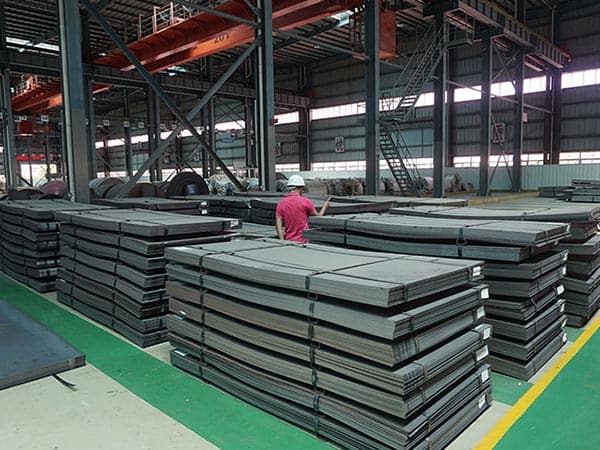
Understanding the Fundamentals of S355MC Steel
S355MC is a high-yield strength steel designed specifically for cold forming applications, governed by the European standard EN 10149-2. In the complex world of metallurgy, this grade represents a perfect balance between high load-bearing capacity and excellent processability. Unlike standard structural steels, S355MC undergoes a specialized manufacturing process that refines its internal structure, making it a preferred choice for industries requiring weight reduction without compromising structural integrity.
What Does the "MC" Designation Stand For?
The alphanumeric code of S355MC carries specific technical meanings that define its identity. The letter "S" denotes that it is a structural steel. The number "355" represents the minimum yield strength of 355 Megapascals (MPa) for thicknesses less than or equal to 16mm. The suffix "MC" is the most critical part of its nomenclature:
- M (Thermomechanically Rolled): This indicates the steel has undergone Thermomechanical Controlled Processing (TMCP). Unlike traditional hot rolling followed by heat treatment, TMCP involves precise temperature control and specific deformation rates during the rolling process. This results in a fine-grained microstructure that enhances both strength and toughness.
- C (Cold Forming): This signifies that the steel is specifically tailored for cold forming operations, such as bending, flanging, or folding. The "C" designation guarantees that the material possesses the necessary ductility to withstand significant deformation without cracking or developing surface defects.
Stringent Chemical Composition Requirements
The superior properties of S355MC are rooted in its low-carbon, micro-alloyed chemical profile. By keeping carbon levels low, the steel achieves exceptional weldability and ductility. The addition of micro-alloying elements like Niobium (Nb), Vanadium (V), and Titanium (Ti) is what facilitates the grain refinement during the thermomechanical rolling process.
| Element | Maximum Content (%) |
|---|---|
| Carbon (C) | 0.12 |
| Manganese (Mn) | 1.50 |
| Silicon (Si) | 0.50 |
| Phosphorus (P) | 0.025 |
| Sulfur (S) | 0.020 |
| Aluminum (Al) | 0.015 (Min) |
| Niobium (Nb) | 0.09 |
| Titanium (Ti) | 0.15 |
This lean chemistry ensures a low Carbon Equivalent Value (CEV), which is vital for preventing cold cracking during welding. The precise control of Sulfur and Phosphorus levels also contributes to the steel's internal cleanliness, reducing the risk of lamellar tearing and improving fatigue resistance.
Mechanical Performance and Quality Benchmarks
The quality requirements for S355MC focus heavily on its mechanical response under stress. Because it is often used in safety-critical components like truck chassis and crane arms, its yield strength and elongation must strictly adhere to EN 10149-2 specifications. One of the standout features of S355MC is its high yield-to-tensile ratio, which allows engineers to design thinner, lighter components that can still handle heavy loads.
| Property | Requirement (Thickness ≤ 16mm) |
|---|---|
| Minimum Yield Strength (ReH) | 355 MPa |
| Tensile Strength (Rm) | 430 - 550 MPa | 19% (for thickness < 3mm) |
| Minimum Elongation (A5) | 23% (for thickness ≥ 3mm) |
Beyond basic tensile testing, S355MC is often required to pass impact toughness tests, particularly when used in low-temperature environments. While the standard does not always mandate impact testing for all thicknesses, many high-end applications specify a minimum impact energy (e.g., 40J at -20°C) to ensure the material remains ductile in sub-zero conditions.
Exceptional Cold Forming and Processing Capabilities
The "C" in S355MC is not just a label; it represents a commitment to superior workability. Quality requirements dictate that the material must be capable of being bent to a specific radius without failure. For S355MC, the minimum recommended bending radius is typically 1.0 to 1.5 times the thickness of the plate, depending on the orientation of the bend relative to the rolling direction.
Weldability: Thanks to its low carbon content and fine grain structure, S355MC exhibits excellent weldability. It can be welded using all conventional methods, including MIG/MAG, TIG, and submerged arc welding. Preheating is generally unnecessary for standard thicknesses, which significantly reduces production time and costs in manufacturing plants.
Cutting and Machining: S355MC responds well to laser, plasma, and oxy-fuel cutting. The low alloy content ensures that the Heat Affected Zone (HAZ) remains relatively soft, preventing brittleness at the cut edges. This is particularly beneficial for subsequent machining or welding operations.
Surface Quality and Dimensional Tolerances
High-quality S355MC must meet strict surface finish standards. In many cases, the steel is supplied in a pickled and oiled condition to remove mill scale and provide a clean surface for painting or galvanizing. According to EN 10163-2, the surface must be free from cracks, shells, and seams that could compromise the integrity of the final part during cold forming.
Dimensional tolerances are usually governed by EN 10051 for continuously hot-rolled products. These standards ensure that the thickness, width, and flatness of the steel sheets are consistent, which is essential for automated robotic welding and precision CNC bending processes.
Broad Spectrum of Industrial Applications
The unique combination of high strength and excellent formability makes S355MC indispensable in modern engineering. Its primary application is in the automotive and transportation industry. Truck frames, chassis components, and cross members are frequently made from S355MC to reduce vehicle weight, thereby increasing fuel efficiency and payload capacity.
In the construction and lifting equipment sector, S355MC is used for telescopic booms, crane structures, and heavy-duty trailers. The material's ability to be formed into complex shapes while maintaining high strength allows for innovative designs that were previously impossible with traditional hot-rolled structural steels.
Furthermore, the agricultural machinery industry utilizes S355MC for plow frames, harvester components, and silage trailers. The steel's resistance to fatigue and its ability to withstand the vibrations of heavy machinery make it a reliable choice for long-term outdoor use.
Environmental Adaptation and Sustainability
S355MC contributes significantly to environmental sustainability. By allowing for the use of thinner sections without sacrificing safety, it reduces the total volume of steel required for a project. This leads to lower energy consumption during production and reduced carbon emissions during the transport of finished goods. Additionally, the micro-alloying approach is more resource-efficient than high-alloying strategies, making S355MC a cost-effective and "green" choice for the future of infrastructure and manufacturing.
When selecting S355MC, it is vital to verify the Mill Test Certificate (MTC) to ensure compliance with EN 10149-2. The MTC provides the actual chemical analysis and mechanical test results for the specific heat of steel, guaranteeing that the material will perform as expected in demanding industrial environments.
Leave a message