
s355mc vs s355j2 with low and intermediate tensile strength
A professional technical comparison between S355MC and S355J2 steel grades, analyzing mechanical properties, processing characteristics, and industrial applications.
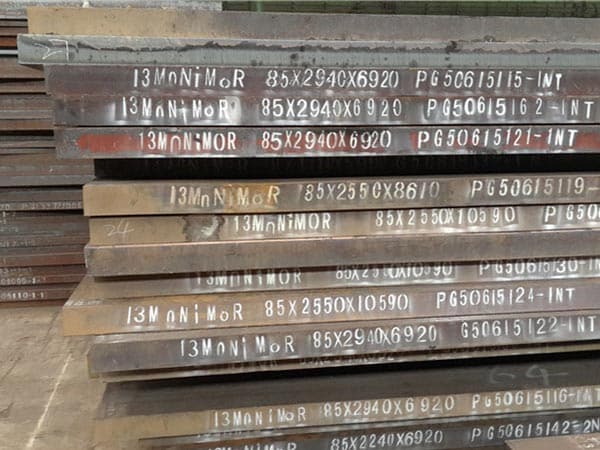
Understanding the Fundamental Differences Between S355MC and S355J2
In the world of structural engineering and steel fabrication, the designation 'S355' serves as a benchmark for a minimum yield strength of 355 MPa. However, the suffixes 'MC' and 'J2' represent vastly different metallurgical philosophies, production routes, and performance profiles. Selecting between S355MC and S355J2 requires a deep dive into how these materials behave under stress, their response to manufacturing processes, and their long-term durability in specific environments.
S355MC is a thermomechanically rolled, fine-grained steel intended for cold forming, governed by the EN 10149-2 standard. In contrast, S355J2 is a non-alloy structural steel governed by EN 10025-2, often supplied in a normalized or as-rolled condition, and is characterized by its guaranteed impact toughness at -20°C. While both occupy the 'intermediate' tensile strength bracket, their internal structures dictate their suitability for different engineering challenges.
Metallurgical Composition and Production Processes
The core difference begins at the mill. S355MC utilizes Thermomechanical Controlled Processing (TMCP). This involves precise temperature control during rolling to refine the grain size, often supplemented by micro-alloying elements like Niobium (Nb), Vanadium (V), or Titanium (Ti). These elements allow the steel to achieve high strength without a significant increase in carbon content, which is the primary driver for its exceptional weldability and formability.
S355J2 follows a more traditional production route. It is a 'killed' steel, meaning it is fully deoxidized during the melting process. Its strength is derived primarily from its carbon and manganese content. The 'J2' designation specifically indicates that the material has undergone Charpy V-notch impact testing, ensuring it can absorb at least 27 Joules of energy at -20°C. This makes it a robust choice for structural components exposed to cold climates or dynamic loading.
Mechanical Property Comparison: Tensile Strength and Ductility
When analyzing low and intermediate tensile strength, it is vital to look beyond the yield point. S355MC typically exhibits a tensile strength range of 430 to 550 MPa. S355J2, depending on the thickness, usually falls within the 470 to 630 MPa range. This slightly higher upper limit for S355J2 suggests a different work-hardening behavior compared to the more 'compliant' S355MC.
| Property | S355MC (EN 10149-2) | S355J2 (EN 10025-2) |
|---|---|---|
| Min. Yield Strength (MPa) | 355 | 355 |
| Tensile Strength (MPa) | 430 - 550 | 470 - 630 |
| Min. Elongation (%) | 19 - 23 (thickness dependent) | 20 - 22 (thickness dependent) |
| Impact Testing | Optional (usually at -20°C or -40°C) | Guaranteed 27J at -20°C |
| Main Alloying Strategy | Micro-alloying (Nb, Ti, V) + TMCP | Carbon-Manganese + Normalizing |
The lower carbon equivalent (CEV) of S355MC provides a distinct advantage in applications requiring extensive welding. While S355J2 is also highly weldable, S355MC's fine-grained structure is less susceptible to grain coarsening in the Heat Affected Zone (HAZ), provided that heat input is strictly controlled.
Cold Forming and Fabrication Efficiency
S355MC is the undisputed leader when it comes to cold forming. Because it was designed for the automotive and heavy machinery industries, it can be bent to very tight radii without cracking. This 'formability' is a result of its low impurity levels and the fine-grained structure achieved through TMCP. Fabricators can produce complex profiles, chassis components, and crane arms with high precision.
S355J2 can also be formed, but it requires larger bending radii. Attempting to bend S355J2 as aggressively as S355MC often results in surface tearing or 'orange peel' effects. For structural sections like I-beams, channels, and heavy plates used in bridge construction, the forming capability is often secondary to the material's cross-sectional consistency and impact resistance.
Environmental Adaptability and Corrosion Resistance
Environmental factors play a massive role in material selection. S355J2 is frequently chosen for outdoor structural applications because its impact properties at -20°C provide a safety buffer against brittle fracture. This is critical in civil engineering projects like stadiums, bridges, and offshore platforms where low-temperature excursions are possible.
S355MC, while often capable of meeting similar impact requirements if specified, is more commonly found in 'protected' or painted environments, such as vehicle frames or internal machinery parts. Its surface quality is generally superior to S355J2 because the TMCP process results in a thinner, more adherent scale, which is easier to remove during pickling or shot blasting before painting or galvanizing.
Industry-Specific Applications
Automotive and Transportation: S355MC is the standard for truck chassis, trailers, and cold-pressed components. Its high strength-to-weight ratio allows designers to reduce plate thickness without sacrificing structural integrity, leading to lighter vehicles and better fuel efficiency.
Construction and Infrastructure: S355J2 dominates this sector. Whether it is the skeletal frame of a high-rise building or the heavy plates of a railway bridge, the predictability and standardized toughness of S355J2 make it the preferred choice for structural engineers following Eurocode 3.
Lifting and Mobile Equipment: This is where the two grades often overlap. For the telescopic booms of cranes, S355MC is favored for its weight-saving potential. For the heavy base plates and outriggers, S355J2 might be chosen for its availability in much thicker sections (S355MC is typically limited to thicknesses under 20mm, whereas S355J2 can be sourced in plates exceeding 100mm).
Economic Considerations and Market Availability
From a procurement perspective, S355J2 is one of the most widely available steel grades globally. It is a 'commodity' structural steel, stocked by almost every major service center. S355MC, being a more specialized product of strip mills, is typically available in coil or sheets cut from coil. If a project requires heavy plates (e.g., 40mm thick), S355MC is not an option, and S355J2 (or its variants like K2) becomes the mandatory choice.
Price-wise, S355MC can sometimes carry a premium due to the sophisticated TMCP rolling technology required, but this cost is often offset by the ability to use thinner material or the reduction in fabrication steps (e.g., avoiding pre-heating for welding or using simpler bending setups).
Technical Decision Matrix
- Choose S355MC if: You need to minimize weight, require tight-radius cold bending, or are manufacturing high-volume automotive/machinery parts from thin to medium gauge sheets.
- Choose S355J2 if: You are designing a building or bridge, require heavy plate thicknesses, need guaranteed impact toughness at sub-zero temperatures, or are working with standard hot-rolled structural sections.
- Welding Note: Both grades are excellent for welding, but S355MC requires careful management of cooling rates to maintain the benefits of its fine-grained structure.
Ultimately, the choice between S355MC and S355J2 is not about which steel is 'better,' but which is better suited to the specific manufacturing process and the service environment of the final product. By understanding the metallurgical nuances of TMCP vs. normalized steel, engineers can optimize both the performance and the cost of their designs.
Leave a message