
Top ten alloy steel 700mce hot rolled automotive steel manufacturers in Belarus
Explore the leading manufacturers and technical specifications of 700MCE hot rolled automotive steel in Belarus. This guide covers mechanical properties, welding, and industrial applications.
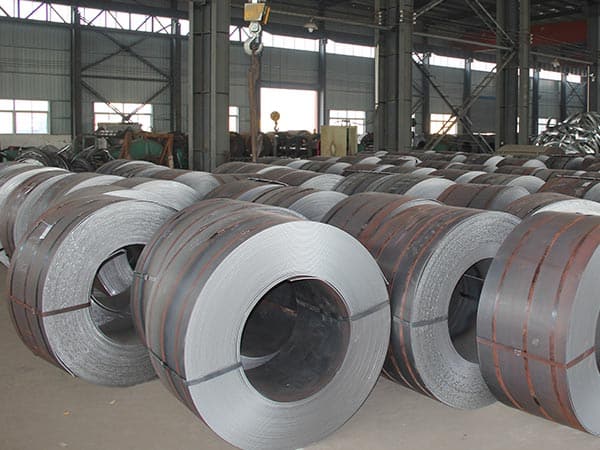
The Strategic Importance of 700MCE Alloy Steel in Modern Engineering
The demand for high-strength low-alloy (HSLA) steels has surged as global industries prioritize weight reduction and structural integrity. Among these materials, 700MCE stands out as a premier grade of thermomechanically rolled steel designed specifically for cold forming. This alloy steel is engineered to provide a minimum yield strength of 700 MPa, making it an ideal candidate for the automotive and heavy machinery sectors where durability and lightness are non-negotiable. In Belarus, the industrial landscape has adapted to these requirements, fostering a specialized ecosystem of manufacturers and processors capable of handling the complexities of 700MCE production and application.
700MCE steel is characterized by its fine-grained microstructure, achieved through precise controlled rolling and cooling processes. This metallurgical approach ensures that the steel maintains high strength without sacrificing ductility or weldability. Unlike traditional carbon steels, the micro-alloying elements in 700MCE, such as Niobium (Nb), Vanadium (V), and Titanium (Ti), work synergistically to refine grain size and provide precipitation hardening. This results in a material that can withstand extreme mechanical stresses while remaining easy to shape into complex automotive components.
Technical Specifications and Chemical Composition
Understanding the performance of 700MCE requires a deep dive into its chemical makeup and mechanical thresholds. The balance of elements is critical for ensuring that the steel meets the rigorous standards required for automotive chassis, crane booms, and cross members. The following table outlines the typical chemical composition and mechanical properties associated with high-quality 700MCE hot rolled steel.
| Element/Property | Typical Value (Chemical %) | Mechanical Property | Value (Metric) |
|---|---|---|---|
| Carbon (C) | ≤ 0.12% | Yield Strength (Reh) | ≥ 700 MPa |
| Manganese (Mn) | ≤ 2.10% | Tensile Strength (Rm) | 750 - 950 MPa |
| Silicon (Si) | ≤ 0.60% | Elongation (A80mm) | ≥ 10% |
| Phosphorus (P) | ≤ 0.025% | Bending Radius (180°) | 2.0 x Thickness |
| Sulfur (S) | ≤ 0.015% | Impact Energy (-20°C) | ≥ 40 J |
| Aluminium (Al) | ≥ 0.015% | Density | 7.85 g/cm³ |
The low carbon content is a deliberate design choice to enhance weldability. High carbon levels typically lead to brittleness in the heat-affected zone (HAZ) during welding, but 700MCE circumvents this issue, allowing for high-speed automated welding processes common in modern vehicle assembly lines. The inclusion of Manganese ensures hardenability, while the micro-alloying elements ensure that the strength is not lost during subsequent processing steps.
Top Ten Manufacturers and Industrial Entities in Belarus
The Belarusian steel market is characterized by a mix of primary production giants and specialized processing plants that transform raw alloy steel into automotive-grade components. While one primary mill dominates the smelting process, several other entities play a crucial role in the supply chain for 700MCE steel.
- Byelorussian Steel Works (BMZ): Located in Zhlobin, BMZ is the cornerstone of the country's metallurgy. It produces high-quality hot-rolled sections and wire rods, utilizing advanced electric arc furnace technology to achieve the purity required for 700MCE grades.
- BelAZ (Belarusian Autoworks): While primarily an OEM for mining trucks, BelAZ operates extensive steel processing facilities. They are a major consumer and internal manufacturer of high-strength structural components using 700MCE-equivalent steels for heavy-duty frames.
- MAZ (Minsk Automobile Plant): MAZ focuses on the fabrication of truck chassis and trailers. Their manufacturing units are equipped with high-precision laser cutting and bending machines specifically calibrated for HSLA steels like 700MCE.
- MTZ (Minsk Tractor Works): As one of the largest tractor manufacturers in the world, MTZ processes vast quantities of alloy steel. Their expertise in heat treatment and forging makes them a key player in the high-strength steel ecosystem.
- Gomselmash: Specializing in agricultural machinery, this manufacturer utilizes 700MCE for harvester frames where high load-bearing capacity and weight optimization are essential for soil protection.
- Mogilevliftmash: Although focused on elevators, their structural steel division handles high-strength plates for safety-critical components, requiring the same rigorous standards as automotive 700MCE.
- Belsplav: This entity focuses on specialized alloys and secondary processing, providing customized steel solutions for niche automotive applications requiring specific 700MCE variations.
- Novopolotsk Metal Structures Plant: A leader in structural engineering, they provide the heavy-duty fabrication services needed to turn 700MCE coils into usable automotive and industrial frameworks.
- Molodechno Plant of Metal Structures: Known for high-precision manufacturing, they supply the automotive industry with pre-fabricated components that leverage the high yield strength of 700MCE.
- Brestmash: A versatile manufacturer involved in automotive component production, focusing on the precision forming of high-strength alloy sheets for light and medium commercial vehicles.
Mechanical Performance and Cold Forming Characteristics
The "C" in 700MCE stands for "Cold forming," which is a defining characteristic of this steel grade. Despite its immense strength, the material exhibits remarkable ductility. This allows manufacturers to use smaller bending radii than would be possible with traditional high-strength steels. The fine-grained structure prevents cracking during the bending process, provided the manufacturer adheres to the recommended minimum bend radius (typically 2 to 2.5 times the material thickness).
One of the critical advantages of 700MCE is its consistency. In the automotive industry, automated stamping and bending require materials with very tight tolerances in terms of yield strength and thickness. Belarusian manufacturers like BMZ utilize thermomechanical rolling (the "M" in the designation) to ensure that the mechanical properties are uniform across the entire length of the coil. This uniformity reduces scrap rates and ensures that every vehicle frame produced meets safety standards.
Welding and Joining Technologies for 700MCE
Welding 700MCE requires an understanding of its micro-alloyed nature. Because the strength is derived from the thermomechanical process rather than high carbon content, the steel is less prone to cold cracking. However, excessive heat input can lead to grain growth in the heat-affected zone (HAZ), which may locally reduce the yield strength. To mitigate this, manufacturers in Belarus employ advanced welding techniques such as Metal Active Gas (MAG) welding with optimized heat input parameters.
The use of appropriate filler metals is also paramount. Usually, filler materials with a slightly lower or equal strength to the base metal are selected to ensure a balanced distribution of stress across the joint. Laser welding is also becoming increasingly popular in Belarusian automotive plants, as it offers a concentrated heat source that minimizes the width of the HAZ, preserving the high-strength properties of the 700MCE steel throughout the assembly.
Environmental Adaptability and Corrosion Resistance
Automotive components are frequently exposed to harsh environments, including road salts, moisture, and extreme temperature fluctuations. 700MCE, while not a stainless steel, offers better atmospheric corrosion resistance than standard mild steels due to its dense, fine-grained surface structure. In the Belarusian climate, where winters are severe, the low-temperature toughness of 700MCE is a vital attribute. The material maintains its impact resistance even at temperatures as low as -20°C or -40°C, depending on the specific sub-grade, ensuring that vehicle frames do not become brittle and fail in cold weather.
Furthermore, the surface quality of hot-rolled 700MCE is optimized for subsequent coating processes. Whether it is hot-dip galvanizing, electroplating, or sophisticated KTL (cathodic dip painting) used in automotive lines, the steel provides an excellent substrate for adhesion. This ensures long-term protection against rust, extending the service life of the vehicle or machine.
Expanding Applications Beyond the Automotive Sector
While 700MCE is synonymous with automotive engineering, its properties have led to its adoption in various other high-stakes industries. In the production of mobile cranes, the high strength-to-weight ratio allows for longer booms and higher lifting capacities without increasing the overall weight of the vehicle. This is a critical factor for transport regulations and operational efficiency.
In the agricultural sector, the shift toward larger and faster machinery has made 700MCE indispensable. Parts such as plow frames, seeder chassis, and harvester supports benefit from the material's ability to absorb shocks and resist fatigue. The Belarusian agricultural machinery industry, led by Gomselmash, has been a pioneer in integrating these high-strength alloys to compete on the global stage. Additionally, the waste management industry utilizes 700MCE for the construction of lightweight yet durable refuse collection bodies, allowing for higher payloads and reduced fuel consumption.
Strategic Outlook for 700MCE Production in Belarus
The future of 700MCE in Belarus is closely tied to the global trend of "green" manufacturing. By using higher strength steel, manufacturers can use thinner sections to achieve the same structural performance, leading to lighter vehicles that consume less fuel and emit less CO2. This move toward sustainability is driving further research into even higher grades, such as 900MC and 1100MC, but 700MCE remains the "sweet spot" for many applications due to its perfect balance of cost, strength, and processability.
Investment in modern rolling mills and automated quality control systems continues to bolster the reputation of Belarusian steel. By adhering to international standards such as EN 10149-2, local manufacturers ensure that their 700MCE products are compatible with global supply chains, making Belarus a vital hub for high-strength automotive steel in the region. The synergy between primary producers and specialized fabricators ensures that the industry can meet the evolving challenges of modern mechanical engineering.
Leave a message