
Why is hot rolled automotive steel grade S960MC so cheap?
Discover why S960MC hot rolled steel offers exceptional value. Explore its TMCP production process, mechanical properties, and cost-saving advantages for automotive and heavy machinery.
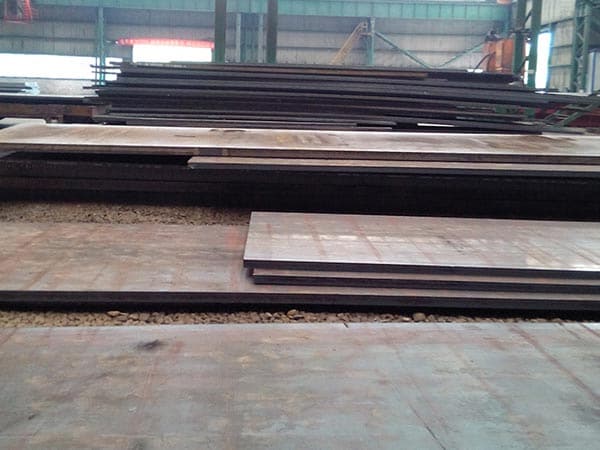
The Economic Logic Behind S960MC High-Strength Steel
When engineers and procurement specialists first encounter S960MC hot rolled automotive steel, the initial reaction is often one of skepticism regarding its price point. How can a material boasting a yield strength of 960 MPa be more cost-effective than many lower-grade specialty alloys? The answer lies not in a compromise of quality, but in the revolutionary Thermomechanically Controlled Processing (TMCP) and the strategic use of micro-alloying elements. S960MC is engineered to deliver maximum performance with minimum resource consumption, making it the 'sweet spot' for modern structural engineering.
The perception of S960MC being 'cheap' is relative to its high-performance counterparts, such as quenched and tempered (Q&T) steels. By understanding the metallurgical shortcuts that don't sacrifice integrity, we can see why this grade has become the backbone of the heavy transport and lifting industries.
The TMCP Advantage: Eliminating Costly Heat Treatment
The primary reason S960MC maintains a competitive price is the Thermomechanical Control Process (TMCP). Traditional high-strength steels often require a secondary quenching and tempering process after rolling to achieve their mechanical properties. This involves reheating the steel, rapid cooling in water or oil, and then tempering it for hours. Each of these steps consumes massive amounts of energy and increases the production cycle time.
In contrast, S960MC achieves its ultra-high strength directly on the rolling mill. By strictly controlling the temperature and the reduction ratio during the rolling process, the grain structure is refined to a microscopic level. This grain refinement is the only strengthening mechanism that simultaneously improves both strength and toughness without needing expensive alloying elements or post-rolling heat treatments. Consequently, the manufacturer saves on energy, labor, and time, passing those savings down the supply chain.
Micro-Alloying: Doing More with Less
Another factor driving the affordability of S960MC is its lean chemical composition. Unlike high-alloy steels that rely on large percentages of Nickel, Chromium, or Molybdenum—which are subject to volatile market pricing—S960MC utilizes micro-alloying technology. Small additions of Niobium (Nb), Vanadium (V), and Titanium (Ti), usually totaling less than 0.20%, are used to pin grain boundaries and prevent grain growth during rolling.
| Element | Maximum Content (%) | Function in S960MC |
|---|---|---|
| Carbon (C) | 0.20 | Ensures weldability while maintaining strength. |
| Manganese (Mn) | 2.20 | Increases hardenability and solid solution strengthening. |
| Silicon (Si) | 0.60 | Deoxidizer and contributes to strength. |
| Nb + V + Ti | 0.22 | Micro-alloying for grain refinement and precipitation hardening. |
| Phosphorus (P) | 0.025 | Kept low to ensure impact toughness. |
This lean chemistry not only lowers the raw material cost but also results in a very low Carbon Equivalent (CEV). A lower CEV means the steel is exceptionally easy to weld, reducing the need for expensive pre-heating or post-weld heat treatments (PWHT) at the fabrication stage, further lowering the 'total cost of ownership'.
Weight Reduction and the 'Down-Gauging' Effect
To understand why S960MC is considered 'cheap' in a commercial sense, one must look at the Down-Gauging potential. Because S960MC is significantly stronger than standard S355 or S700MC grades, designers can use thinner plates to support the same loads. For example, replacing an 8mm S700MC plate with a 6mm S960MC plate can reduce the weight of a component by over 25%.
- Reduced Material Volume: Buying fewer tons of steel for the same project.
- Lower Transport Costs: Lighter components mean more payload for trailers and lower fuel consumption.
- Welding Efficiency: Thinner plates require fewer welding passes and less filler material.
- Environmental Impact: Reduced CO2 footprint throughout the lifecycle of the vehicle or machine.
When the cost is calculated per unit of strength rather than per kilogram, S960MC often emerges as the most economical choice available in the market today.
Mechanical Excellence and Processing Versatility
Despite its cost-efficiency, S960MC does not lag in performance. It is designed specifically for cold forming, meaning it can be bent into complex shapes without cracking, provided the minimum bending radius is respected. This is crucial for the automotive industry where chassis frames and crane booms require precise geometries.
| Property | Value (Typical) | Significance |
|---|---|---|
| Yield Strength (ReH) | Min. 960 MPa | High load-bearing capacity without permanent deformation. |
| Tensile Strength (Rm) | 980 - 1250 MPa | Resistance to breaking under tension. |
| Elongation (A5) | Min. 7% | Sufficient ductility for safety and forming. |
| Impact Energy (-40°C) | 27 J (Optional) | Reliability in arctic or extreme cold environments. |
The consistent surface quality of hot-rolled S960MC also facilitates high-speed laser cutting. The low internal stress levels achieved through modern leveling processes ensure that parts remain flat after cutting, reducing scrap rates and secondary rework.
Expanding Applications: Beyond the Chassis
The affordability of S960MC has triggered a shift in various industries. While it was originally developed for the automotive sector—specifically for truck frames, cross members, and suburban bus structures—its use has expanded rapidly. In the lifting and handling sector, telescopic crane booms made from S960MC allow for higher reach and greater lift capacities without increasing the weight of the crane itself.
In the agricultural machinery sector, manufacturers are using S960MC for large-scale tillers and trailers. These machines face extreme stress during operation, and the high fatigue resistance of S960MC ensures a long service life. By switching to S960MC, these manufacturers can offer more competitive pricing to farmers by reducing the weight of the equipment, which in turn reduces the tractor power required to pull it.
Technical Challenges and Optimization
While S960MC offers incredible value, its 'cheapness' is only realized if processed correctly. The high strength of the material means that springback during bending is more significant than with mild steel. Fabricators must use high-tonnage press brakes and precision tooling to account for this. Furthermore, because the strength is derived from the TMCP process, excessive heat input during welding can lead to a 'softening' of the Heat Affected Zone (HAZ). Using low-heat input welding techniques, such as MAG welding with optimized parameters, is essential to maintain the integrity of the 960 MPa yield strength across the joint.
By mastering these processing nuances, companies can fully exploit the cost advantages of S960MC. The material represents a pinnacle of metallurgical efficiency: a steel that is stronger, lighter, and more sustainable, yet priced to compete in a demanding global market. Its 'cheap' price tag is not a sign of inferiority, but a testament to the advancement of modern steel-making technology.
Leave a message