
What is the difference between s355mc en 10149-2 sheet & plate steel?
Comprehensive analysis of S355MC steel under EN 10149-2, detailing the differences between sheet and plate, mechanical properties, and industrial applications.
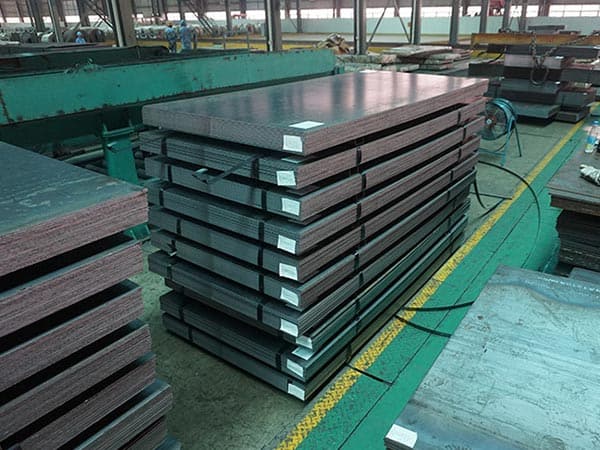
Understanding the Core Identity of S355MC Steel
S355MC is a high-yield strength, hot-rolled steel specifically designed for cold forming. It is governed by the European standard EN 10149-2, which specifies the technical delivery conditions for thermomechanically rolled steels. The designation "S" stands for structural steel, "355" refers to the minimum yield strength of 355 MPa, "M" indicates the thermomechanical rolling process, and "C" signifies that the grade is suitable for cold forming. Understanding the nuances between S355MC sheet and plate requires a deep dive into the manufacturing process, dimensional tolerances, and the metallurgical advantages provided by micro-alloying elements.
The Metallurgical Distinction: Thermomechanical Rolling (TMCP)
The primary factor that sets S355MC apart from standard structural steels like s355jr (EN 10025-2) is the Thermomechanical Control Process (TMCP). Unlike traditional normalized rolling, TMCP involves precise control of the temperature and the deformation rate during the rolling process. This technique refines the grain size of the steel to a microscopic level.
By achieving a fine-grained ferrite-pearlite structure, S355MC attains high strength without a significant increase in carbon content. This is crucial for maintaining excellent weldability and toughness. The difference between sheet and plate in this context often relates to the cooling rates achieved during production. Thinner sheets (typically under 3mm) cool more rapidly and uniformly, while thicker plates (up to 20mm) require more stringent control of the cooling banks to ensure consistent mechanical properties throughout the cross-section.
S355MC Sheet vs. Plate: Physical and Dimensional Differences
While the chemical composition remains largely the same, the distinction between "sheet" and "plate" in the industry is often defined by thickness and the method of delivery.
- S355MC Steel Sheet: Generally refers to thicknesses ranging from 1.5mm to 3.0mm. These are often supplied in coils or cut-to-length sheets. They offer superior surface finish and are ideal for precision laser cutting and high-speed stamping.
- S355MC Steel Plate: Usually covers thicknesses from 3.0mm up to 20mm (though some mills go higher). Plates are often used for heavy-duty structural components where load-bearing capacity is paramount.
Dimensional tolerances for these products are typically governed by EN 10051. Sheets cut from coils tend to have slightly different flatness characteristics compared to heavy plates produced on a reversing mill. For engineers, choosing between sheet and plate involves balancing the weight-to-strength ratio against the required stiffness of the final component.
Chemical Composition and Its Impact on Performance
The chemical recipe of S355MC is optimized for weldability and formability. The low carbon equivalent (CEV) is achieved by using micro-alloying elements such as Niobium (Nb), Vanadium (V), and Titanium (Ti). These elements form fine precipitates that pin grain boundaries, preventing grain growth during welding or heating.
| Element | Maximum Content (%) |
|---|---|
| Carbon (C) | 0.12 |
| Manganese (Mn) | 1.50 |
| Silicon (Si) | 0.50 |
| Phosphorus (P) | 0.025 |
| Sulfur (S) | 0.020 |
| Aluminium (Al) | 0.015 |
| Nb + V + Ti | 0.22 |
This low carbon content is the reason why S355MC does not require preheating for welding in most applications, a significant advantage over standard S355 grades when dealing with thick plates.
Mechanical Properties: Yield, Tensile, and Elongation
The mechanical integrity of S355MC is what makes it a favorite in the automotive and heavy machinery sectors. The "355" MPa yield strength is a minimum value, and often, the actual test results for sheets are higher due to the increased work hardening during the final cold-leveling stages.
| Property | Value (Thickness ≤ 16mm) |
|---|---|
| Min. Yield Strength (MPa) | 355 |
| Tensile Strength (MPa) | 430 - 550 |
| Min. Elongation (A80mm) | 19% (for t < 3mm) |
| Min. Elongation (A5) | 23% (for t ≥ 3mm) |
It is important to note that for S355MC, the elongation values vary based on the thickness and the direction of the test (longitudinal vs. transverse). Plates typically exhibit slightly higher ductility in the longitudinal direction, which must be accounted for during the design of complex bent parts.
Cold Forming and Bending Performance
The "C" in S355MC highlights its exceptional suitability for cold forming. This is where the difference between sheet and plate becomes most practical. Sheets can often be bent with a very tight internal radius, sometimes as low as 0.5 times the thickness (0.5t). For thicker plates, the minimum recommended bending radius increases to ensure no cracking occurs on the outer tension surface.
- Springback: S355MC has a predictable springback, but because of its high yield strength compared to mild steel (S235), it requires more force and careful compensation in the tooling design.
- Edge Quality: When processing S355MC plates, the quality of the sheared or laser-cut edge is vital. Burrs or micro-cracks at the edge can propagate during the bending process, especially in thicker sections.
Weldability and Processing Advantages
One of the most significant advantages of EN 10149-2 S355MC is its superior weldability. Because the strength is derived from grain refinement (TMCP) rather than high carbon or alloy content, the Carbon Equivalent Value (CEV) is extremely low. This means:
- Reduced risk of cold cracking in the Heat Affected Zone (HAZ).
- No requirement for pre-heating, even for plates at the upper limit of the thickness range.
- Compatibility with modern welding techniques like fiber laser welding, MIG/MAG, and robotic plasma welding.
In the context of laser cutting, S355MC sheets and plates provide a very clean cut with minimal dross, thanks to the controlled silicon and aluminum content which stabilizes the melt pool during the cutting process.
Environmental Adaptability and Durability
S355MC is designed for structural efficiency. By using a higher strength steel, manufacturers can reduce the thickness of the material (and thus the weight) without sacrificing structural integrity. This leads to "lightweighting," which is critical for reducing fuel consumption in transport vehicles.
In terms of environmental resistance, S355MC is a "black" steel, meaning it does not have inherent corrosion resistance like stainless steel or weathering steel (Corten). However, its fine-grained surface provides an excellent substrate for protective coatings. Whether it is hot-dip galvanizing, powder coating, or KTL (e-coating), S355MC plates and sheets hold finishes exceptionally well, ensuring long-term durability in harsh environments.
Expanding Applications Across Industries
The versatility of S355MC makes it indispensable in modern engineering.
- Automotive Industry: Used for chassis frames, cross members, and longitudinal beams. The high strength allows for thinner sheets, reducing the overall vehicle weight.
- Heavy Machinery: Crane arms, excavator buckets, and agricultural equipment benefit from the high yield strength and toughness of S355MC plates.
- Storage Systems: High-bay racking and industrial shelving utilize S355MC for its ability to handle high static loads while remaining easy to manufacture through roll-forming.
- Renewable Energy: Solar tracking systems and wind turbine internal components often specify S355MC for its balance of cost and performance.
Strategic Selection: Choosing Between Sheet and Plate
When specifying S355MC EN 10149-2, the decision between sheet and plate often comes down to the manufacturing workflow. If the project requires high-volume stamping and automated feeding, S355MC sheet in coil form is the logical choice. For heavy-duty structural fabrications where stiffness and peak load capacity are the primary drivers, S355MC plate is the superior option.
Engineers must also consider the grain direction. Since S355MC is a rolled product, its properties are anisotropic. Bending perpendicular to the rolling direction is generally safer than bending parallel to it. This distinction is often more pronounced in plates than in sheets, making layout optimization a critical step in the production process.
Summary of Technical Superiority
S355MC EN 10149-2 represents the pinnacle of high-strength low-alloy (HSLA) steel technology. By leveraging thermomechanical rolling, it offers a combination of strength, formability, and weldability that traditional structural steels cannot match. Whether utilized as a thin sheet for precision automotive parts or a thick plate for heavy machinery, S355MC provides a reliable, cost-effective solution for modern engineering challenges. Its ability to be formed into complex shapes while maintaining a yield strength of 355 MPa allows for innovative designs that are both lighter and stronger than ever before.
Leave a message