
What are the advantages of S700MC oiled steel coil plate
Discover the technical advantages of S700MC oiled steel coil, focusing on its high yield strength, exceptional cold forming, superior weldability, and the benefits of the pickled and oiled surface for industrial applications.
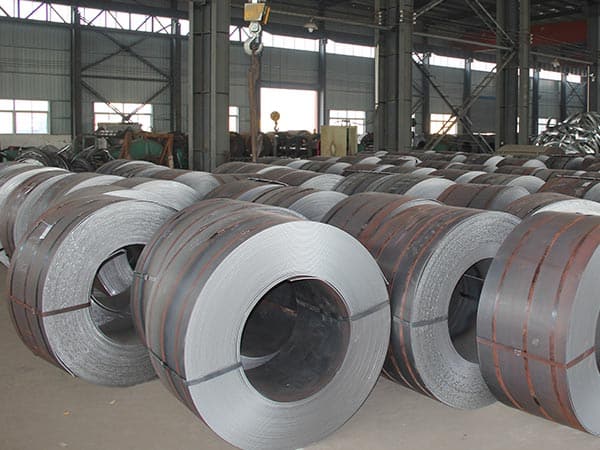
The Evolution of High-Strength Structural Steel: Understanding S700MC
In the modern industrial landscape, the pursuit of materials that combine extreme strength with lightweight properties has led to the widespread adoption of S700MC. This grade belongs to the thermomechanically rolled (MC) high-yield-strength steels, specifically designed for cold forming. The "S" stands for structural steel, while "700" denotes its minimum yield strength of 700 MPa. When provided as an oiled steel coil, typically following a pickling process, it offers a clean, scale-free surface that is ready for immediate processing. This material represents a significant leap from traditional structural steels, providing engineers with the ability to reduce component weight without sacrificing structural integrity.
Mechanical Superiority: Beyond the 700MPa Yield Strength
The core advantage of S700MC lies in its impressive mechanical profile. By utilizing micro-alloying elements such as niobium, vanadium, and titanium, manufacturers achieve a fine-grained microstructure. This results in a material that is not only strong but also remarkably ductile. Unlike older generations of high-strength steel that became brittle as strength increased, S700MC maintains excellent elongation properties. This balance allows for complex designs where high load-bearing capacity is essential. The following table illustrates the typical mechanical properties that define this grade:
| Property | Value (Typical) |
|---|---|
| Yield Strength (ReH) | Min. 700 MPa |
| Tensile Strength (Rm) | 750 - 950 MPa |
| Elongation (A80mm) | Min. 10 - 12% (depending on thickness) |
| Impact Energy (Charpy-V) | 40J at -20°C (standard requirement) |
These values indicate that S700MC can withstand significantly higher stresses than standard Q355 or S355 grades. This strength-to-weight ratio is the primary driver for its selection in heavy-duty transport and lifting equipment.
The Pickled and Oiled Advantage: Surface Integrity and Corrosion Resistance
The "oiled" designation refers to the Pickled and Oiled (P&O) finishing process. During hot rolling, a layer of iron oxide scale forms on the steel surface. Pickling removes this scale using an acid bath, leaving a smooth, clean metallic surface. The subsequent application of a protective oil layer serves two critical functions. First, it prevents flash rusting during transport and storage, ensuring the material arrives at the fabrication site in pristine condition. Second, the absence of abrasive scale significantly extends the life of tooling, such as laser cutting nozzles and stamping dies. This surface treatment ensures that S700MC is ready for high-precision operations like robotic welding or automated painting without extensive pre-treatment.
Cold Forming and Fabrication: Precision without Cracking
One of the most remarkable characteristics of S700MC is its cold-forming capability. Despite its high strength, the material can be bent to tight radii. This is achieved through precise control of the rolling process and chemical composition, which minimizes internal stresses. Fabrication shops benefit from:
- Reduced Springback: While high-strength steels naturally exhibit more springback than milder steels, S700MC’s consistent grain structure makes this behavior predictable, allowing for accurate CNC bending.
- Edge Quality: The fine-grained structure ensures that sheared or laser-cut edges remain stable, reducing the risk of edge cracking during subsequent forming operations.
- Complex Geometries: It allows for the creation of intricate profiles and chassis components that would be impossible with less ductile high-strength materials.
Welding Performance: Maintaining Structural Integrity
Welding S700MC requires an understanding of its thermomechanical origin. Because the strength is derived from the rolling process and micro-alloying rather than high carbon content, the carbon equivalent (CEV) remains low. This low CEV translates to excellent weldability using standard methods such as MAG (Metal Active Gas) or laser welding. Key benefits include:
- Minimal Heat Affected Zone (HAZ) Softening: While all TMCP steels experience some softening in the HAZ, S700MC is engineered to minimize this effect, ensuring the welded joint retains a high percentage of the base metal's strength.
- Resistance to Cold Cracking: The low carbon content eliminates the need for extensive preheating in many applications, saving time and energy costs during assembly.
- Compatibility: It can be easily welded to other structural steels, providing flexibility in multi-material assemblies.
Weight Reduction and Economic Efficiency
The shift toward S700MC is often driven by the "lightweighting" trend. By replacing a 10mm thick S355 plate with a 6mm or 7mm S700MC plate, manufacturers can achieve the same structural performance while reducing weight by up to 30-40%. This weight reduction has a ripple effect on economic efficiency:
- Payload Increase: In the transport sector, lighter trailers and truck frames mean higher legal payloads, directly increasing profitability for operators.
- Fuel Savings: Lighter vehicles consume less fuel and produce fewer emissions, aligning with global sustainability goals and environmental regulations.
- Material Costs: Although S700MC has a higher price per ton than basic grades, the reduction in the total volume of steel required often leads to a lower overall project cost.
Broadening the Scope: Emerging Applications
While S700MC was originally popularized in the automotive and truck manufacturing sectors, its utility has expanded into numerous other heavy-duty industries. Current applications include:
- Crane Construction: Telescopic booms and lattice structures benefit from the high strength-to-weight ratio, allowing for longer reaches and higher lift capacities.
- Agricultural Machinery: Plows, harvesters, and trailers use S700MC to withstand the rigorous stresses of soil interaction while remaining light enough for efficient tractor towing.
- Renewable Energy: Support structures for solar arrays and components for wind turbine transport systems utilize the durability of S700MC in harsh outdoor environments.
- Waste Management: The high yield strength is ideal for refuse collection vehicles and containers that undergo frequent high-pressure compaction cycles.
Technical Considerations for Implementation
Successful implementation of S700MC oiled steel coil requires attention to detail during the design and manufacturing phases. Engineers must account for the higher forces required for bending and ensure that the welding parameters are optimized for high-strength low-alloy (HSLA) steels. Furthermore, the choice of filler metals must match the strength requirements of the parent material. Utilizing the oiled surface effectively means ensuring that the oil is compatible with any subsequent adhesives or coatings, although most industrial oils used in the P&O process are designed to be easily removed with standard degreasers. The result of this careful planning is a product that outperforms traditional materials in every measurable metric of durability and efficiency.
Leave a message