
What are the quality features of S960MC with EN10204-3.1 certificate
Discover the comprehensive quality features of S960MC steel, including its mechanical properties, chemical composition, and the significance of the EN10204-3.1 certificate for structural integrity.
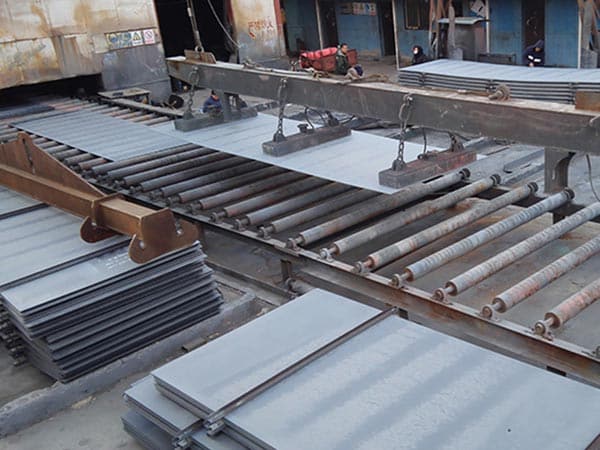
The Technological Foundation of S960MC High-Strength Steel
S960MC represents a pinnacle in the evolution of thermomechanically rolled (TMCP) structural steels. As an ultra-high-strength fine-grain steel, it is engineered to meet the demanding requirements of modern engineering where weight reduction and structural integrity are paramount. The 'S' denotes structural steel, '960' indicates a minimum yield strength of 960 MPa, and 'MC' signifies its production through thermomechanical rolling, which optimizes the microstructure for superior performance compared to traditional normalized steels.
The Critical Role of the EN10204-3.1 Certificate
In the supply chain of high-performance materials, the EN10204-3.1 certificate is not merely a document but a guarantee of quality and traceability. This specific certification level requires the manufacturer to provide test results from the actual batch of steel delivered. Unlike a 2.1 or 2.2 certificate, the 3.1 version must be validated by an authorized inspection representative who is independent of the manufacturing department. For S960MC, this certificate confirms that the specific plates or coils meet the stringent chemical and mechanical thresholds defined by the EN 10149-2 standard. It ensures that every megapascal of strength claimed is verified through rigorous testing, providing engineers with the confidence needed for safety-critical designs.
Superior Mechanical Properties and Performance Metrics
The primary allure of S960MC lies in its extraordinary strength-to-weight ratio. By utilizing a yield strength that is nearly three times that of standard S355 steel, designers can significantly reduce the thickness of structural components without compromising load-bearing capacity. This leads to lighter machinery, increased payloads, and reduced fuel consumption in mobile applications.
| Property | Typical Value / Requirement |
|---|---|
| Minimum Yield Strength (ReH) | 960 MPa |
| Tensile Strength (Rm) | 980 - 1150 MPa |
| Minimum Elongation (A80mm) | 7% - 8% (depending on thickness) |
| Impact Energy (Charpy-V) | Typically 27J or 40J at -20°C or -40°C |
While high strength often comes at the cost of ductility, S960MC maintains a level of elongation that allows for complex structural geometries. The fine-grained microstructure achieved through TMCP ensures that the material remains tough even at sub-zero temperatures, which is vital for equipment operating in arctic or high-altitude environments.
Chemical Composition and Micro-Alloying Excellence
The secret to the performance of S960MC is its precise chemical balance. Unlike older generations of high-strength steel that relied on high carbon content, S960MC utilizes a low-carbon design supplemented by micro-alloying elements such as Niobium (Nb), Vanadium (V), and Titanium (Ti). These elements promote grain refinement and precipitation hardening during the rolling process.
- Low Carbon Equivalent (CEV): A low CEV is crucial for weldability. S960MC typically maintains a CEV that allows for welding without extensive preheating, reducing fabrication time and costs.
- Sulfur and Phosphorus Control: Extremely low levels of S and P are maintained to enhance the internal cleanliness of the steel, which improves fatigue resistance and prevents lamellar tearing.
- Grain Refinement: The TMCP process creates a very fine ferritic-bainitic or martensitic microstructure, which is the primary driver behind the material's high yield point and low-temperature toughness.
Advanced Processing Capabilities: Bending and Cutting
Fabricating S960MC requires an understanding of its unique characteristics. Despite its extreme hardness, it is designed for cold forming. Manufacturers specify minimum bending radii to prevent cracking, typically ranging from 3.0 to 4.0 times the material thickness for a 90-degree bend. This capability allows for the creation of streamlined, aerodynamic, and structurally efficient profiles in crane booms and chassis frames.
When it comes to cutting, S960MC responds excellently to laser, plasma, and waterjet processes. Laser cutting is particularly effective due to the steel's consistent surface quality and tight thickness tolerances. Because the steel is produced via TMCP, it possesses low internal stresses, which minimizes distortion during and after the cutting process, ensuring high precision for complex components.
Welding S960MC: Precision and Heat Control
Welding is perhaps the most critical aspect of utilizing S960MC. Because the strength is derived from a specific thermomechanical history, excessive heat input can lead to "softening" in the heat-affected zone (HAZ). To maintain the integrity of the 960 MPa yield strength, welders must strictly adhere to recommended cooling times (t8/5 times) and use appropriate filler metals.
- Filler Metals: Matching or slightly under-matching filler metals are often used depending on the structural requirement.
- Heat Input: Keeping heat input low prevents excessive grain growth in the HAZ, preserving the toughness and strength of the joint.
- Post-Weld Treatment: Generally, S960MC does not require post-weld heat treatment (PWHT), as this can actually degrade the TMCP-derived properties.
Strategic Industry Applications
The adoption of S960MC with EN10204-3.1 certification is widespread in industries where performance limits are constantly pushed. In the lifting and mobile crane industry, it is the standard for telescopic booms, allowing for higher reach and greater lift capacity. In the transportation sector, it is used for high-strength trailers and truck chassis, where reducing the tare weight directly translates to higher revenue per trip.
The mining and earthmoving sectors utilize S960MC for wear-resistant yet structural components in dump bodies and loaders. By using a material that is both strong and tough, equipment can withstand the punishing impact of heavy ores while remaining light enough to maximize operational efficiency. Furthermore, the offshore and energy sectors value the 3.1 certification for its assurance of material consistency in harsh, corrosive, and high-stress environments.
Economic and Environmental Impact of High-Strength Steel
Transitioning to S960MC offers a dual advantage of economic savings and environmental sustainability. From a manufacturing perspective, using thinner plates reduces the volume of welding consumables required and shortens welding times. From a lifecycle perspective, the weight savings lead to significant reductions in CO2 emissions over the operating life of a vehicle or machine. This alignment with "Green Steel" initiatives makes S960MC a preferred choice for forward-thinking engineering firms looking to optimize their carbon footprint while maintaining peak technical performance.
Ensuring Quality through Rigorous Standards
The combination of S960MC's intrinsic material properties and the administrative rigor of the EN10204-3.1 certificate creates a robust framework for high-end engineering. Buyers should always verify that the certificate includes details on the heat number, chemical analysis, mechanical test results (yield, tensile, elongation), and impact test values. This level of transparency is what separates premium S960MC from generic high-strength alternatives, ensuring that the final structure performs exactly as predicted in the finite element analysis (FEA) models. By prioritizing these quality features, industries can continue to innovate, building structures that are lighter, stronger, and more durable than ever before.
Leave a message