
What is S420MC steel for car body structural steel?
Comprehensive guide to S420MC steel, exploring its chemical composition, mechanical properties, and critical role in automotive structural applications.
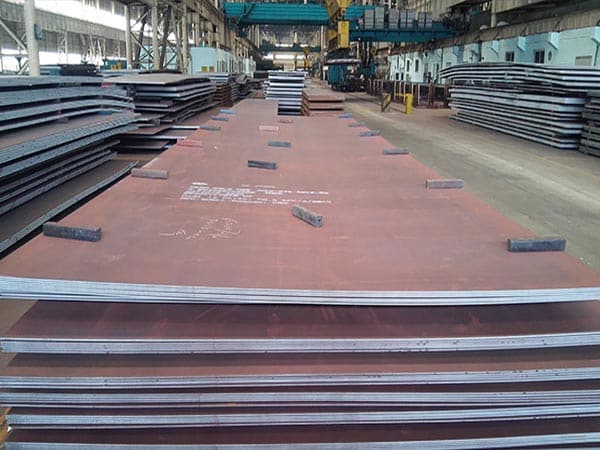
Understanding the Essence of S420MC High-Strength Steel
S420MC is a high-strength, low-alloy (HSLA) hot-rolled steel specifically designed for cold forming. Governed by the European standard EN 10149-2, this material represents a pinnacle of metallurgical engineering where weight reduction meets structural integrity. The nomenclature itself reveals its identity: 'S' stands for structural steel, '420' denotes a minimum yield strength of 420 MPa, 'M' indicates it is thermomechanically rolled, and 'C' signifies its suitability for cold forming. For the automotive industry, S420MC serves as a cornerstone material, bridging the gap between traditional mild steels and ultra-high-strength grades, offering a balanced profile of formability and load-bearing capacity.
The Chemistry Behind the Performance
The exceptional properties of S420MC are not accidental but the result of precise chemical control. Unlike traditional carbon steels that rely on high carbon content for strength, S420MC utilizes micro-alloying elements. By keeping carbon levels low (typically below 0.12%), the steel maintains excellent weldability and toughness. The addition of trace amounts of Niobium (Nb), Vanadium (V), and Titanium (Ti) facilitates grain refinement during the thermomechanical rolling process. These elements form fine carbides and nitrides that pin grain boundaries, preventing grain growth and resulting in a fine-grained microstructure that is inherently stronger and tougher.
| Element | Maximum Content (%) |
|---|---|
| Carbon (C) | 0.12 |
| Manganese (Mn) | 1.60 |
| Silicon (Si) | 0.50 |
| Phosphorus (P) | 0.025 |
| Sulfur (S) | 0.015 |
| Aluminium (Al) | 0.015 |
This lean chemical composition ensures that the material does not become brittle, a common issue with higher carbon steels. The low sulfur content is particularly vital for cold forming, as it reduces the presence of non-metallic inclusions that could lead to cracking during intense bending or stretching operations.
Mechanical Properties and Structural Integrity
The primary reason automotive engineers specify S420MC is its impressive strength-to-weight ratio. In an era where reducing vehicle emissions and increasing fuel efficiency are paramount, S420MC allows for thinner gauges without sacrificing the safety of the vehicle's structural frame. The yield strength of 420 MPa ensures that structural components can withstand significant stress before undergoing permanent deformation.
| Property | Value Range | Min 420 MPa | 480 - 620 MPa | Min 16% (thickness < 3mm) | 0.5t to 1.5t (depending on thickness) |
|---|
Beyond simple tensile strength, S420MC exhibits remarkable impact toughness, even at low temperatures. This is critical for automotive safety, as structural components must absorb energy during a collision rather than fracturing catastrophically. The fine-grained structure derived from the 'M' (thermomechanical) processing route provides a high resistance to crack propagation.
Processing Performance: Weldability and Formability
For manufacturers, the utility of a steel grade is determined by how easily it can be integrated into a production line. S420MC excels in two key areas: welding and cold forming. Because of its low carbon equivalent (CEV), S420MC can be welded using all standard methods, including MIG, TIG, and spot welding, without the need for pre-heating or post-weld heat treatment. This streamlines the assembly of complex car body structures.
- Cold Bending: S420MC can be bent to very tight radii relative to its strength, making it ideal for complex profiles.
- Deep Drawing: While not a specialized deep-drawing steel like DC04, it possesses sufficient ductility for moderately complex pressed parts.
- Laser Cutting: The clean chemistry and consistent surface finish make it highly compatible with high-speed laser cutting systems, ensuring precise dimensions for structural assemblies.
The thermomechanical rolling process ensures that the internal stresses are minimized, which prevents warping during cutting or welding. This dimensional stability is crucial for automated robotic assembly lines where tolerances are measured in fractions of a millimeter.
Strategic Applications in the Automotive Sector
The versatility of S420MC makes it a preferred choice for various 'under-the-skin' components of a vehicle. It is rarely used for visible outer body panels where surface finish is the only priority; instead, it thrives in the chassis and structural skeleton. Common applications include:
- Longitudinal and Cross Members: These are the 'bones' of the vehicle frame that must support the engine and cabin weight while providing rigidity.
- Suspension Parts: Control arms and brackets made from S420MC offer the necessary fatigue resistance to withstand millions of cycles of road vibration.
- Truck Chassis Frames: In heavy-duty vehicles, S420MC provides the strength to carry heavy payloads while keeping the dead weight of the truck as low as possible.
- Seat Frames: Modern car seats are complex safety devices; S420MC provides the strength to hold passengers securely during high-impact events.
By replacing thicker, lower-grade steels (like S235 or S355) with S420MC, engineers can achieve weight savings of 15% to 25% in specific components. This directly translates to lower CO2 emissions and improved vehicle dynamics.
Environmental Adaptation and Sustainability
S420MC is highly responsive to modern coating technologies. Whether it is hot-dip galvanizing or electrolytic zinc coating, the steel's surface chemistry promotes excellent adhesion. This provides long-term corrosion resistance, ensuring that the structural integrity of the car body remains intact throughout the vehicle's lifespan, even in harsh environments where road salt and moisture are prevalent.
Furthermore, S420MC is fully recyclable. As a high-strength low-alloy steel, it can be returned to the electric arc furnace at the end of the vehicle's life and processed into new high-quality steel without the loss of its fundamental properties. This circularity is a key component of the automotive industry's push toward carbon neutrality.
Comparison with Other MC Grades
Choosing between S355MC, S420MC, and S500MC often involves a trade-off between strength and formability. S420MC sits at the 'sweet spot' for many structural applications. While S500MC offers higher strength, it requires larger bending radii and more powerful pressing equipment. S355MC is easier to form but requires thicker sections to match the load-bearing capacity of S420MC. Therefore, S420MC is frequently selected as the optimal compromise for high-volume automotive production where both performance and manufacturing efficiency are required.
The consistency of S420MC, provided by reputable mills, ensures that every batch of steel behaves predictably under the press. This reliability is what makes it a staple in the global automotive supply chain, supporting the evolution of safer, lighter, and more efficient vehicles.
Leave a message