
What is the S315MC steel for cold forming parts price export to Morocco
Explore the comprehensive guide on S315MC steel for cold forming parts, focusing on its technical properties, price drivers for the Moroccan market, and industrial applications in North Africa.
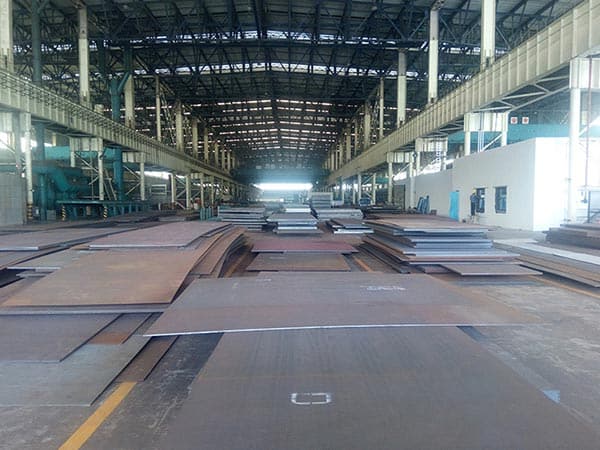
Understanding S315MC Steel: The Backbone of High-Strength Cold Forming
S315MC is a high-yield-strength steel designed specifically for cold forming applications, governed by the European standard EN 10149-2. This thermomechanically rolled steel offers a unique balance of weight reduction and structural integrity, making it a preferred choice for manufacturers looking to optimize material usage without sacrificing safety. When discussing the export of S315MC to Morocco, it is essential to recognize that this grade belongs to the High-Strength Low-Alloy (HSLA) family, which utilizes micro-alloying elements like niobium, vanadium, and titanium to achieve its superior characteristics.
The Moroccan industrial landscape, particularly in the automotive and renewable energy sectors, has seen a surging demand for materials that can withstand complex bending and folding processes. S315MC fits this requirement perfectly due to its fine-grained microstructure. Unlike traditional carbon steels, the thermomechanical rolling process ensures that the steel maintains its toughness even at lower temperatures, providing a reliable solution for parts that require high precision and durability.
Chemical Composition and Mechanical Integrity
The performance of S315MC is rooted in its precise chemical makeup. By keeping carbon content low, the material ensures excellent weldability, while the addition of manganese and micro-alloys enhances its yield strength. For buyers in Morocco, understanding these technical parameters is crucial for quality assurance and ensuring the material meets local project specifications.
| Element | Max % Content |
|---|---|
| Carbon (C) | 0.12 |
| Manganese (Mn) | 1.30 |
| Silicon (Si) | 0.50 |
| Phosphorus (P) | 0.025 |
| Sulphur (S) | 0.020 |
| Aluminium (Al) | 0.015 |
| Niobium (Nb) | 0.09 |
Mechanical properties are the primary driver for selecting S315MC over standard mild steel. With a minimum yield strength of 315 MPa, it allows for thinner gauges to be used in structural components, effectively reducing the overall weight of the finished product. This is particularly beneficial for the transport industry in Morocco, where fuel efficiency and load capacity are critical factors.
- Minimum Yield Strength: 315 MPa
- Tensile Strength: 390 - 510 MPa
- Minimum Elongation: 20% to 24% (depending on thickness)
- Bending Radius: Excellent performance at 0.5t to 1.0t (t=thickness)
Factors Influencing S315MC Steel Prices for the Moroccan Market
Determining the price of S315MC for export to Morocco involves several variables beyond the base cost of the metal. Morocco’s strategic location as a gateway between Europe and Africa makes it a competitive market, yet logistics and trade policies play a significant role in final pricing. Currently, prices are influenced by global iron ore fluctuations, energy costs in manufacturing hubs, and the specific requirements of the Moroccan import customs.
Logistics costs are a major component. Shipping from major steel hubs like China or Europe to the Port of Casablanca or Tangier Med requires careful consideration of freight rates. FOB (Free on Board) and CIF (Cost, Insurance, and Freight) terms are the most common methods of transaction. For Moroccan importers, CIF Casablanca is often preferred to simplify the risk management of maritime transport. Additionally, the availability of container space and the frequency of vessel rotations significantly impact the lead time and the landed cost of the material.
Currency exchange rates, specifically the MAD (Moroccan Dirham) against the USD or EUR, also fluctuate, affecting the purchasing power of local manufacturers. It is common for long-term contracts to include price adjustment clauses to mitigate the volatility of the global steel market. Quality certifications, such as the EN 10204 3.1 certificate, are mandatory for most Moroccan industrial projects, and the cost of these inspections and documentation is usually factored into the premium price of S315MC compared to commercial grade steels.
Advanced Processing and Cold Forming Capabilities
The "MC" in S315MC stands for thermomechanically rolled (M) and cold forming (C). This steel is engineered to be manipulated. In the Moroccan manufacturing sector, where press braking, roll forming, and deep drawing are common, S315MC excels. Its low carbon equivalent ensures that even after intense forming, the material does not suffer from strain aging or brittleness.
Weldability is another standout feature. Whether using MIG, TIG, or submerged arc welding, S315MC maintains its structural properties across the heat-affected zone (HAZ). This is vital for the production of complex chassis components and structural frames used in Morocco's growing agricultural machinery industry. The consistency of the surface finish also allows for high-quality galvanizing or painting, which is essential for parts exposed to the coastal environments of cities like Agadir or Tangier.
Strategic Applications in Morocco's Industrial Ecosystem
Morocco has positioned itself as a leading automotive hub in Africa, with major players like Renault and Stellantis operating large-scale production facilities. S315MC is widely used in the production of automotive structural parts, such as longitudinal beams, cross members, and bracketry. The high strength-to-weight ratio helps these manufacturers meet stringent international safety and emission standards.
Beyond automotive, the renewable energy sector in Morocco—specifically solar and wind power—utilizes S315MC for mounting structures and support frames. The material's ability to be cold-formed into intricate profiles makes it ideal for solar tracker components that require both strength and aerodynamic efficiency. Furthermore, the construction of heavy-duty racking systems for Morocco's expanding logistics warehouses relies on the durability of S315MC to handle high load capacities with minimal material volume.
Sourcing and Quality Assurance for Export
When sourcing S315MC for the Moroccan market, verifying the origin and the mill's reputation is paramount. High-quality S315MC should have a clean surface, free from scale or defects that could impede the cold forming process. Importers should look for suppliers who provide comprehensive testing reports, including chemical analysis, tensile tests, and impact tests if required.
Working with experienced exporters who understand the ADII (Administration des Douanes et Impôts Indirects) regulations in Morocco ensures a smooth transition through customs. Proper packaging is also vital; since S315MC is often shipped as hot-rolled pickled and oiled (HRPO), it must be protected from moisture during the sea voyage to prevent surface oxidation. Using VCI (Volatile Corrosion Inhibitor) paper and robust steel strapping is standard practice for high-grade exports to North Africa.
In conclusion, the price of S315MC for Morocco is a reflection of its high-tech manufacturing process and its value-added properties. While it may carry a higher initial cost than standard S235JR, the savings realized through weight reduction, lower processing rejection rates, and enhanced product longevity make it a cost-effective choice for modern Moroccan industry. By focusing on technical excellence and reliable supply chains, businesses can leverage S315MC to gain a competitive edge in the regional market.
Leave a message