
What is the price S700MC hot rolled steel for car gear in Iran?
Explore the comprehensive pricing factors, mechanical properties, and industrial applications of S700MC hot rolled steel within the Iranian automotive and gear component sector.
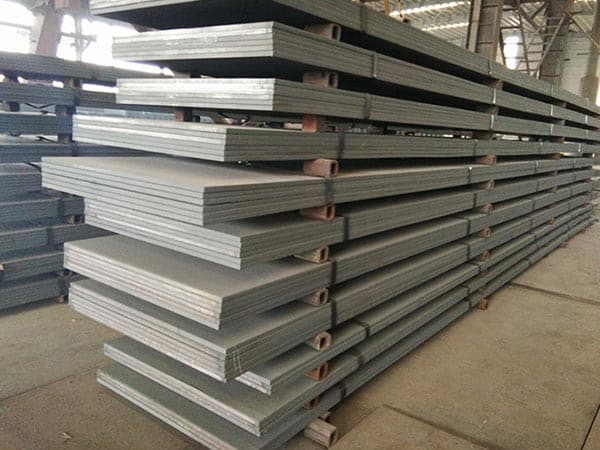
The Economic Landscape of S700MC Steel in the Iranian Automotive Sector
Determining the price of S700MC hot rolled steel in Iran requires a nuanced understanding of both global metallurgical trends and local economic variables. As a high-strength low-alloy (HSLA) steel produced through thermomechanical rolling, S700MC has become a cornerstone for manufacturers aiming to reduce vehicle weight without compromising structural integrity. In the context of the Iranian market, pricing is not merely a reflection of raw material costs but is heavily influenced by import duties, currency fluctuations between the Rial and the Euro or USD, and the logistical complexities of the Middle Eastern supply chain.
Currently, the price of S700MC in Iran fluctuates based on the origin of the material. High-end European imports often command a premium due to their consistent grain structure and superior surface finish, while alternatives from Tier-1 Chinese mills or localized production efforts offer a different price-to-performance ratio. For automotive gear components and structural assemblies, the cost typically ranges from $900 to $1,250 per metric ton on a C&F (Cost and Freight) basis, though local stockist prices may vary significantly depending on inventory levels in hubs like Tehran or Isfahan.
Technical Specifications and Chemical Composition
The performance of S700MC is rooted in its precise chemical makeup. Unlike traditional carbon steels, S700MC utilizes micro-alloying elements such as Niobium (Nb), Vanadium (V), and Titanium (Ti) to achieve its remarkable yield strength. These elements facilitate grain refinement during the thermomechanical rolling process, which is essential for components subjected to high stress, such as gear housing brackets and heavy-duty chassis parts.
| Element | Maximum Content (%) |
|---|---|
| Carbon (C) | 0.12 |
| Manganese (Mn) | 2.10 |
| Silicon (Si) | 0.60 |
| Phosphorus (P) | 0.025 |
| Sulphur (S) | 0.015 |
| Aluminium (Al) | 0.015 |
| Niobium (Nb) | 0.09 |
| Vanadium (V) | 0.20 |
| Titanium (Ti) | 0.22 |
This lean chemical composition ensures that the steel remains highly weldable while maintaining a yield strength of at least 700 MPa. For Iranian automotive engineers, this balance is critical when designing gears and transmission-related structural components that must withstand the rugged terrain and extreme temperature variations found across the Iranian plateau.
Mechanical Properties: Strength Meets Ductility
The primary reason for the adoption of S700MC in the automotive sector is its exceptional strength-to-weight ratio. By utilizing S700MC, manufacturers can reduce the thickness of components by up to 30% compared to S355 steel, leading to significant fuel savings and increased payload capacity for commercial vehicles. The mechanical properties are strictly governed by standards such as EN 10149-2.
| Property | Value |
|---|---|
| Yield Strength (ReH) | Min 700 MPa |
| Tensile Strength (Rm) | 750 - 950 MPa |
| Elongation (A80mm) | Min 10% (Thickness < 3mm) |
| Elongation (A5) | Min 12% (Thickness ≥ 3mm) |
| Bending Radius (90°) | 1.5 x Thickness |
These properties ensure that the steel can absorb significant energy during an impact, a vital safety feature for automotive structural parts. The high tensile strength also provides excellent fatigue resistance, which is paramount for gear-related components that experience cyclic loading during vehicle operation.
Processing Performance: Fabrication in Iranian Workshops
One of the standout features of S700MC is its ease of processing. Despite its high strength, the material exhibits excellent cold-forming characteristics. Iranian fabrication shops, which often utilize a mix of modern CNC machinery and traditional hydraulic presses, find S700MC highly adaptable. However, precise control over the bending radius is necessary to prevent micro-cracking at the outer tension zones.
Welding Compatibility: S700MC features a low carbon equivalent (CEV), which significantly enhances its weldability. Standard methods such as MAG (Metal Active Gas) and laser welding are highly effective. It is crucial to manage the heat input to avoid excessive softening in the heat-affected zone (HAZ), which could potentially lower the local yield strength. For Iranian manufacturers producing gear housings or complex automotive sub-frames, maintaining the integrity of the weld is non-negotiable.
Cutting and Machining: The material is well-suited for laser, plasma, and waterjet cutting. The clean edges produced by laser cutting are particularly beneficial for gear components that require tight tolerances and minimal post-processing. When machining, the use of high-quality carbide tools is recommended to account for the material's toughness.
Environmental Adaptability and Durability
Iran's climate ranges from the humid Caspian coast to the arid central deserts and the freezing Alborz mountains. S700MC's fine-grained structure provides a degree of inherent resistance to atmospheric corrosion, although for automotive applications, it is typically paired with advanced coating technologies such as cathodic electrodeposition (KTL) or galvanization. The material's performance at low temperatures is also noteworthy; it maintains its toughness even in sub-zero conditions, ensuring that car components do not become brittle during harsh Iranian winters.
Market Dynamics and Sourcing Strategies in Iran
The procurement of S700MC in the Iranian market involves navigating a complex landscape of local production and international trade. While major domestic players like Mobarakeh Steel Company (MSC) have made strides in producing high-strength grades, the specific requirements for S700MC often necessitate imports for high-precision automotive applications. Buyers must prioritize Mill Test Certificates (MTC) that verify compliance with EN 10149-2 standards to ensure the safety and longevity of the final product.
- Quality Verification: Always demand 3.1 or 3.2 certification to confirm chemical and mechanical properties.
- Thickness Tolerances: For gear components, precise thickness control is vital; ensure the material meets EN 10051 standards.
- Surface Condition: Hot rolled pickled and oiled (HRPO) surfaces are preferred for automotive parts to facilitate better coating adhesion and reduce tool wear during stamping.
Strategic sourcing involves monitoring the LME steel scrap and iron ore indices, as these global benchmarks eventually filter down into the Iranian market prices. Furthermore, the "Nima" exchange rate plays a pivotal role in determining the final Rial-denominated cost for Iranian manufacturers, making timing a critical factor in large-scale procurement.
Industrial Applications Beyond Gears
While the focus remains on gear-related structural components, the utility of S700MC extends across the entire automotive and transport industry in Iran. It is extensively used in the production of longitudinal beams, cross members, and crane arms. In the heavy-duty truck sector, S700MC is the preferred choice for trailer chassis, where reducing dead weight directly translates to higher profitability for logistics operators. The material's versatility makes it a premium asset in the transition toward more efficient and sustainable transportation solutions within the region.
By integrating S700MC into their production lines, Iranian automotive firms can align themselves with international standards, enhancing the export potential of their vehicles to neighboring markets. The initial higher cost per ton of S700MC is frequently offset by the reduction in material volume required and the long-term durability of the components produced.
Leave a message