
S900MC steel for car axle for general structural purpose
A comprehensive guide to S900MC steel for car axles and structural purposes, covering mechanical properties, welding, and lightweighting advantages.
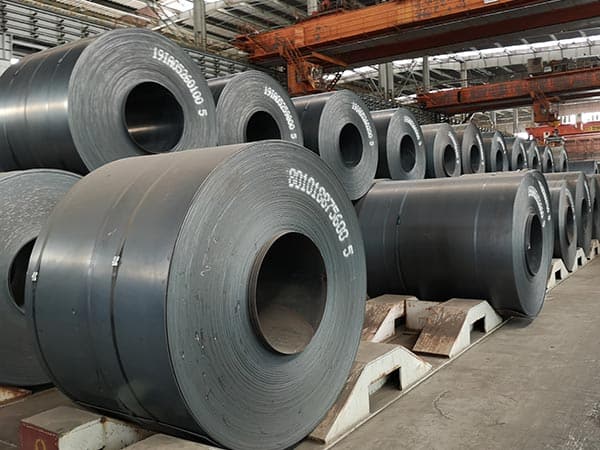
The Role of S900MC in Modern Automotive Axle Engineering
The demand for lightweight, high-performance materials in the automotive and heavy machinery industries has led to the widespread adoption of S900MC high-strength low-alloy (HSLA) steel. S900MC, governed by the EN 10149-2 standard, is a thermomechanically rolled steel designed specifically for cold forming. For car axles and general structural purposes, this material offers a unique combination of extreme yield strength and surprising ductility, making it a cornerstone of modern structural engineering.
Unlike traditional quenched and tempered steels, S900MC achieves its properties through a sophisticated Thermomechanical Controlled Processing (TMCP). This process refines the grain structure at a microscopic level, ensuring that the steel maintains its integrity under the high-stress conditions typical of vehicle axles. By utilizing S900MC, engineers can significantly reduce the wall thickness of structural components without compromising safety or load-bearing capacity, leading to substantial improvements in fuel efficiency and payload capacity.
Chemical Composition and Metallurgical Design
The performance of S900MC is rooted in its precise chemical balance. It utilizes a low carbon content to enhance weldability while incorporating micro-alloying elements such as Niobium (Nb), Vanadium (V), and Titanium (Ti). These elements facilitate grain refinement and precipitation hardening, which are essential for achieving a minimum yield strength of 900 MPa.
| Element | C (max) | Si (max) | Mn (max) | P (max) | S (max) | Al (min) | Nb+V+Ti (max) |
|---|---|---|---|---|---|---|---|
| Percentage (%) | 0.20 | 0.60 | 2.20 | 0.025 | 0.015 | 0.015 | 0.22 |
This metallurgical strategy ensures that the steel remains "clean," with very low levels of impurities like sulfur and phosphorus. This cleanliness is vital for preventing brittle fractures and ensuring consistent performance across different production batches. The inclusion of Nitrogen (N) is also strictly controlled to prevent the formation of undesirable nitrides that could impair toughness.
Mechanical Properties: Strength Meets Ductility
The primary appeal of S900MC for car axles is its exceptional Yield Strength. In the context of vehicle dynamics, the axle must withstand both static loads and dynamic shocks from uneven road surfaces. S900MC provides the necessary stiffness to prevent permanent deformation under these extreme conditions.
| Property | Value (Metric) |
|---|---|
| Minimum Yield Strength (Reh) | 900 MPa |
| Tensile Strength (Rm) | 930 - 1200 MPa |
| Minimum Elongation (A80mm) | 7% - 8% |
| Impact Energy (Charpy-V) | Typically 27J at -20°C or -40°C |
Despite its high strength, S900MC retains sufficient elongation to allow for complex cold-forming operations. This is particularly important for axle housings and structural brackets that require bending or stamping. The high tensile strength ensures that the material can absorb significant energy during a collision, contributing to the overall crashworthiness of the vehicle.
Advanced Processing: Welding and Cold Forming
Manufacturing efficiency is a critical factor in the selection of S900MC. Because it is a low-carbon HSLA steel, it exhibits excellent weldability. Standard welding processes such as MAG (Metal Active Gas), TIG (Tungsten Inert Gas), and laser welding can be employed. However, due to the thermomechanical nature of the steel, heat input must be carefully managed to avoid excessive softening in the Heat Affected Zone (HAZ).
- Preheating: Generally not required for S900MC unless the ambient temperature is very low or the plate thickness is exceptional.
- Interpass Temperature: Should be kept low to preserve the fine-grained microstructure.
- Filler Materials: High-strength welding wires (e.g., ER110S-G) are recommended to match the base metal's strength.
In terms of cold forming, S900MC is highly capable. Designers must account for a larger springback compared to lower-strength steels like S355. Using a larger bending radius and ensuring the tools are in top condition are essential steps for achieving precise geometries in axle components. The recommended minimum bending radius is typically 3 to 4 times the material thickness, depending on the orientation relative to the rolling direction.
Environmental Adaptability and Fatigue Resistance
Car axles are exposed to harsh environments, including road salts, moisture, and extreme temperature fluctuations. S900MC's fine-grained structure provides a natural resistance to atmospheric corrosion compared to traditional carbon steels. Furthermore, its performance at low temperatures is a major advantage for vehicles operating in arctic or sub-zero climates. The impact toughness ensures that the steel does not become brittle, which is a common failure mode in lower-quality structural steels.
Fatigue life is another critical metric for axles. Since axles undergo millions of stress cycles during their lifespan, the high fatigue limit of S900MC is indispensable. The smooth surface finish resulting from the thermomechanical rolling process reduces the number of surface defects that could act as stress concentrators, thereby extending the component's operational life.
Strategic Advantages in Structural Applications
Moving beyond car axles, S900MC is increasingly used in heavy-duty truck chassis, crane booms, and agricultural machinery. The primary driver is the "strength-to-weight ratio." By replacing S355 or S460 with S900MC, manufacturers can achieve weight savings of up to 40% in specific structural members. This weight reduction has a cascading effect: it reduces fuel consumption, decreases tire wear, and allows for higher legal payloads.
In the construction equipment sector, the use of S900MC in telescopic booms allows for greater reach and lifting capacity without increasing the overall weight of the machine. This efficiency is a key competitive advantage in a market focused on sustainability and operational cost reduction. The material's reliability in these high-stakes applications underscores its robustness as a general structural steel.
Implementation Considerations for Engineers
When transitioning to S900MC, engineering teams must update their design parameters. Finite Element Analysis (FEA) should be used to optimize the geometry for high-strength materials. It is also important to consider the surface treatment. S900MC is often supplied in a pickled and oiled condition, which provides an excellent base for painting or powder coating, further enhancing its environmental resistance.
Cost-benefit analyses often reveal that while the per-ton price of S900MC is higher than standard grades, the total project cost is lower. This is due to the reduction in material volume required, lower transport costs, and reduced welding time (as thinner sections require fewer weld passes). These economic factors, combined with the technical performance, make S900MC an optimal choice for forward-thinking structural design.
Leave a message